

 Phoenix 24
When an Olympic Medal Became a Public Confession
A medal moment turned private pain public.
Oslo, February 2026.
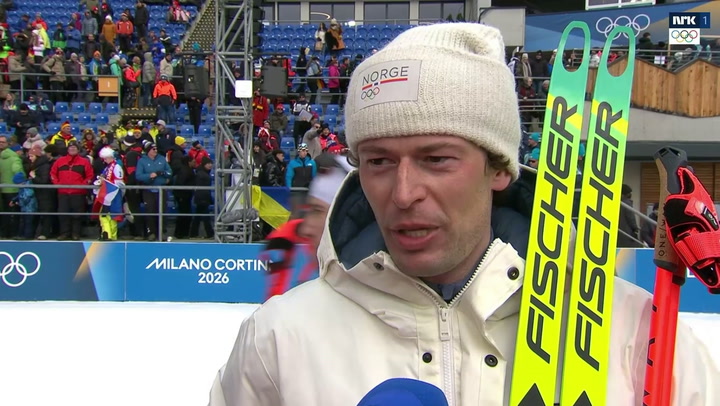
Elite sport runs on a disciplined bargain: the athlete performs under extreme pressure, and the public receives a story tidy enough to celebrate. This week, that bargain cracked when Norwegian biathlete Sturla Holm Laegreid used a post medal interview to disclose infidelity, turning what should have been a controlled Olympic narrative into an open ended social reckoning. The confession did not land as a simple act of honesty. It landed as a governance problem, because Olympic communications are designed to produce collective meaning, not collateral damage.
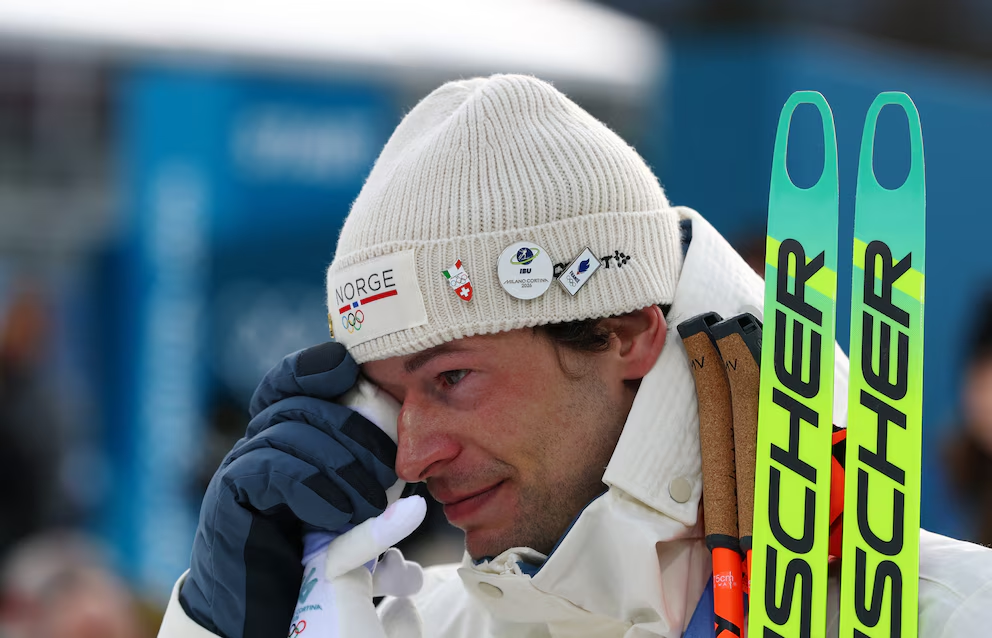
What made the episode travel was not merely that a private matter was revealed, but that it was revealed in a setting with built in amplification. According to Norway’s public broadcaster, the admission came immediately after he secured bronze, at the exact moment cameras typically frame gratitude, national symbolism, and team cohesion. He spoke about timelines, heartbreak, and responsibility, and he dedicated the medal to the partner he had hurt, implying remorse and longing in the same breath. For some viewers, it read like unfiltered accountability. For others, it read like self centered performance under the halo of victory.
The structure of his account also mattered. He described meeting a partner he called the love of his life months earlier, then being unfaithful, then confessing to her shortly before the Games began, describing the aftermath as emotionally brutal. That sequencing repositioned the medal as a coping mechanism, not merely a sporting achievement. It also placed a non athlete at the center of the Olympic spotlight without her consent, which is where the story stops being gossip and becomes ethics. In highly mediated environments, the right to speak is never only about the speaker. It is also about who gets exposed when the speaker chooses disclosure.
The partner’s response, delivered through a leading Norwegian newspaper, cut through the noise precisely because it was restrained. She did not dramatize the betrayal or invite a public trial. Instead, she emphasized that she did not choose to be placed in this situation, and that it hurt, even after the athlete’s public framing of love and regret. In one statement, she rebalanced the narrative away from his redemption arc and toward the reality of involuntary visibility. Her words functioned as a boundary marker, asserting that intimacy is not a public resource just because an athlete wins hardware.
Reactions inside Norway’s winter sport ecosystem exposed how the system polices attention. According to commentary attributed to prominent Norwegian athletes and former stars, the timing was criticized as wrong, not necessarily because confession is taboo, but because the mixed zone is treated as a strategic space where personal revelations can destabilize team optics and national storytelling. The criticism was also a signal to younger athletes: authenticity is allowed only within parameters that do not break the broadcast frame. In modern sport, spontaneity is tolerated until it interrupts institutional objectives.
There was immediate spillover onto other athletes as well. Reports indicated that the gold medalist in the same competition risked having his achievement overshadowed, with the conversation pulled away from performance and toward scandal. Laegreid reportedly apologized to his compatriot, acknowledging that his confession might have stolen oxygen from the winner’s moment. That apology is not trivial, because it reveals an internal understanding of hierarchy in Olympic storytelling. The podium is supposed to distribute attention according to results, and any disruption is felt as a breach of professional etiquette.
The deeper issue is the media environment that makes these moments inevitable. According to the International Olympic Committee’s digital media and athlete conduct guidance, Olympic spaces operate under a managed communications logic even when the content appears spontaneous. The model encourages personal narrative because it increases audience engagement, yet it also tries to reduce legal, reputational, and operational risk. When a confession involves a private partner, that risk expands beyond the athlete, beyond the team, and beyond the broadcaster, into a zone where the institution has limited control and the collateral party has limited protection.

Public health and stigma dynamics sit underneath the spectacle, too. The World Health Organization has repeatedly argued that media framing shapes attitudes and can intensify harm when complexity is reduced to a consumable storyline. This case shows how quickly moral discourse becomes entertainment when placed inside an Olympic frame. Viewers begin to treat private trauma as a debate topic, and the platform’s scale makes it feel normal to judge a relationship based on a few sentences and a camera angle. The partner’s statement was, in effect, a refusal to let the public convert her pain into content.
None of this erases the athlete’s claim that guilt and emotional stress were real, or that he may have been seeking accountability. The point is that accountability is not only confession, it is also consideration of who bears the cost of that confession. A post medal interview is a high power megaphone, and a megaphone changes the moral geometry of personal disclosure. In other contexts, a confession can be private repair. In this context, it becomes public theater, with incentives that reward virality more than healing.
The episode will likely fade from the official medal table, but it will linger as a signal about what elite sport is becoming. The Olympics increasingly monetize intimacy, vulnerability, and confession, because those elements keep audiences watching between competitions. Yet the institution cannot claim innocence when that same monetization exposes non athletes who did not sign up for the spotlight. The most durable line in this story is not the confession itself. It is the partner’s reminder that visibility can be imposed, and that the person closest to the medal can end up paying the highest price.
Detrás de cada dato, la intención. / Behind every data point, the intention.