

 Phoenix 24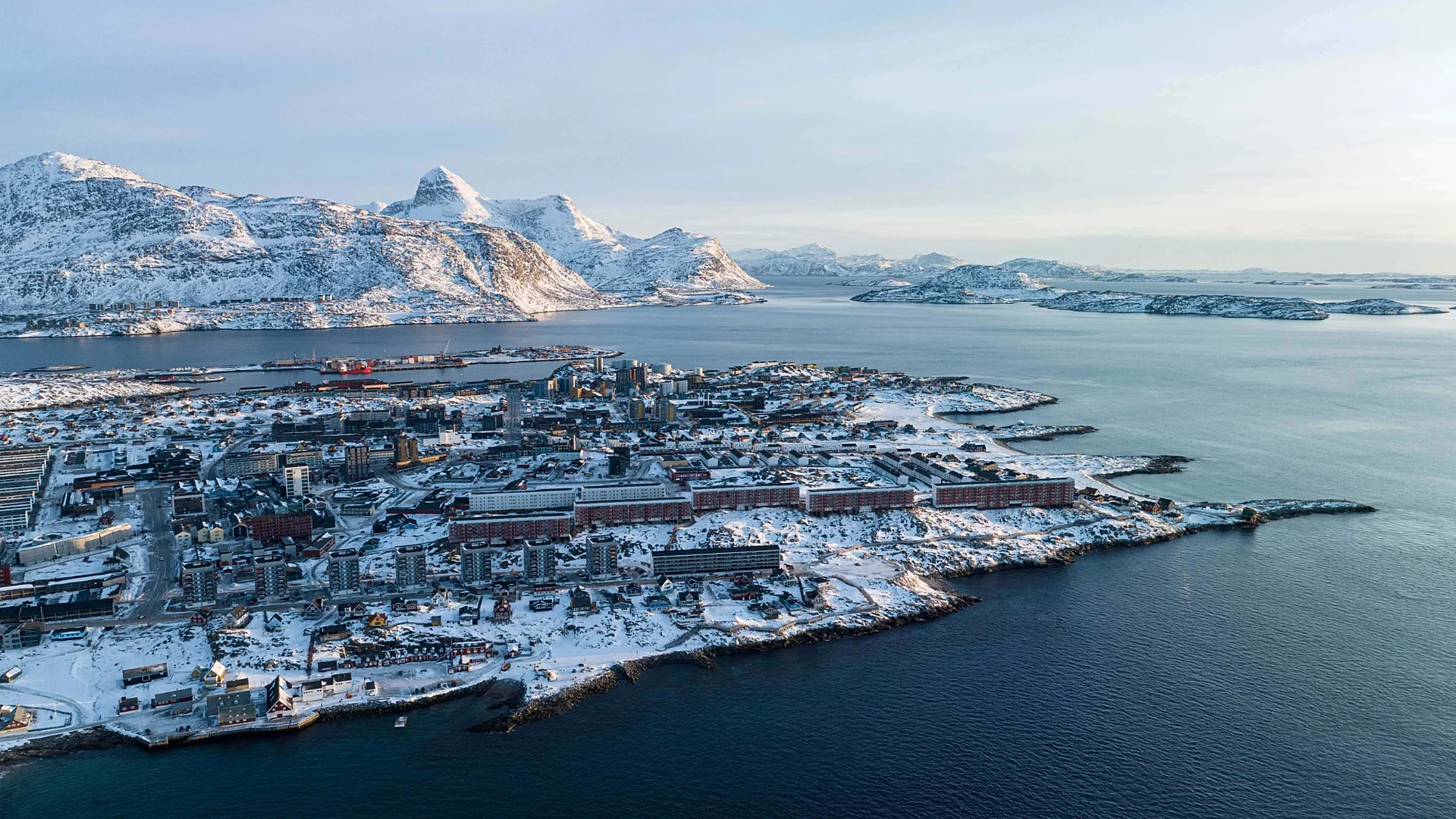
Diplomacy becomes a foothold in contested ice.
Nuuk, February 2026.
France has inaugurated a consulate in Nuuk, translating a diplomatic intention into a permanent presence at the political centre of Greenland. The step makes France the first European Union member state to establish a consulate general on the island, an autonomous territory within the Kingdom of Denmark whose relevance now extends well beyond symbolism. Paris has framed the mission as a platform for scientific, cultural, economic, and political cooperation, a deliberately wide mandate that keeps the post from being reduced to a single security headline. Yet permanence is the message, because a consulate creates routine access, institutional memory, and a direct channel to Greenlandic decision makers that does not depend on Copenhagen’s filter. In Arctic politics, representation functions as leverage, because it shapes which actors are present when rules, projects, and partnerships are negotiated. The opening therefore signals that France intends to participate in Greenland’s evolving external relationships rather than observe them at a distance.
The timing also reveals why the Arctic has shifted from a peripheral theatre to a test space for power projection and risk management. As sea ice retreats and the operational window for northern routes expands, the logic of access, monitoring, and infrastructure becomes more consequential, even when shipping volumes remain modest. Greenland’s geography sits at the seam between the North Atlantic and the high Arctic, and that seam is increasingly treated as strategic depth rather than empty map space. Security communities within NATO have warned that contested access in the High North can become a pressure point that forces alliances to spend, patrol, and posture in costly ways. Policy institutes such as SIPRI have highlighted how Arctic militarisation can proceed quietly through surveillance, dual use infrastructure, and readiness cycles rather than overt deployments. For France, a consulate is a low noise instrument that still carries strategic intent, because it embeds the state inside local networks that shape situational awareness. It is diplomacy designed to remain standing after the news cycle has moved on.
Canada’s parallel decision to deepen its own representation in Nuuk strengthens the signal that allied diplomacy is shifting from episodic attention to institutional permanence. When multiple partners expand their footprint in the same small capital at the same moment, it usually reflects a shared assessment that future bargaining power will be built through daily contact, not summit theatre. Ottawa has framed its presence through a dual lens, Arctic security and climate cooperation on one side, and Inuit ties and rights on the other, a blend that projects legitimacy without sounding militarised. For Greenland’s government, the clustering of consulates expands its room to manoeuvre, because it creates more direct channels for investment, research partnerships, and political messaging. It also offers Greenlandic officials a larger menu of interlocutors, which matters in a system where small actors can gain leverage by diversifying partners. Think tanks such as CSIS have long argued that influence in the Arctic is often accumulated through logistics, science, and governance rather than dramatic confrontations. In that context, consulates are not ceremonial offices, they are nodes in a long horizon competition over access and alignment.
This diplomatic expansion sits against a backdrop of renewed U.S. attention to Greenland that has unsettled European capitals and sharpened allied solidarity around Denmark’s territorial integrity. The issue is not only a hypothetical transfer of sovereignty, but the broader signal that strategic geography can be treated as negotiable when great power competition intensifies. Greenland’s leadership has pushed for greater autonomy and international visibility over time, and additional foreign presences can be read locally as recognition of that trajectory. At the same time, foreign missions can create new vectors of influence, and influence is rarely neutral in an environment shaped by minerals, maritime routes, and security planning. The European angle is especially delicate, because the European Union has limited hard power in the High North but retains substantial diplomatic and economic instruments that can shape standards and partnerships. Institutions such as the OECD have warned that climate driven resource frontiers often attract governance stress, including contested licensing, community pressure, and weak regulatory capacity under fast investment cycles. France’s move therefore carries an implicit bet that being present early reduces strategic surprise later. It also normalises a message that Greenland is not an afterthought in Europe’s northern perimeter.
The deeper pattern is that the Arctic is being redefined as a connected system where climate dynamics, indigenous governance, critical minerals, and defence posture intersect. A consulate in Nuuk becomes a tool for reading that system up close, because it enables constant engagement with local politics, scientific communities, and economic actors shaping the island’s future. The Lowy Institute has noted that Arctic developments increasingly reverberate through Indo Pacific security planning, not because Greenland sits near Asia, but because risk and deterrence now travel through systems and precedents. If external pressure on Greenland grows, diplomatic presence becomes a form of reassurance to Denmark and a signal of collective interest in rules based governance. If investment accelerates, presence becomes a way to track who is financing what, which standards apply, and how local consent is managed. If security posture hardens, presence becomes a listening post that helps prevent misreading and overreaction in a region where distance and weather magnify uncertainty. In short, this is not a story about a building opening, it is a story about the Arctic entering a new phase where visibility, access, and alignment are being priced in. France has chosen to pay that price now, in a low drama way, before the costs of late entry rise.
Phoenix24: claridad en la zona gris. / Phoenix24: clarity in the grey zone.