

 Phoenix 24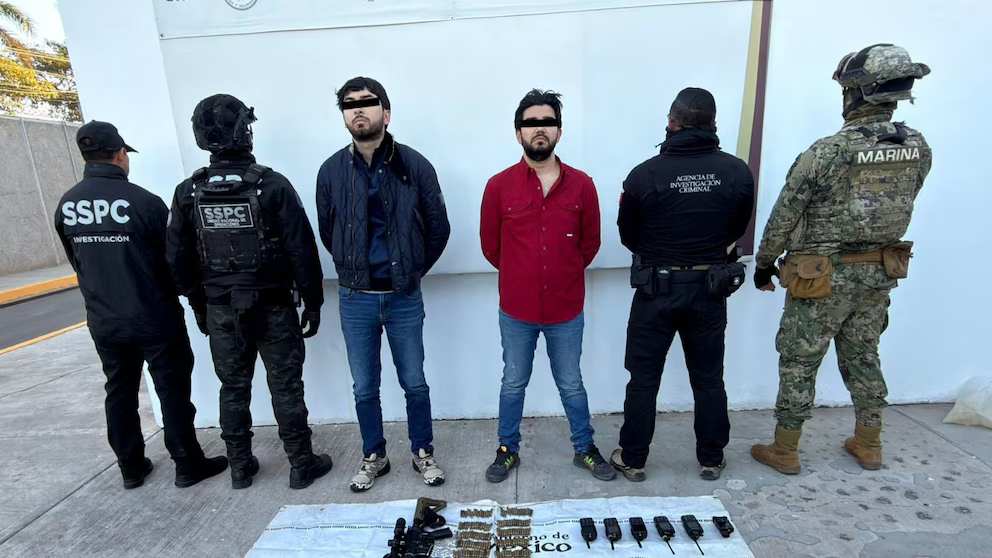
A suspected gang operator insists his value lies in everyday skills even as authorities link him to organized violence.
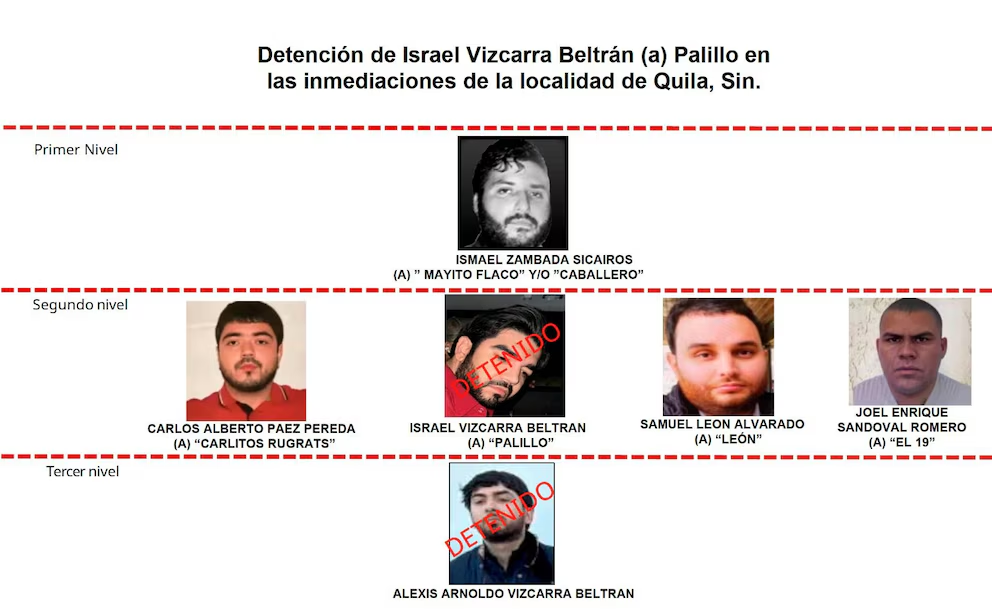
Mexico City, February 1, 2026. A man identified by authorities as a key operator in the criminal network led by the recently captured suspect known as “El Mayito Flaco” has been detained after a dramatic raid that underscored ongoing efforts to dismantle organised crime structures in parts of Mexico. The individual, colloquially known as “El Palillo,” drew attention in court when he downplayed his alleged criminal role by claiming that he was “good in the kitchen,” suggesting that his skills were better suited to cooking than to the operations authorities say he helped coordinate.
Officials from the Attorney General’s Office described El Palillo as a facilitator within the broader organisation, alleged to have managed logistics, communications and links between cells that carried out violent actions and illicit activities. While prosecutors presented evidence connecting him to internal coordination tasks, El Palillo’s courtroom comments hinted at a persona that attempted to blend bravado with self-depiction as a normal citizen facing extraordinary circumstances. Judges granted provisional detention as the legal process moves forward, with prosecutors outlining charges that could include organised crime participation, facilitation of violent acts and collaboration in illegal financial schemes.

The arrest of El Palillo comes amid heightened scrutiny of criminal networks that have entrenched themselves in certain regions, leveraging social vulnerabilities, economic inequality and gaps in law enforcement presence to expand influence. Authorities emphasised that capturing high-ranking facilitators like El Palillo can disrupt operational planning and financial flows, even if the symbolic figureheads remain at large. In recent months security forces have increased intelligence-led operations, seeking to undercut command structures rather than only pursuing isolated street-level offenders.
Public reaction to El Palillo’s self-description sparked debate about the narratives criminals adopt when confronted with accountability and how those narratives contrast with behavior that law enforcement deems part of organised crime’s mechanisms. Some observers noted that such statements can be part of a legal strategy to humanise a defendant, while others argued that downplaying one’s alleged role in violence does little to mitigate the gravity of the charges. The courtroom exchange also highlighted media and public fascination with colourful figures whose monikers and off-hand remarks can overshadow the serious matters at hand.
Prosecutors in the case presented documentation and witness testimonies that, they argue, illustrate a pattern of collaboration in activities linked to extortion, logistics facilitation and tactical communication among network cells. The evidence is being compiled as investigators seek to build a robust case that connects individuals to specific incidents rather than broad associations. Legal analysts noted that such cases often hinge on demonstrating intent, participation in coordination and material support for organised operations, which can be complex and protracted legal endeavors.
Human rights advocates, while supportive of law enforcement actions against violent actors, also emphasise the need for due process and caution against sensationalising criminal figures. They argue that legal proceedings should focus on evidence and uphold fair trial standards, keeping public commentary grounded in respect for judicial integrity. In high-profile cases that attract national attention, adherence to rule of law principles remains a central concern for both accountability and legitimacy.
The broader context of the arrest reflects ongoing efforts by Mexican authorities to reduce the influence of organised crime through a combination of arrests, intelligence work and community outreach programs aimed at addressing underlying social conditions that can facilitate criminal recruitment. Government officials argue that disrupting organised networks requires sustained action across security, justice and social policy domains, with cooperation from local and federal partners.

As the case of El Palillo progresses through the legal system, the public will be watching how evidence is presented, how defence strategies unfold and how courts balance narrative with substantiated facts. The outcome may shape perceptions of criminal accountability and the limits of personal portrayal when confronting serious accusations.
Behind every courtroom assertion there is a deeper reality of law, evidence and responsibility that defines how justice is pursued and understood.