

 Phoenix 24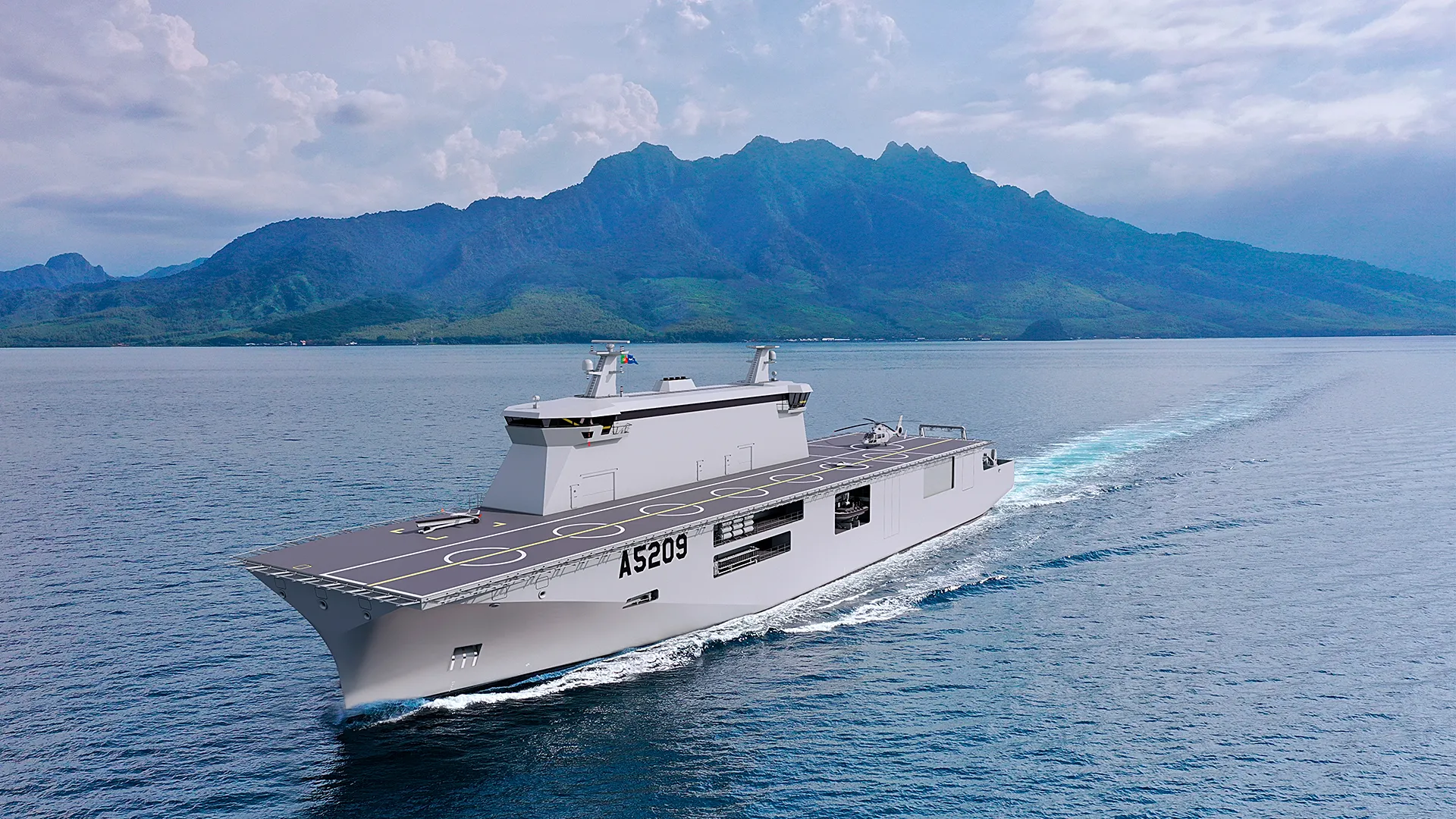
Unmanned presence at sea redefines maritime projection for a mid-tier European power.
Lisbon, January 29, 2026. Portugal has embarked on a strategic leap in naval capability with the construction of what is expected to be Europe’s first purpose-built unmanned aircraft carrier, a multifunctional maritime platform designed around the operation of unmanned systems across air, surface and subsurface domains. The platform, known as the NRP D. João II, embodies a shift in maritime doctrine that leverages automation and modularity to extend Portugal’s reach across its vast maritime zone and within broader European naval architectures.
The Portuguese initiative is rooted in a recognition of both technological opportunity and geographic obligation. Portugal’s national maritime space, among the largest in Europe, encompasses extensive exclusive economic zones that include critical sea lines of communication, offshore resources and zones vulnerable to hybrid threats such as infrastructure sabotage or covert intrusion. Traditional naval assets optimized for crewed carrier operations are resource-intensive and beyond the procurement and sustainment capacities of many EU member states. By contrast, a drone-centric platform reduces operational costs, minimizes risk to personnel and enhances adaptability across a spectrum of missions, from scientific research to maritime security.
The multifunctional vessel under construction represents a new class of naval asset. With a length exceeding one hundred meters and modular mission bays, the ship will support the launch and recovery of unmanned aerial vehicles alongside robotic surface and underwater systems. This architecture allows the platform to reconfigure rapidly for specific operational profiles, whether environmental monitoring, oceanographic data collection, search and rescue, or surveillance of maritime approaches. In emergencies, the vessel’s capacity to accommodate additional personnel and support humanitarian assistance operations further extends its utility beyond conventional naval missions.
Portugal’s choice to invest in unmanned maritime systems reflects a broader trend in naval strategy that decentralizes force projection from legacy carrier definitions to a more networked, distributed model. The D. João II is designed with flexible launch and recovery systems, specialized hangars and automated support facilities that integrate emerging technologies, including artificial intelligence for sensor fusion, assisted navigation and data processing. Such integration underscores the evolving character of maritime power, where information dominance and persistent remote sensing can substitute for sheer tonnage or crewed strike capacity.
This strategic orientation also aligns with cooperative security frameworks within Europe. As other navies experiment with unmanned platforms, Portugal’s early investment positions it as a node in a potentially interoperable unmanned maritime network under NATO and EU defense cooperation. Exercises involving unmanned systems have already featured significant Portuguese participation, demonstrating the country’s operational emphasis on robotic experimentation and joint development. Portugal’s leadership in this domain could influence allied procurement and doctrine, prompting reassessment of how smaller navies can contribute meaningfully to collective security without replicating large carrier fleets.
Critically, the unmanned carrier concept challenges assumptions about the relationship between naval power and national scale. Historically, carrier-centric doctrine was a privilege of major powers capable of sustaining large crews, complex logistics and extended blue-water operations. The emergence of drone carriers signals a democratization of maritime capability: states with advanced technological ecosystems and strategic maritime interests can achieve persistent presence and influence without replicating high-cost, high-risk platforms.
The Portuguese vessel is scheduled for delivery in the second half of 2026. Its construction is largely funded through European Union recovery mechanisms, reflecting how multilateral economic tools can underwrite strategic innovation in defense. The modular and open systems design allows for future upgrades and integration of next-generation unmanned systems, ensuring that the platform’s strategic value will endure even as technologies evolve.
In geopolitical terms, Portugal’s investment in unmanned naval platforms emerges at a moment of renewed interest in maritime security across the North Atlantic, Eastern Atlantic and Mediterranean environments. Hybrid threats, gray-zone competition and the proliferation of unmanned systems demand new approaches to persistent surveillance, early warning and response. Portugal’s vessel is a tangible expression of that shift, combining technological foresight with strategic necessity.
As navies worldwide grapple with the implications of autonomy and networked operations, Portugal’s decision underscores how mid-sized powers can leverage innovation to shape future defense paradigms. The NRP D. João II heralds a chapter in which unmanned presence at sea becomes an instrument of sovereignty, deterrence and regional cooperation, redefining what it means to project power from the water’s edge to the broader maritime domain.
Behind every datum, there is an intention. Behind every silence, there is a structure.
Detrás de cada dato, hay una intención. Detrás de cada silencio, una estructura.