

 Phoenix 24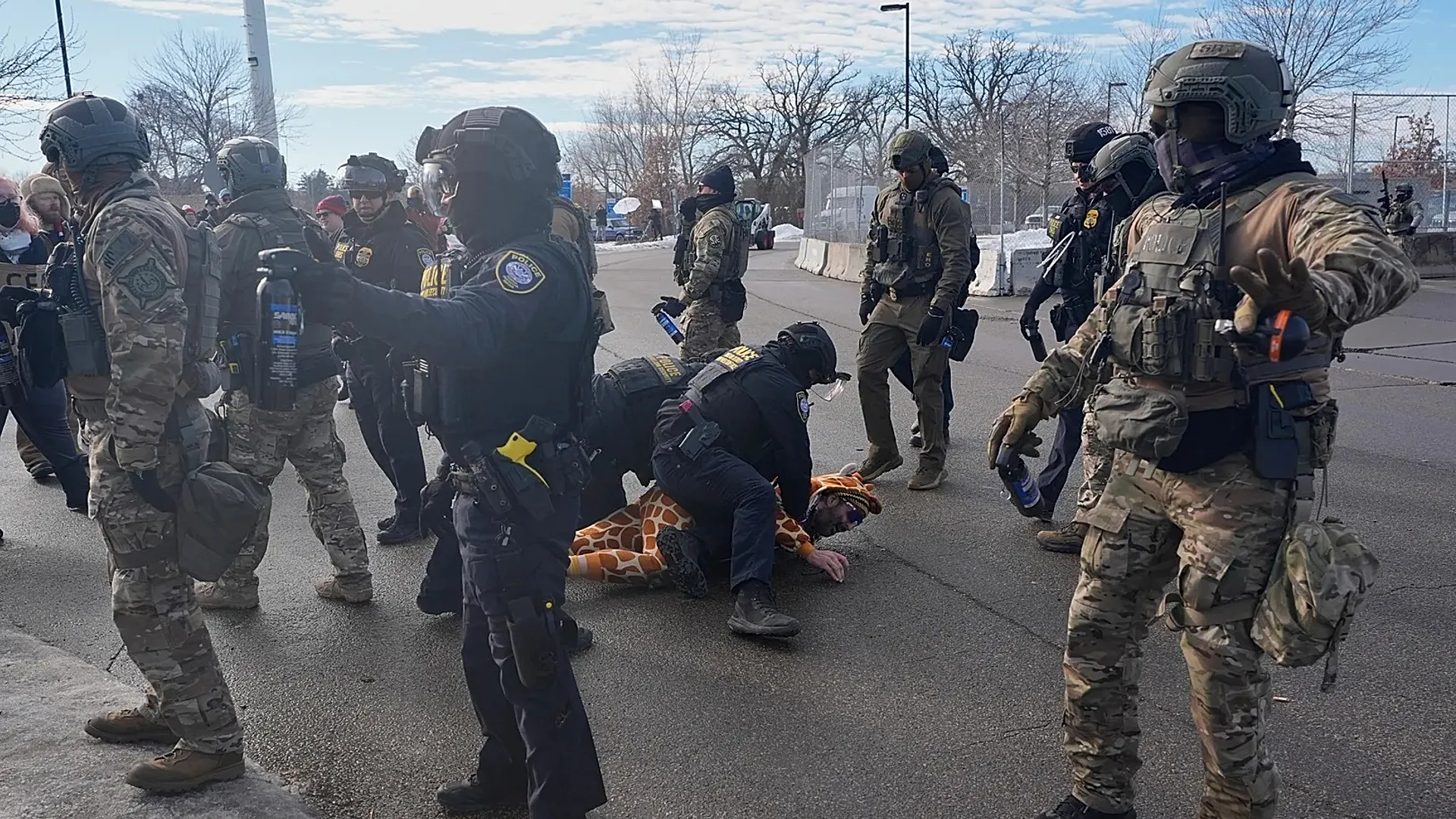
When security details intersect with political sensitivities, even routine protection plans can trigger broader controversy.
Milan, January 27, 2026. A heated debate has emerged in Italy over reports that agents from the U.S. Immigration and Customs Enforcement agency may be involved in the security arrangements for the 2026 Winter Olympic Games in Milan-Cortina, prompting criticism from politicians, civil society leaders and local officials. While U.S. authorities have described the role in purely supportive terms related to the protection of visiting dignitaries, the proposed involvement of a U.S. immigration enforcement agency has struck a nerve in a country that values its sovereignty and inclusive traditions.
The controversy stems from statements indicating that a unit of the U.S. Immigration and Customs Enforcement agency could accompany senior American officials, including representatives of the U.S. delegation, during the Games scheduled to take place from February 6 to February 22. Initial reports suggested the presence of ICE personnel could be part of a security detail for the delegation, raising concerns about what such a role might imply in the context of recent high-profile enforcement actions by the agency in the United States. Italian regional leaders commented publicly, contributing to a broader national conversation about the appropriateness of involving a foreign law enforcement body in the Olympic security framework.
Critics in Italy have been vocal about their objections. Some opposition figures and municipal leaders have condemned the idea of ICE agents participating in any capacity, arguing that the agency’s reputation—particularly after episodes of contentious enforcement actions abroad—makes it an unsuitable presence at an event that celebrates unity, peace and international cooperation. These voices have framed their criticism not merely as a procedural objection but as a symbolic defense of Italy’s commitment to hosting an inclusive and welcoming global event.
The mayor of Milan, at the center of the controversy, reportedly expressed that the presence of a foreign immigration enforcement agency was unwelcome, describing the agency in stark terms that underscore the depth of local opposition. For many critics, the proposed involvement of the agency contravenes the spirit of the Olympics and evokes broader debates about migration policy, human rights and the perception of law enforcement practices. Public petitions and social media discourse have amplified these concerns, tapping into a long-standing Italian and European sensitivity to issues of jurisdiction and national autonomy.
Government officials in Rome, including the national interior minister, moved quickly to address the controversy, clarifying that under Italian law the responsibility for security within the Games’ venues rests exclusively with Italian authorities and that any foreign personnel would have a strictly limited and non-operational role. The interior minister reiterated that there had been no official decision to deploy agents from the U.S. immigration enforcement agency to conduct law enforcement activities on Italian soil, emphasizing that international security coordination for the Olympics would remain under Italian control. This clarification was intended to reassure the public and defuse the political tension surrounding the reports, even as questions linger about the optics and implications of foreign security arrangements.
The debate also reflects broader political dynamics. Some Italian lawmakers from opposition parties have seized on the issue to critique the national government’s handling of foreign policy and security cooperation, asserting that Italy should resist any arrangement perceived as diminishing its sovereignty. Others suggest that clear communication from all parties involved is essential to prevent misunderstandings about the nature and scope of any foreign security support at the Games.
Supporters of close international cooperation argue that hosting a complex global event like the Olympics requires intricate coordination among multiple stakeholders and that visiting delegations are responsible for the safety of their own officials. In this view, limited participation by foreign security details is a practical feature of international protocol and does not imply operational authority or jurisdiction beyond the host nation’s framework. Proponents stress that the Italian authorities will retain overall responsibility for all security operations during the Games and that external support will be confined to advisory or protective functions for specific diplomatic personnel.
The controversy illustrates how even technical aspects of planning and security for major events can become entangled with political narratives, public perception and questions of national identity. As the Winter Olympics approach, the discussion over the potential involvement of foreign security agents highlights the need for transparent dialogue about roles, responsibilities and respect for host nation prerogatives.
Behind every data point, there is an intention. Behind every silence, a structure.
Detrás de cada dato, hay una intención. Detrás de cada silencio, una estructura.