

 Phoenix 24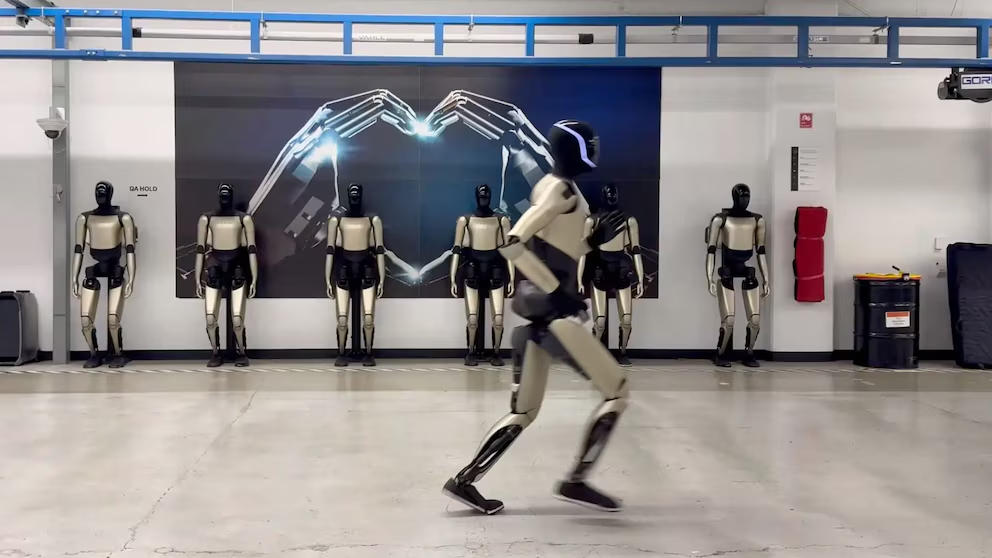
When machines designed for factories are reimagined for the home, the boundary between human routine and automated labor is being redrawn.
In 2027, Tesla intends to introduce Optimus, its humanoid robot, to the consumer market, marking a potential turning point in how society interacts with autonomous machines. The company behind electric vehicles and autonomous driving technologies has been developing the robot for several years, initially focusing on industrial and logistical functions. Now leadership has signaled a shift toward broader applications that could include household tasks, domestic assistance and support for everyday routines, reflecting an ambition to expand the company’s influence beyond transportation and into the core of daily life.
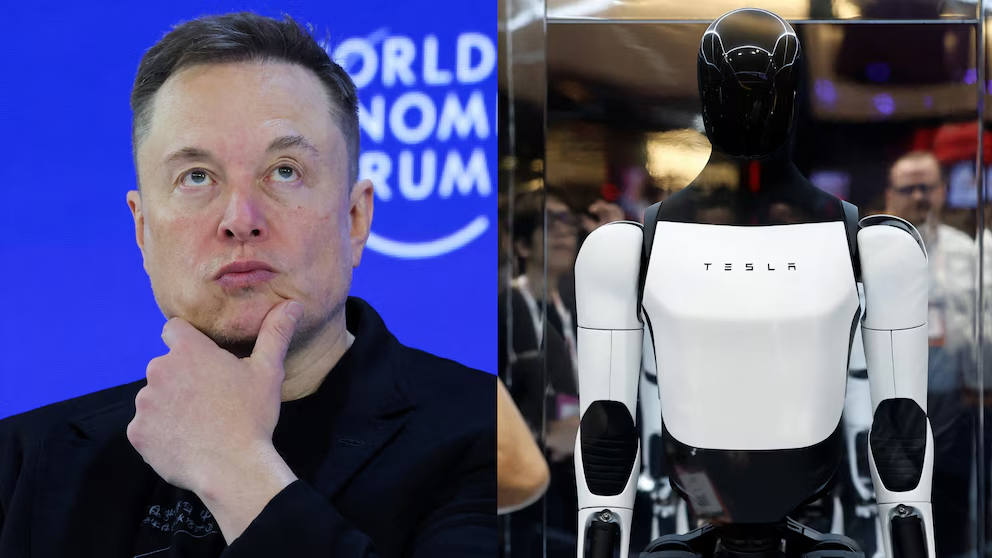
Optimus began as an experimental platform designed to navigate controlled environments inside manufacturing facilities. Early iterations focused on balance, mobility and the integration of hardware with artificial intelligence systems capable of perceiving and responding to dynamic conditions. These prototypes served as testbeds for foundational capabilities, such as maintaining equilibrium, interpreting sensor data in real time and executing coordinated physical actions. The evolution from these controlled settings to open human environments is nontrivial, requiring sophisticated context awareness, safety assurances and adaptability to unpredictable situations.
Making a humanoid robot useful in a household environment requires solving a series of challenges that extend well beyond pure mechanics. Unlike industrial floors where tasks are repetitive and predictable, homes are filled with variability: furniture of different designs, fragile objects within reach, surfaces that vary in texture and incline, and people whose behavior cannot be fully anticipated. Achieving reliable autonomy in such a context necessitates advanced perception systems, machine learning models capable of generalizing across contexts, and robust safeguards to prevent harm. These technological hurdles are at the heart of why consumer-ready humanoid robots have remained elusive despite decades of research.
Tesla’s timeline also reflects broader strategic and financial calculations. Optimus is a core element of long term compensation plans and growth projections approved by shareholders. This linkage of executive incentives to robot commercialization underscores the importance of the project within the company’s future roadmap. It signals that Tesla’s leadership views humanoid robotics not as a speculative sideline but as a pillar of its long term business strategy, potentially contributing to new revenue streams and technological prestige.
Critical observers, however, note that ambitious projected timelines must be tempered by the realities of production scaling. Transitioning from prototype to mass market involves establishing supply chains, refining manufacturing processes and creating quality control systems that ensure consistent performance across units. These considerations are particularly acute for robotics intended to operate in human spaces where failures can have physical consequences. Tesla’s leadership has candidly acknowledged that initial production rates may be limited as the company works to overcome these barriers and ensure that safety and reliability meet acceptable standards.
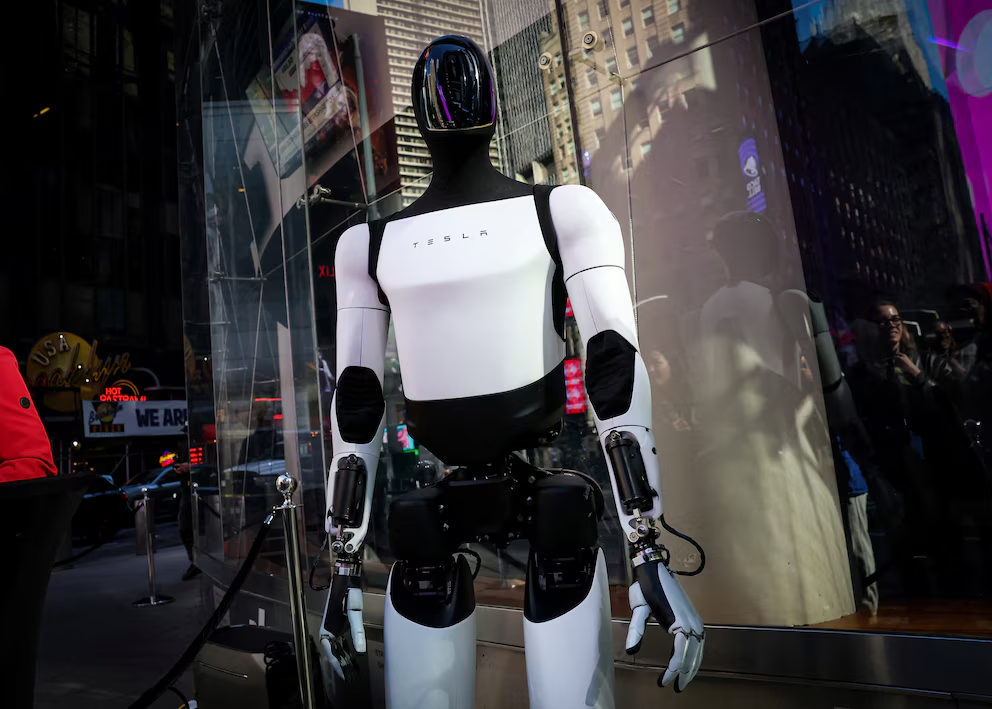
Beyond technical and production challenges, the introduction of humanoid robots into homes raises complex questions about labor dynamics and societal adaptation. If machines like Optimus become capable of performing routine domestic activities, the implications extend into the realms of caregiving, elder support and household labor distribution. Such technology could alter how families organize their time, how care for dependents is provided, and how everyday chores are assigned or outsourced. In societies where the division of labor within homes is deeply tied to cultural norms, the arrival of robotic assistants may accelerate conversations about the nature of work, leisure and human purpose.
Economic effects are also subject to scrutiny. Widespread adoption of humanoid robots could reshape labor markets, particularly in sectors where routine physical tasks are predominant. Supporters argue that automation can free humans from repetitive and physically demanding work, enabling greater focus on creative, intellectual and interpersonal pursuits. Critics counter that displacing workers without robust social safety nets or retraining programs could exacerbate inequality and strain existing employment structures. How economies adapt to these shifts will likely influence public acceptance and regulatory responses.
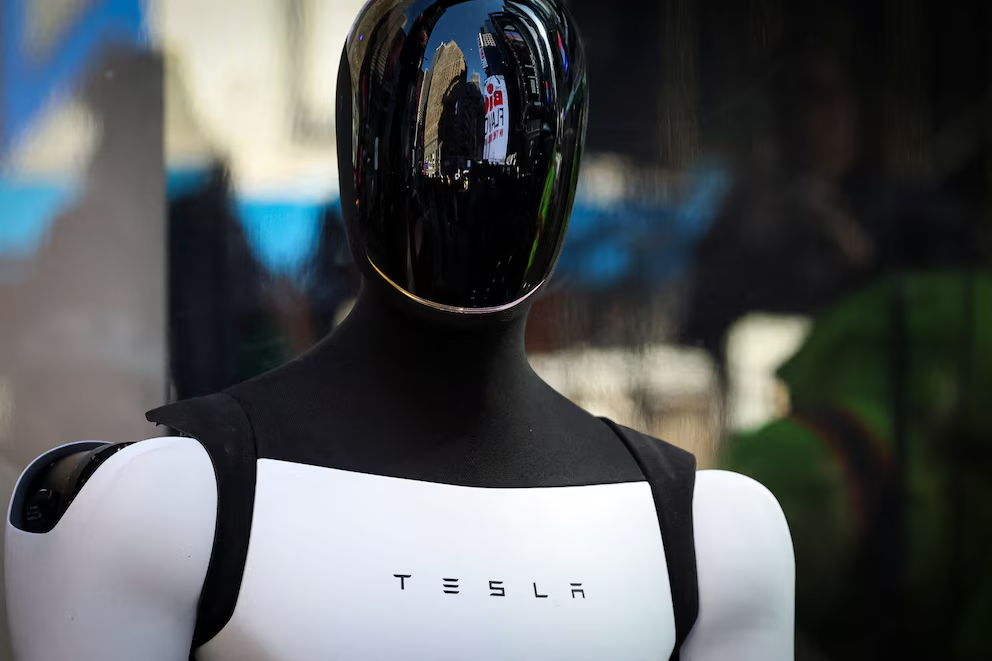
Safety and ethical guidelines represent another dimension of the challenge. Ensuring that robots operate without causing harm demands rigorous standards, transparent oversight mechanisms and clear accountability frameworks. Interactions between autonomous machines and vulnerable populations, such as children or the elderly, heighten the stakes. Public discourse around these issues is evolving in parallel with technological development, as stakeholders seek to balance innovation with protections that preserve individual well-being.
The competitive landscape in consumer robotics remains active, with other firms advancing platforms that incorporate varying levels of autonomy and specialization. This broader trend illustrates how artificial intelligence and robotics are converging to address persistent challenges in labor substitution, quality of life enhancements and accessibility. Success in this field will hinge not only on technical performance but also on cost, reliability, integration with existing digital ecosystems and public trust.
Tesla’s effort to commercialize Optimus by 2027 encapsulates the tension between visionary technological ambition and the pragmatic realities of engineering, production and social adaptation. Whether the company achieves this target will depend on its ability to translate experimental robotics research into machines that are safe, useful and economically viable in everyday life. The path from concept to consumer remains demanding, yet the implications of success could redefine how routine tasks are distributed between humans and machines.
Behind every data point, there is an intention. Behind every silence, a structure.
Detrás de cada dato, hay una intención. Detrás de cada silencio, una estructura.