

 Phoenix 24
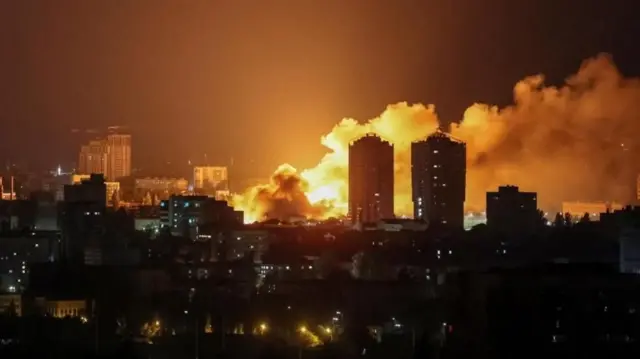
A single night revealed how the war has shifted from territorial advances to systemic exhaustion through mass aerial pressure.
Ukraine, January 2026. Russia launched one of its largest coordinated aerial assaults of the year, deploying more than four hundred drones and missiles against multiple Ukrainian cities in a single operational window. The attacks targeted Kyiv, Kharkiv, Dnipro and other major urban centers, overwhelming air defense systems through volume rather than precision. Explosions were reported across residential districts and near critical infrastructure, producing widespread power outages during winter conditions. Ukrainian authorities described the strike pattern as deliberately saturating, designed to exhaust interception capacity rather than achieve isolated battlefield gains. The scale and simultaneity of the attack marked a clear escalation in the air campaign. Civilian areas once again bore the immediate consequences of strategic signaling conducted from afar.
The assault reflected a broader shift in Russian military doctrine toward sustained pressure on urban resilience rather than rapid territorial movement. By combining drones and missiles in layered waves, Moscow sought to probe vulnerabilities in air defense timing and logistics. Ukrainian forces reported intercepting a significant portion of the incoming weapons, yet acknowledged that the sheer volume allowed multiple impacts to reach their targets. Energy facilities, transportation nodes and residential structures were among the affected sites, reinforcing the perception that infrastructure disruption remains a central objective. The timing of the strikes during freezing temperatures magnified their humanitarian impact. The operation underscored how air power has become a primary tool for shaping civilian endurance rather than front line dynamics.
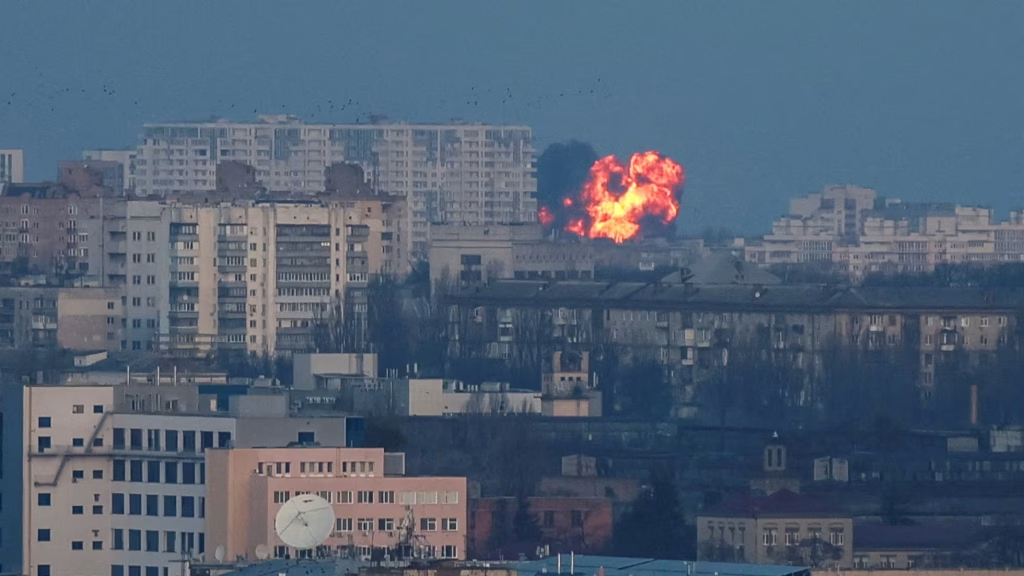
For Ukraine, the attacks intensified an already fragile balance between defense capacity and societal strain. Emergency services were deployed across several regions to manage fires, evacuations and infrastructure failures, while millions experienced temporary losses of electricity and heating. Authorities framed the response as evidence of institutional resilience, emphasizing continuity of governance and rapid repairs where possible. At the same time, officials acknowledged that repeated mass attacks place cumulative stress on both technical systems and public morale. The psychological dimension of constant aerial alerts has become inseparable from the physical damage inflicted. Each large scale strike reinforces a climate of uncertainty that extends well beyond the immediate blast zones.
Internationally, the assault drew renewed attention to the evolving nature of the conflict and its implications for regional security. Western governments condemned the attacks as disproportionate and destabilizing, reiterating support for Ukraine’s right to self defense. Analysts noted that the use of hundreds of low cost drones alongside higher value missiles reflects a strategy aimed at cost asymmetry, forcing defenders to expend expensive interceptors repeatedly. This dynamic has implications not only for Ukraine, but for future conflicts where saturation tactics could redefine air defense economics. The strike therefore resonated beyond Ukraine’s borders as a case study in modern warfare adaptation. It also revived debates about long term sustainability of defensive assistance.
From a strategic perspective, the attack suggested that Moscow is prioritizing attrition over breakthrough. Rather than seeking decisive battlefield victories, the emphasis appears to be on degrading infrastructure, exhausting defenses and signaling endurance to both domestic and international audiences. The persistence of such operations indicates a calculation that prolonged pressure may yield political leverage even without territorial gains. Ukraine, in turn, has framed its resistance as a test of collective resolve, linking its air defense needs to broader European security. The confrontation has thus evolved into a contest of endurance measured in months rather than maneuvers. Airspace has become one of the war’s most contested and consequential domains.
The humanitarian dimension remains central to the impact of these attacks. Civilian casualties, displacement and service disruptions continue to define daily life in targeted cities, reinforcing the asymmetry between military objectives and civilian suffering. International organizations have warned that repeated strikes on infrastructure risk compounding humanitarian challenges as winter conditions persist. Local communities have adapted through shelters and contingency measures, yet each new wave of attacks tests these coping mechanisms. The normalization of mass aerial assaults risks desensitizing external observers while deepening internal fatigue. This tension between visibility and endurance shapes the conflict’s narrative trajectory.
As the war enters another year, the latest barrage highlights a grim reality: escalation no longer requires territorial movement to be effective. Control over airspace, energy systems and civilian psychology now functions as a strategic lever equal to ground operations. Ukraine’s ability to absorb and respond to such attacks will influence not only its own trajectory, but broader assessments of modern defensive warfare. The international response to sustained saturation tactics will shape future deterrence models. What unfolded over Ukraine’s cities was not merely an attack, but a signal about how this war is being fought and how it may persist. The night’s explosions echoed a deeper structural shift in twenty first century conflict.
Behind every data point, there is an intention. Behind every silence, there is a structure.