

 Phoenix 24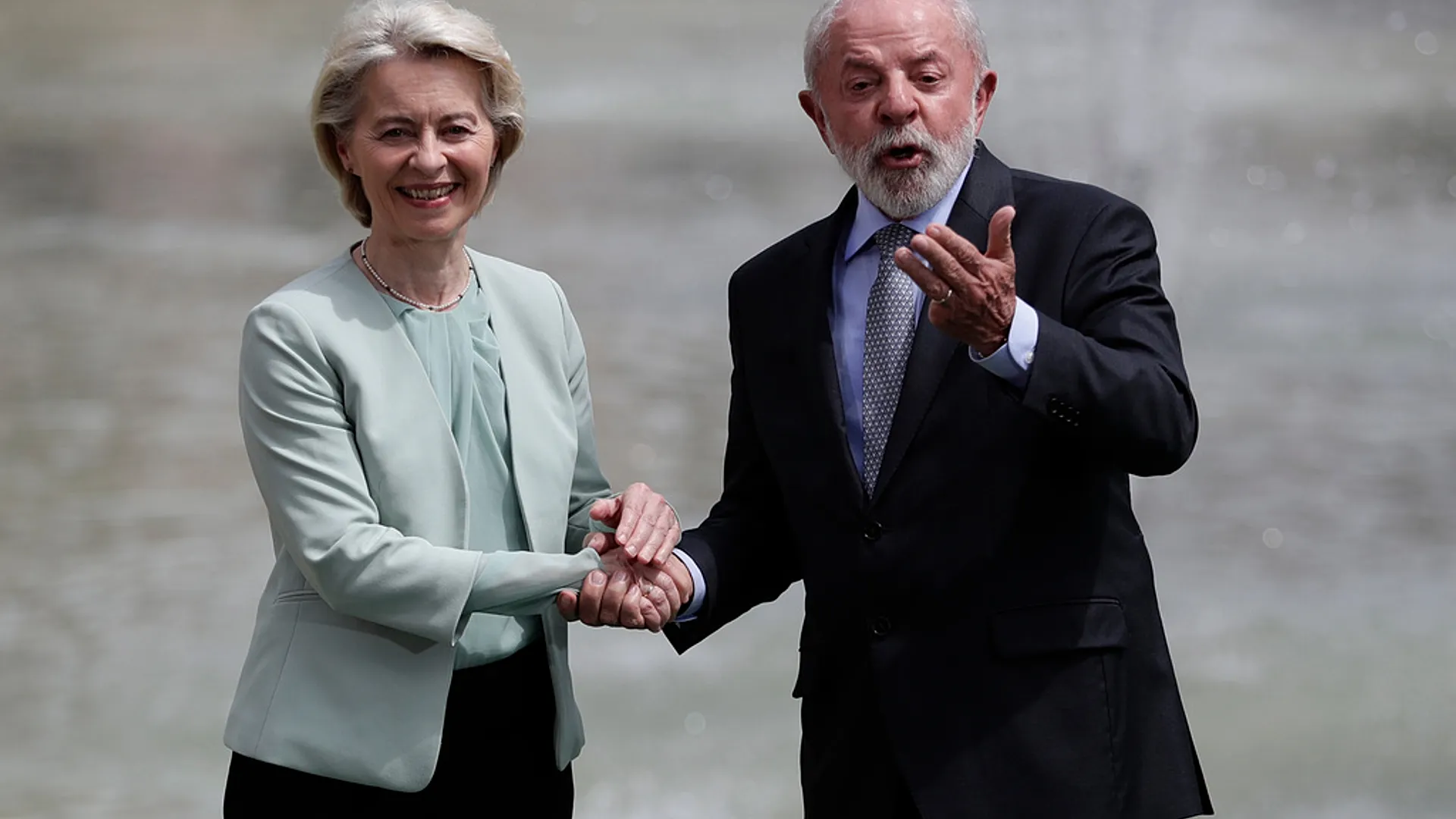
When patience becomes policy, new markets and alliances begin to move.
Rio de Janeiro, January 2026.
Brazilian President Luiz Inacio Lula da Silva received European Commission President Ursula von der Leyen in Rio de Janeiro to highlight what both described as a historic trade agreement between the European Union and the Mercosur bloc. After more than two decades of negotiations, the accord is being presented as a turning point in relations between Europe and South America and as one of the largest trade frameworks ever built between two regions.
Lula called the agreement the result of persistence and political will. He stressed that for years the project survived changes of government, economic crises and ideological shifts, yet never disappeared from the diplomatic agenda. For Brazil, he said, the deal represents recognition of South America as a strategic partner and not merely as a supplier of raw materials. He framed the accord as a bridge between continents at a time when many countries are turning inward.
Von der Leyen echoed that tone. She described the agreement as a signal that cooperation can still overcome protectionism. In her view, the pact sends a message that open, rules based trade remains possible even in a world marked by geopolitical tension, war and economic fragmentation. She praised Brazil’s role in pushing the final stage of negotiations and credited Lula with giving political energy to a process that often seemed stalled.
The agreement links the European Union with Argentina, Brazil, Paraguay and Uruguay in a vast economic space that includes hundreds of millions of consumers. Once fully implemented, most tariffs on goods traded between the two blocs will be gradually reduced or eliminated. The goal is to make it easier for European industrial products, machinery and services to enter South American markets, while giving Mercosur countries broader access for agricultural and industrial exports to Europe.
Supporters argue that the pact can boost investment, create jobs and modernize supply chains. European companies see new opportunities in energy, infrastructure, technology and services. South American producers expect better access for meat, grains, sugar, ethanol and manufactured goods. For many governments, the agreement is also strategic, allowing both regions to reduce dependence on a small number of global partners.
Yet the celebration is not free of tension. In several European countries, farmers’ organizations fear that cheaper agricultural imports could hurt local producers. Environmental groups warn that increased exports from South America could accelerate deforestation if not properly controlled. To respond to those concerns, negotiators included chapters on labor rights, environmental standards and sustainable development, although critics argue that enforcement will be the real test.
Ratification will be the next major battle. The agreement must be approved by the European Parliament and by national parliaments in Mercosur countries. That process could take months or even years, and political resistance in some states remains strong. Governments will have to convince skeptical sectors that the long term benefits outweigh short term disruptions.
Lula chose to praise the agreement in Brazil rather than attend the formal signing abroad, a decision that reflects the complex domestic context. His government faces economic challenges, social demands and political divisions, and he has to balance international ambition with internal priorities. Still, by hosting von der Leyen and placing the agreement at the center of the meeting, he sent a clear signal that Brazil sees this pact as a cornerstone of its foreign and economic policy.
For the European Union, the agreement is also about strategy. Europe is seeking to diversify its trade relations in a world where dependence on a few partners has become a risk. Strengthening ties with South America allows Brussels to secure access to food, raw materials and growing markets while projecting its model of trade rules, standards and values.
Observers note that the deal is as political as it is economic. It reflects a shared interest in multilateralism at a time when power politics and unilateral measures are becoming more common. For Lula, who often speaks of the Global South’s role in reshaping world order, the agreement is part of a broader vision in which emerging economies gain more voice. For von der Leyen, it is a way to show that Europe can still lead through cooperation.
Public opinion, however, will shape the future of the pact. In Europe, protests by farmers and environmental activists show that economic logic alone will not be enough. In South America, concerns remain about whether small producers and local industries will really benefit or whether gains will concentrate in large corporations.
As the ratification process begins, governments will have to explain the agreement in concrete terms. What will it change for workers, farmers, businesses and consumers. How will environmental commitments be enforced. Who will win and who will need support to adapt. Those answers will determine whether the pact becomes a symbol of shared prosperity or a source of lasting controversy.
For now, the image from Rio is one of optimism. Lula and von der Leyen presented the agreement not as a technical document but as a political statement. After decades of talks, they framed it as proof that long negotiations can still end in consensus.
In a world increasingly defined by rivalry, the EU Mercosur agreement is being sold as a different story: one where dialogue, compromise and time can still build something larger than borders.
Phoenix24: journalism without borders.