

 Phoenix 24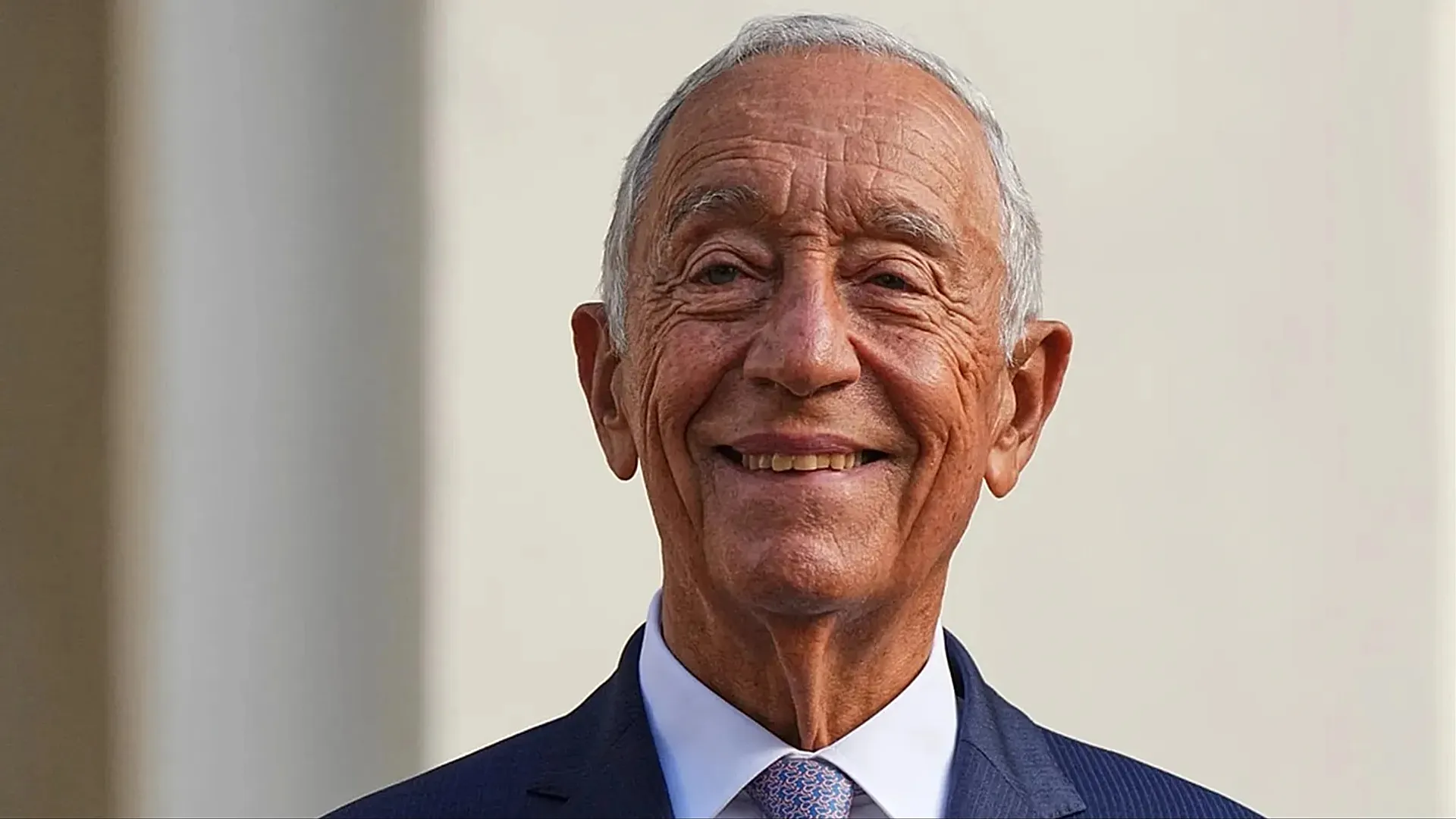
When power chooses closeness, politics becomes a daily encounter.
Lisbon, January 2026.
Marcelo Rebelo de Sousa is closing a ten-year chapter as President of Portugal, ending a second and final term that redefined how the office is seen, felt and lived. From 2016 to 2026, his presidency turned the Palácio de Belém into a stage of constant movement, emotion and public presence, shaping a style that blended constitutional authority with personal visibility.
Unlike predecessors who governed from a distance, Rebelo de Sousa made proximity his signature. He hugged strangers, walked through crowds, attended local events without heavy protocol and spoke directly to citizens in moments of celebration and crisis. For many Portuguese, he was not just the head of state but a familiar figure who appeared wherever the country seemed to need reassurance.
His decade in office unfolded through political turbulence. He worked with two prime ministers, oversaw multiple parliamentary elections and used his constitutional powers at critical moments. On more than one occasion, he dissolved parliament to unlock political deadlock, arguing that stability sometimes required resetting the political board. Each intervention reinforced the idea of a president who did not merely observe, but acted.
Rebelo de Sousa’s background as a law professor and political commentator shaped his instincts. Before entering Belém, he was known for decades of media presence, explaining politics to the public with clarity and humor. That communicative skill followed him into office. He spoke often, and he spoke simply, making the presidency feel less distant and more conversational.
Crises defined much of his mandate. He guided the country through devastating forest fires, economic strain, and the shock of a global pandemic. During the worst moments, he was often seen on the ground, visiting victims, listening to families and standing alongside emergency workers. Supporters saw in that presence a form of moral leadership: a president who shared pain rather than managing it from afar.
Not all reactions were admiring. Critics argued that his emotional style blurred the line between symbolism and substance. Some accused him of seeking constant visibility, turning the presidency into a permanent performance. Others felt that his closeness risked weakening the authority of the institution by making it too informal. Yet even critics admitted that he had reshaped expectations of what a Portuguese president looks like in public life.
Politically, his role was complex. Portugal’s system gives the president limited executive power but strong influence in moments of crisis. Rebelo de Sousa used that influence carefully, often positioning himself as a mediator between parties, sometimes as a referee when conflicts threatened governance. His decisions to dissolve parliament were controversial, but always framed as necessary to restore democratic clarity.
His relationship with governments varied. At times cooperative, at times tense, it reflected his belief that the presidency should not be passive. He insisted that the head of state must be present not only in ceremonies but in political turning points. That belief shaped his legacy more than any single decision.
As his term ends, Portugal prepares to choose a new president under the rule that forbids a third consecutive mandate. The transition closes a cycle that many describe as unusually personal in tone. Future presidents will inevitably be compared to him, not just in policy choices but in gestures, language and public warmth.
For younger generations, Rebelo de Sousa is the only president they have known. To them, the image of a head of state hugging citizens, appearing unexpectedly in public spaces and speaking in accessible language is not innovation, but normality. That may be his deepest impact: changing the cultural memory of what presidential authority feels like.
Beyond style, his decade also reflected a broader European moment, where institutions struggle to maintain trust and leaders seek new ways to connect. In that context, his presidency can be read as an experiment in emotional legitimacy: ruling not only through law and procedure, but through visible empathy.
As he prepares to leave Belém, assessments of his legacy remain divided. Some will remember him as the president who brought politics closer to everyday life. Others will recall controversies, political interventions and a style that sometimes overshadowed substance. But few deny that his decade transformed the symbolic language of power in Portugal.
Rebelo de Sousa does not leave behind a single doctrine or program. He leaves an image: a president in motion, always among people, always present in moments when the country needed to feel seen. In a world where trust in institutions is fragile, he tried to build authority not from distance, but from closeness.
Whether that model will endure depends on those who follow him. But his ten years at Belém have already become a reference point, a reminder that leadership is not only what is decided in offices, but also what is felt in the street, in a gesture, in a shared moment between power and people.