

 Phoenix 24
The new feature seeks to make customer interactions more conversational and personalized.
Mountain View, January 2026. Google announced a forthcoming artificial intelligence capability that will allow users to have direct, conversational chats with businesses they care about. The goal is to create a more natural and efficient way for customers to get information about products, services and offers by engaging in back-and-forth dialogue with AI systems that represent those brands.
Under this initiative, Google’s AI will act as an intermediary between users and businesses. Instead of navigating a series of menus, browsing lengthy FAQs or searching scattered support pages, people will be able to type or speak questions directly and receive conversational answers that draw on company data. For example, a user might ask specific questions about product features, shipping timelines or membership perks and receive responses that are tailored to that particular brand’s policies and offerings.
According to Google, the service will integrate with existing business profiles and tools that companies already use to manage their online presence. Partner businesses will be able to provide structured data that the AI can interpret, such as store hours, inventory levels, appointment availability and service details. This data will help the AI generate accurate and up-to-date responses on behalf of the business, while offering a conversational interface that feels more human than traditional automated systems.
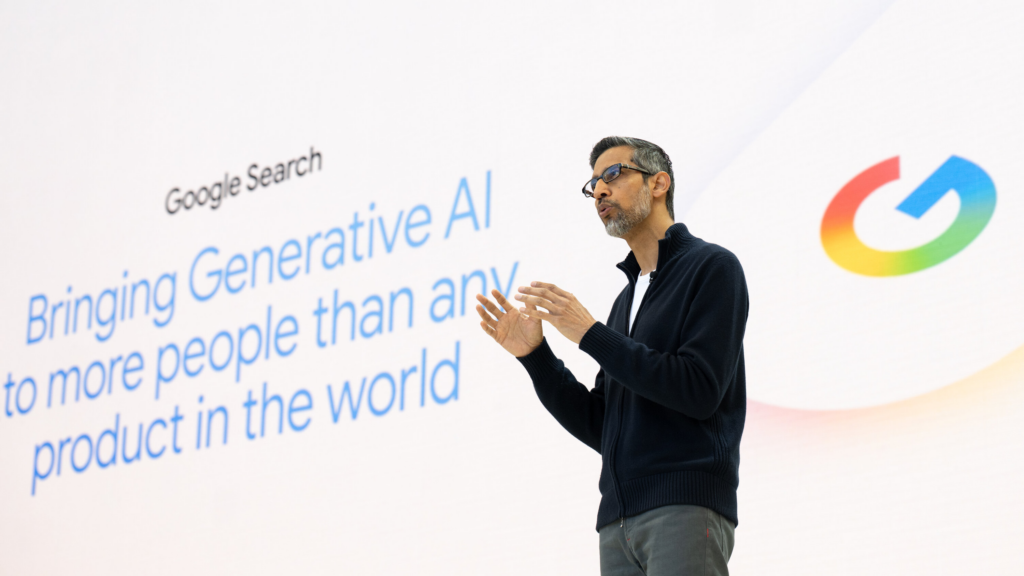
This new application builds on Google’s recent advances in large-scale language models and natural language understanding. Over the past few years, the company has invested heavily in AI research and development, creating systems capable of summarizing complex information, translating text across languages and generating content based on user prompts. The extension into business dialogues represents a further step in making AI tools more integrated into everyday digital experiences.
One of the anticipated benefits for users is efficiency. For many online shoppers and customers, finding precise answers can require navigating multiple pages or waiting for human support. With AI chat, information is designed to be delivered quickly and in context. Users may also receive personalized recommendations based on past interactions, preferences or stated needs. Google asserts that the system will respect privacy policies and user consent, ensuring that personal data is handled according to existing standards.
From the perspective of businesses, the conversational AI offers a new channel for engagement. Smaller companies in particular may find value in being able to respond to customer queries around the clock without the need for extensive customer service staff. Brands can configure the AI responses to reflect their tone, values and product information, creating a consistent presence across interactions.
Industry analysts have pointed out that this development is part of a broader trend in which AI is being deployed to streamline customer experience functions. Retailers, service providers and hospitality brands are increasingly experimenting with automated assistants that can handle routine inquiries, freeing human employees to focus on more complex tasks. In some cases, early adopters have reported reductions in response times and improvements in customer satisfaction metrics.

However, experts also warn of challenges. Ensuring the accuracy of AI-generated responses requires rigorous data integration and constant updates to business information. If the AI relies on outdated or incorrect data, customers could receive misleading answers. There are also questions about how disputes will be handled if users believe the AI provided inaccurate or harmful information. Google has indicated that businesses will retain control over the content the AI uses for responses and that safeguards will be put in place to prevent the spread of misinformation.
Privacy advocates note that conversational AI systems collect and process large amounts of interaction data, even when not tied to personal identity. They emphasize that companies must be transparent about data use, retention policies and opt-in options for users who may not want their interactions used for model improvement. Google has reiterated its commitment to privacy standards and said that user consent will guide how conversation data is stored and utilized.
The rollout timeline for this feature was not immediately announced, but Google said that a pilot phase with select business partners will begin in the coming months. Early participants may include brands that already use advanced AI for customer support or have extensive digital customer service infrastructure.
As AI continues to become more embedded in everyday applications, features that allow conversational interaction with businesses may soon become a common expectation rather than a novelty. For Google, this development aligns with its broader strategy of integrating AI across search, productivity tools and digital services.
Truth is structure, not noise.
La verdad es estructura, no ruido.