

 Phoenix 24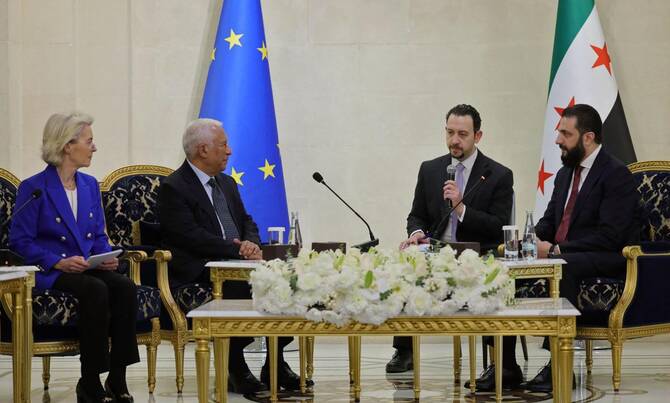
Europe’s commitment to Syria reflects a strategic pivot toward sustained humanitarian and political engagement.
Brussels, January 2026.
European Union leaders have reiterated a firm pledge to support the Syrian people and stabilize the war-torn country as part of a broader effort to restore social cohesion, deter further conflict spillover and reinforce international norms on humanitarian access and reconstruction. At the heart of this renewed engagement is a message delivered by the President of the European Commission, who stated that Europe will do whatever is feasible within international law, humanitarian principles and diplomatic channels to help address the profound crisis that has gripped Syria for more than a decade, seeking to balance humanitarian imperatives with geopolitical realities.
The Syrian conflict, which erupted amid the broader wave of Middle East upheavals, has drawn sustained attention from global and regional actors including the European Union, the United States and a range of Middle Eastern governments. A convergence of humanitarian crises, economic disruption and political fragmentation has left millions of Syrians displaced internally and across borders, with neighboring countries in the Levant and the wider Middle East bearing significant social and economic burdens. Europe’s stance, articulated through its multilateral engagement, underscores a commitment to alleviate human suffering while promoting conditions for durable peace and governance reform.
In her address, the Commission President emphasized that Europe’s approach is framed by a combination of direct humanitarian aid, diplomatic engagement and strategic coordination with international partners. This includes working with United Nations agencies to ensure that lifesaving assistance reaches vulnerable populations in areas that have been inaccessible for long periods due to security constraints and bureaucratic impediments. The statement reflects an acknowledgment of the complex interplay between humanitarian needs and political solutions, a balance that global institutions such as the United Nations and regional bodies have repeatedly stressed as essential to any sustainable approach in the Syrian context.
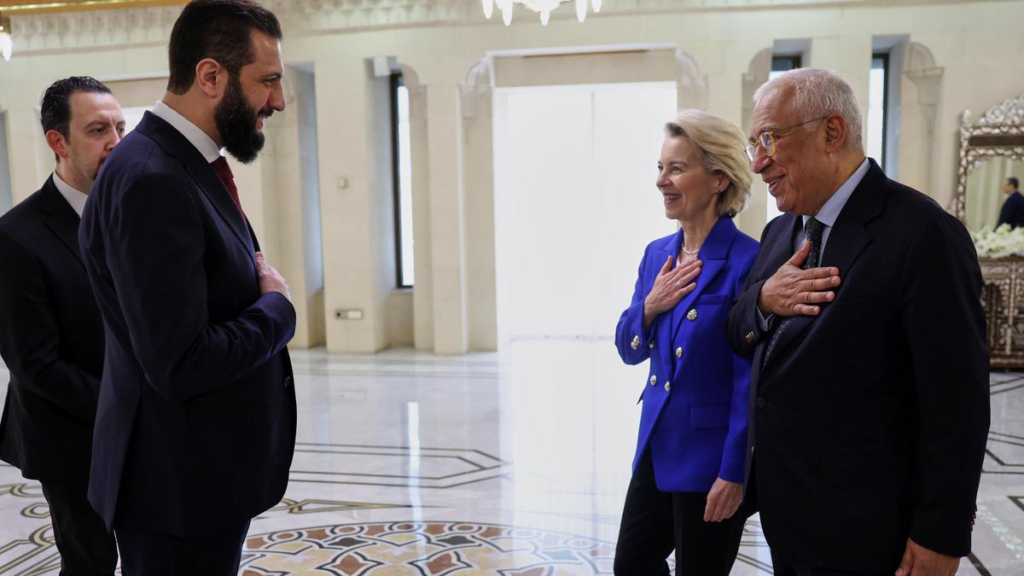
European involvement in Syria is not new, but the tone and scope of recent declarations suggest an effort to recalibrate engagement in the context of shifting dynamics. As Western capitals reassess their roles in the Middle East following major geopolitical shifts, including adjustments in U.S. posture and evolving alliances across Asia and the Gulf, the European Union is positioning itself as a consistent partner for reconstruction, stabilization and long-term recovery. This strategy aligns with longstanding EU policy emphasizing conflict-sensitive development, civilian protection and the strengthening of civil society structures where possible.
The humanitarian dimension remains a core focus. Europe has been among the largest donors of assistance to Syrian refugees and internally displaced persons, funding health services, education, food security, shelter and livelihood programs in host communities across the region. Collaboration with organizations specializing in crisis response from Africa to Asia underscores Europe’s integration of humanitarian principles with operational partnerships, a pattern seen in responses to crises in the Horn of Africa and South Asia where coordinated interregional support has been critical.
Diplomatically, European officials have engaged in dialogues with a spectrum of stakeholders, including regional powers whose interests intersect with Syria’s future stability. This includes coordination with counterparts from the Middle East, recognition of Russia’s role as a key interlocutor in Syrian affairs, and efforts to align discussions with broader international law frameworks that govern state sovereignty, human rights protections and post-conflict reconstruction norms. Navigating these relationships requires careful calibration, as each actor brings distinct priorities and historical ties to the Syrian theatre.
Challenges remain formidable. Persistent insecurity in parts of Syria, economic hardship exacerbated by sanctions, and the absence of a fully inclusive political process present barriers to progress. In addition, the displacement crisis continues to strain host nations in the region, complicating prospects for voluntary return and reintegration for refugees. International mediators have long acknowledged that without tangible improvements in governance and security, humanitarian gains may be fragile and susceptible to reversal.
Europe’s strategic vision, as articulated by its senior leadership, frames its support for Syria within an integrated model that seeks not only to deliver immediate relief but also to foster conditions conducive to longer-term reconciliation and institutional resilience. This approach draws on lessons from other complex humanitarian and post-conflict environments, where blended strategies of aid, diplomacy and local engagement have proven necessary to sustain progress.
The European Union’s role in Syria also speaks to its evolving identity as a global actor capable of bridging humanitarian priorities with geopolitical responsibilities. As crises in Yemen, Libya and Ukraine have demonstrated, the EU’s capacity to marshal collective resources and diplomatic capital is increasingly tested by multifaceted conflicts that defy simple solutions. In Syria’s case, the intertwining of human suffering with strategic competition among external powers underscores the delicate balancing act that European policy must maintain.
For Syrians themselves, the promise of continued European support offers a measure of hope, even as the path to peace and reconstruction remains uncertain. Humanitarian workers and civil society advocates within and outside Syria continue to urge sustained focus on basic needs, protection of civilians, accountability for violations and participatory processes that include diverse community voices. Europe’s engagement, if consistent and well-coordinated with regional and global partners, could contribute meaningfully to these ends.
Ultimately, the European Commission’s pledge reflects both a moral and strategic calculus: the necessity to respond to mass human suffering while asserting a constructive role in a region where stability has proven elusive and where the consequences of inaction can reverberate far beyond Syria’s borders.
Phoenix24: analysis that transcends power.
Phoenix24: analysis that transcends power.