

 Phoenix 24
Power rarely changes hands quietly, but it almost never does so without leaving a trail that reshapes the meaning of the event itself.
Caracas, January 2026.
In the days following the arrest of Nicolás Maduro by United States forces, Venezuelan authorities have fixed their narrative on a single figure: twenty four. That is the number of security agents the government says were killed during the military operation that led to the detention of the former head of state. The figure has been repeated across official statements, commemorations, and legal briefings, not as a marginal detail but as the central axis through which the episode is now being interpreted.
According to prosecutors in Caracas, the deaths occurred during coordinated actions against facilities and mobile units linked to presidential security. The operation, described by U.S. officials as precise and time bound, is portrayed domestically as abrupt and overwhelming. In this telling, the focus is not the legality of the arrest itself but the cost paid in lives by those tasked with defending the state. By elevating the casualty count, the Venezuelan government seeks to recast what Washington frames as law enforcement into what it defines as a military incursion.
Legal language has followed swiftly. The Public Prosecutor’s Office has indicated that it is examining the circumstances under international humanitarian law, leaving open the possibility of classifying the deaths as violations of the laws of war. While such claims face steep hurdles in international courts, their function is primarily diplomatic. They reposition Venezuela not as a collapsed regime undergoing judicial reckoning, but as a sovereign actor subjected to external force. The deaths become evidence in a broader argument about precedent rather than an isolated tragedy.
The narrative has not remained confined within Venezuela. Regional allies have echoed concerns about the operation’s scope, while governments in Europe have adopted a more cautious tone, calling for restraint and clarification without endorsing either side’s framing. Analysts linked to European security institutions have warned that the normalization of cross border arrests carried out by military units risks eroding already fragile norms surrounding sovereignty. From this perspective, the reported casualties intensify unease over how far counter narcotics or counterterrorism rationales can be stretched before they blur into regime intervention.
In the United States, officials have emphasized that the arrest followed longstanding indictments and was conducted to minimize civilian harm. Yet even sympathetic observers acknowledge that the emergence of confirmed deaths complicates that message. In Washington policy circles, comparisons are already being drawn to past interventions where tactical success generated strategic ambiguity. The question being asked quietly is whether the removal of one leader at such a cost strengthens or undermines the credibility of international law enforcement efforts.
Beyond the Atlantic, reactions in Asia and the Middle East have underscored the global resonance of the case. Commentators affiliated with Asian strategic institutes have noted that the incident may be cited by major powers as justification for future extraterritorial operations, particularly in regions where judicial mechanisms are weak or politicized. In parts of the Middle East, state aligned media have highlighted the Venezuelan casualties as proof that Western rhetoric about rules based order remains selectively applied.
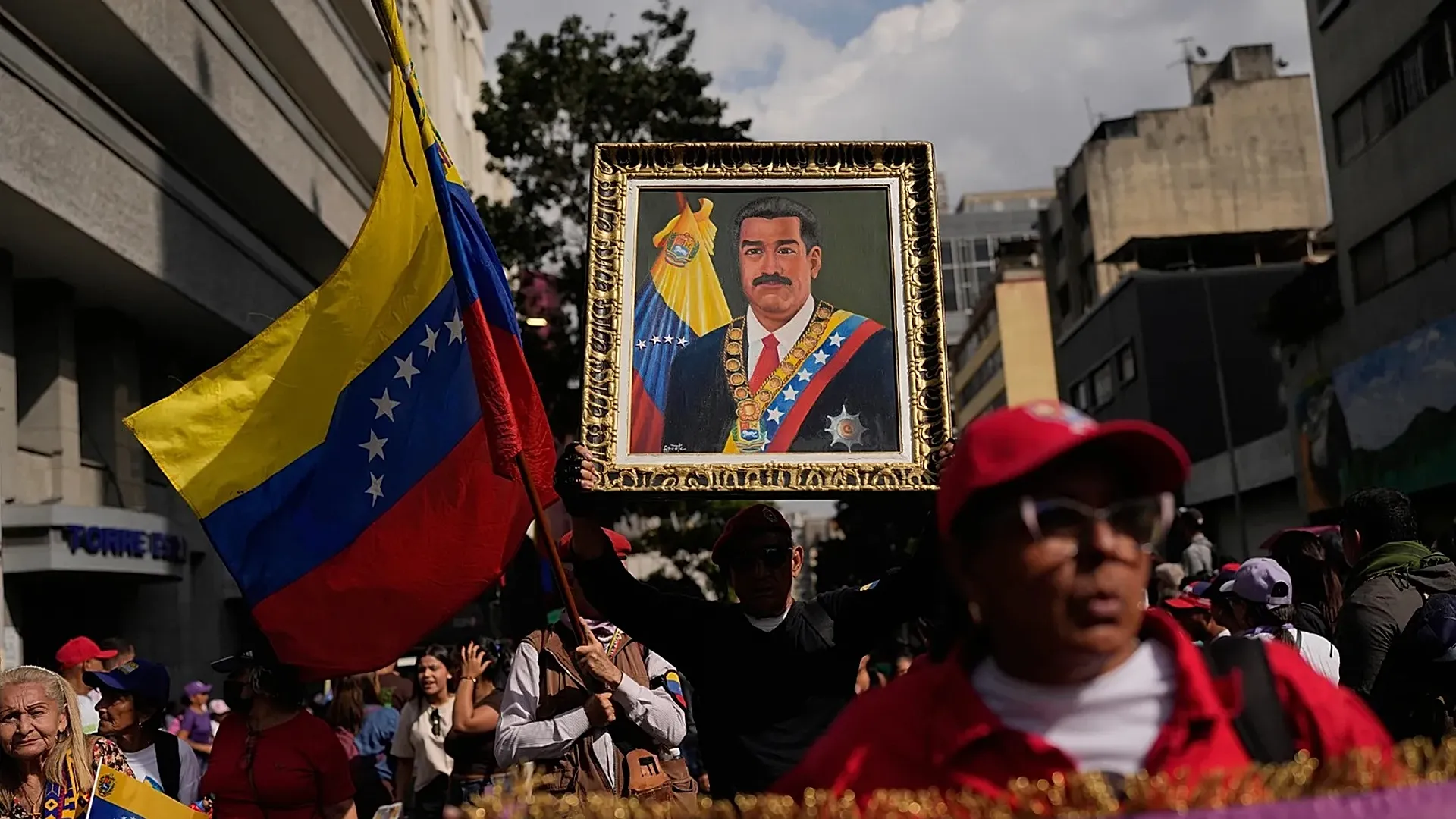
Inside Venezuela, the deaths are already shaping political psychology. State media have broadcast tributes to the fallen agents, embedding their images into a narrative of resistance and sacrifice. This framing serves multiple functions. It consolidates support among security forces unsettled by the sudden removal of their commander in chief, and it redirects public attention away from the failures of governance toward a shared sense of loss inflicted by an external actor. For a population exhausted by years of crisis, the emphasis on mourning offers a rare moment of collective clarity, even if that clarity is tightly curated.
Independent observers caution, however, that casualty figures in such contexts are inherently contested. Human rights groups have urged transparent verification, warning against the instrumentalization of the dead for political ends. They note that without independent access to sites and records, competing narratives will persist, each hardened by selective evidence. The deaths thus become less a matter of forensic accounting than of narrative control.
Strategically, the episode marks a shift in how power transitions may be contested in the Americas. The arrest of a sitting leader by foreign forces was already exceptional. The acknowledgment of fatalities transforms it into something more consequential. It introduces blood into what might otherwise have been framed as a technical act of justice, altering how the event will be remembered and invoked.
As investigations proceed and diplomatic exchanges multiply, the number twenty four will continue to circulate, challenged, defended, and reinterpreted. Whether it stands as a verified account or a disputed claim, its impact is already evident. The operation’s success or failure will not be measured solely by the presence of a former president in a courtroom, but by how these deaths recalibrate the boundaries between law, force, and legitimacy in an unsettled international order.
La verdad es estructura, no ruido. / Truth is structure, not noise.