

 Phoenix 24

When cultural leadership speaks against erasure, creative expression becomes a test of societal direction.
Mexico City, January 2026.
Filmmaker Guillermo del Toro issued a forceful critique of attitudes that devalue artistic expression, asserting that cultural contempt can precede broader forms of social closure and authoritarian impulse. Delivering this message during a public dialogue on the role of art in society, del Toro drew on historical memory and contemporary cultural debates to argue that dismissing creativity as frivolous or expendable undermines the foundations of pluralistic discourse.
Del Toro’s remarks were oriented not only at the arts community but at wider audiences grappling with questions of cultural priority and freedom of expression. He emphasized that when societies treat artistic practice as peripheral rather than integral, they risk normalizing narratives that marginalize dissent, restrict imagination and devalue the symbolic frameworks through which communities interpret shared experience. In his view, this pattern is not isolated to any single region, but reflects a broader global trend in which artistic voices become targets of criticism or disregard amid political polarization.

The director underscored that art functions as a repository of collective memory and a space for critique, experimentation and reflection. When creative spaces are weakened or sidelined, the cultural logic that supports critical inquiry is disrupted. Del Toro invoked examples from historical moments where cultural suppression preceded severe restrictions on intellectual life and personal liberties, framing these patterns as cautionary tales rather than abstract theory.
Responding to the notion that art is an optional luxury in challenging economic or social conditions, he insisted that cultural practice should be understood as foundational to human experience. Artistic creation, whether in film, literature, visual arts or performance, shapes how societies narrate their past, confront their contradictions and imagine alternative futures. For del Toro, marginalizing this process carries implications that extend well beyond aesthetic preference, touching upon human dignity and civic consciousness.
The filmmaker’s comments intersect with ongoing debates about funding priorities, educational curricula and public support for cultural institutions. In many countries, budgetary pressures and political rhetoric have placed the arts at risk of diminished investment, prompting cultural advocates to defend not only funding but the institutional autonomy that underpins artistic innovation. Del Toro’s intervention added a prominent voice to these conversations, urging that cultural literacy be recognised as a core component of civic health rather than a specialized interest.
International observers noted that the statement resonates with similar concerns raised by artists and intellectuals worldwide. In contexts where artistic expression has been constrained by legal, political or economic pressures, debates about cultural value often accompany broader struggles over public space, narrative authority and societal norms. In this dynamic, artists serve as interlocutors between private experience and collective understanding, challenging prevailing assumptions and expanding interpretive horizons.
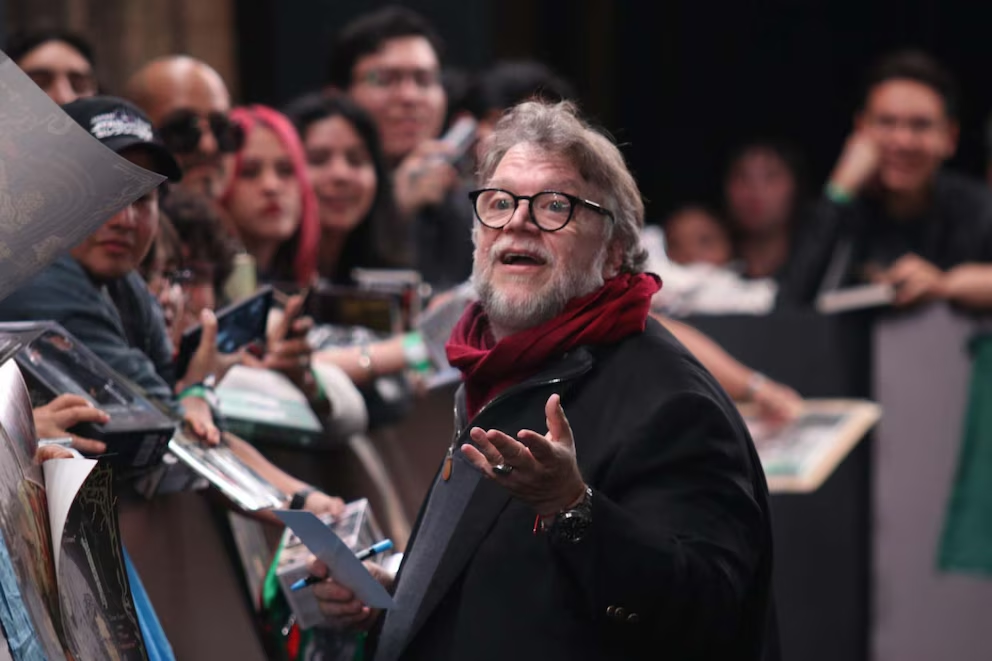
Del Toro’s intervention occurred at a moment when cultural production faces both unprecedented opportunity and profound uncertainty. Technological shifts, global connectivity and new modes of distribution have expanded the reach of creative work, even as economic models and institutional infrastructures struggle to adapt. Against this backdrop, affirming the social significance of art carries implications for how creativity is sustained, valued and defended in the public sphere.
By framing disdain for art as a precursor to authoritarian tendencies, del Toro positioned cultural engagement as a barometer of civic openness. His message suggests that defending artistic practice is not simply a matter of aesthetic preference, but a commitment to preserving the conditions for critical thought, diverse expression and reflective community life.
Phoenix24: clarity in the grey zone.
Phoenix24: claridad en la zona gris.