

 Phoenix 24
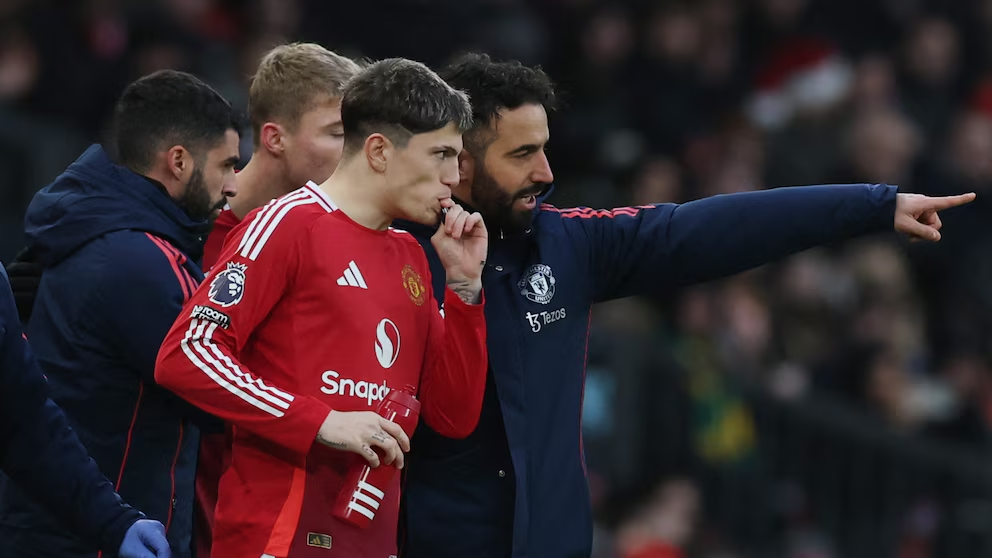
In modern football, reactions are often measured less by words than by timing.
Manchester, January 2026.
The dismissal of Rúben Amorim as manager of Manchester United triggered immediate attention across the football world, but one of the most closely scrutinized reactions came from a distance. Alejandro Garnacho, now playing away from Old Trafford after a turbulent final chapter at the club, responded not with a statement, but with silence punctuated by a single digital gesture.
Shortly after Amorim’s departure became public, Garnacho interacted with a social media post announcing the decision. The action was minimal, yet it resonated. For supporters and analysts, it symbolized the unresolved tension that marked the end of the relationship between player and coach, a conflict that had already reshaped both careers.
During Amorim’s tenure, Garnacho’s role at Manchester United steadily diminished. Tactical disagreements, disputes over discipline, and diverging visions of squad hierarchy reportedly pushed the winger to the margins. What began as a promising player-manager dynamic deteriorated into open friction, culminating in Garnacho’s exit from the club. His departure was interpreted by many as a casualty of internal power struggles rather than purely sporting considerations.
Amorim’s dismissal, meanwhile, reflected broader instability within Manchester United’s sporting project. Results failed to meet expectations, internal cohesion weakened, and confidence in long-term direction eroded. The decision to remove him underscored how managerial authority at elite clubs remains fragile when performance, politics, and personalities collide.
Garnacho’s restrained reaction avoided provocation. There was no public commentary, no retrospective criticism, and no attempt to rewrite the narrative. Yet the timing carried weight. In elite football culture, silence paired with precision often communicates more than explanation. The gesture was widely interpreted as closure, a subtle acknowledgment that the chapter had ended without reconciliation.
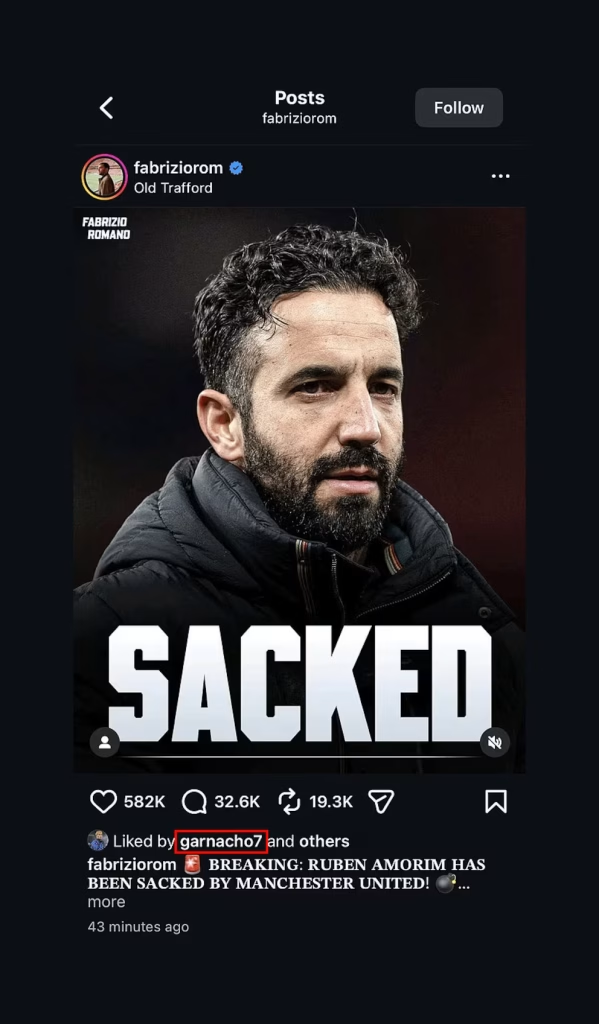
From a broader perspective, the episode illustrates how modern football power dynamics extend beyond the pitch. Players today navigate reputations, personal brands, and institutional politics under constant public scrutiny. Even minor digital actions are absorbed into larger narratives about loyalty, authority, and vindication.
For Manchester United, the situation serves as another reminder that managerial decisions reverberate long after contracts end. For Garnacho, it marked distance rather than triumph. No celebration, no commentary, only a quiet signal that the conflict no longer defines his present.
In contemporary football, reactions are rarely accidental. They are calibrated, contextual, and deeply symbolic.
Cada silencio habla.
Every silence speaks.