

 Phoenix 24
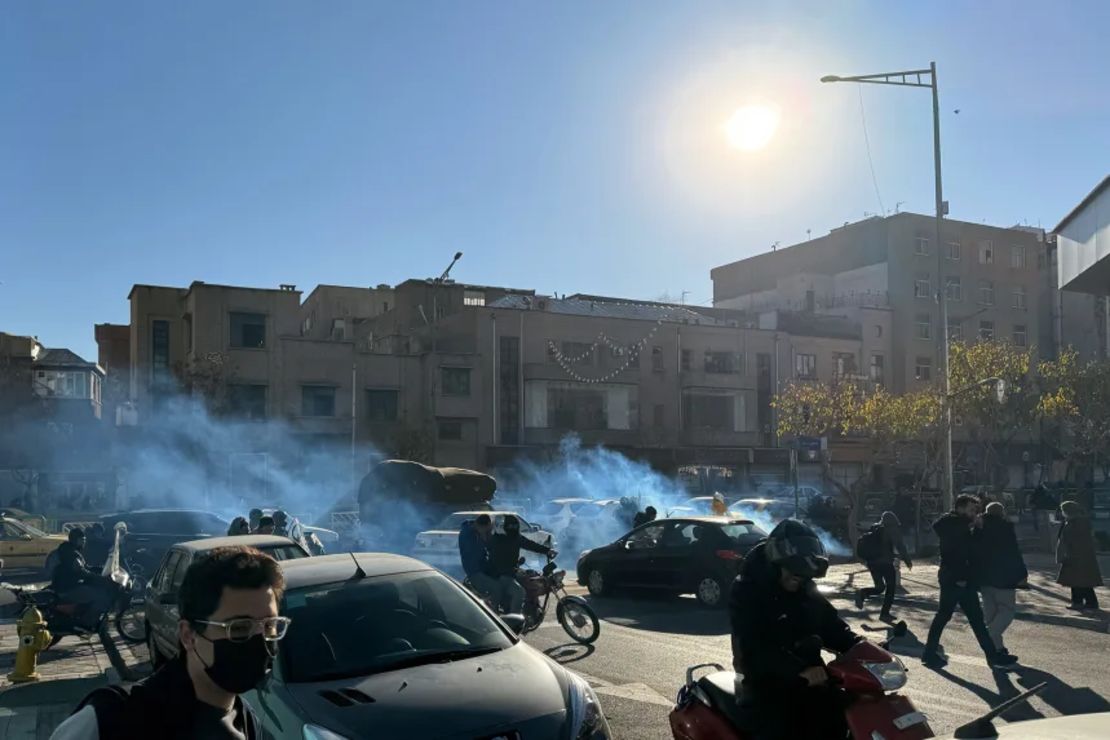
What started as an economic reaction in commercial districts evolved into a broader expression of social and political fatigue.
Tehran, Iran.
The protests that erupted across Iran at the end of 2025 began in the heart of the country’s commercial life, not in universities or political centres, but in marketplaces where economic pressure became impossible to absorb. The first demonstrations emerged in Tehran’s commercial districts, where merchants and shopkeepers closed their businesses in response to the rapid collapse of the national currency and the sharp rise in living costs that had eroded purchasing power across all social strata.
These initial actions were not organised as ideological protests but as economic resistance. Shop closures and gatherings outside market areas reflected frustration among small and medium business owners facing shrinking margins, volatile prices and declining consumer demand. For many merchants, the collapse of the rial translated directly into insolvency risk, making daily commerce unsustainable. What began as a defensive economic gesture quickly drew public attention.
The visibility of closed markets in Tehran had a catalytic effect. Commercial districts have long functioned as social barometers in Iran, and disruption in these areas carries symbolic and practical weight. As images and reports of merchant protests circulated, similar actions appeared in other parts of the capital and then in provincial cities. The pattern repeated itself as economic anxiety resonated far beyond the original participants.
Within days, students joined the demonstrations, particularly around university campuses in Tehran. Their participation marked a turning point. While merchants articulated grievances tied to prices, inflation and currency instability, students broadened the narrative to include governance, opportunity and future prospects. The convergence of economic actors and youth transformed the protests from sector specific discontent into a multi layered social phenomenon.
As the demonstrations spread to other urban centres, the composition of participants diversified. Workers, pensioners and ordinary residents joined gatherings that mixed economic demands with expressions of deeper dissatisfaction. The protests no longer centred exclusively on immediate material hardship but began to reflect accumulated frustration with prolonged uncertainty, declining living standards and limited avenues for political expression.
The state response followed a familiar pattern. Security forces were deployed around commercial areas, campuses and major intersections, attempting to contain gatherings before they could merge. While authorities framed the unrest as isolated disturbances, the speed with which protests appeared in multiple cities suggested a shared national mood rather than localised agitation.
Economic conditions played a decisive role in the protests’ rapid expansion. The currency collapse had immediate consequences for food prices, rent and basic services, affecting households regardless of political alignment. Unlike previous protest waves driven by specific incidents, this unrest was anchored in daily survival pressures. Inflation was not abstract. It was experienced at the market stall, the pharmacy and the household budget.
As protests continued, slogans and chants evolved. Economic language remained central, but political undertones became more pronounced. The shift reflected a common dynamic in periods of economic crisis, where material hardship lowers the threshold for broader dissent. What begins as a protest against prices often becomes a protest against systems perceived as unresponsive.
The geographic spread of the protests followed economic logic rather than organisational hierarchy. Cities with strong commercial activity and high exposure to price volatility were among the first to see demonstrations. This pattern reinforced the idea that the unrest was not centrally coordinated but socially synchronized, driven by shared pressures rather than formal leadership.
The origins of the protests in Tehran’s commercial districts matter because they reveal the nature of the discontent. These were not symbolic marches or isolated political rallies. They were disruptions of everyday economic life by actors whose livelihoods depend on stability. When such groups withdraw participation from the economic system, the signal is structural rather than episodic.
By the time universities and residential neighbourhoods became active, the protests had already crossed a psychological threshold. They were no longer about a single policy failure but about cumulative erosion of economic security and future expectations. The spread was less the result of mobilisation than recognition, as different groups saw their own grievances reflected in the initial actions.
The trajectory of these protests illustrates how economic stress can transform into systemic pressure. The spark came from merchants responding to immediate financial threat, but the fuel was a broader social exhaustion that had been building over time. Once activated, that pressure moved quickly across social and geographic boundaries.
Understanding where the protests began helps explain why they spread. They emerged not from ideological margins but from the economic core of urban life. That origin made them harder to dismiss and more difficult to contain, revealing a fault line that runs through daily experience rather than political abstraction.
Detrás de cada dato, hay una intención. Detrás de cada silencio, una estructura.
Behind every data point, there is an intention. Behind every silence, a structure.