

 Phoenix 24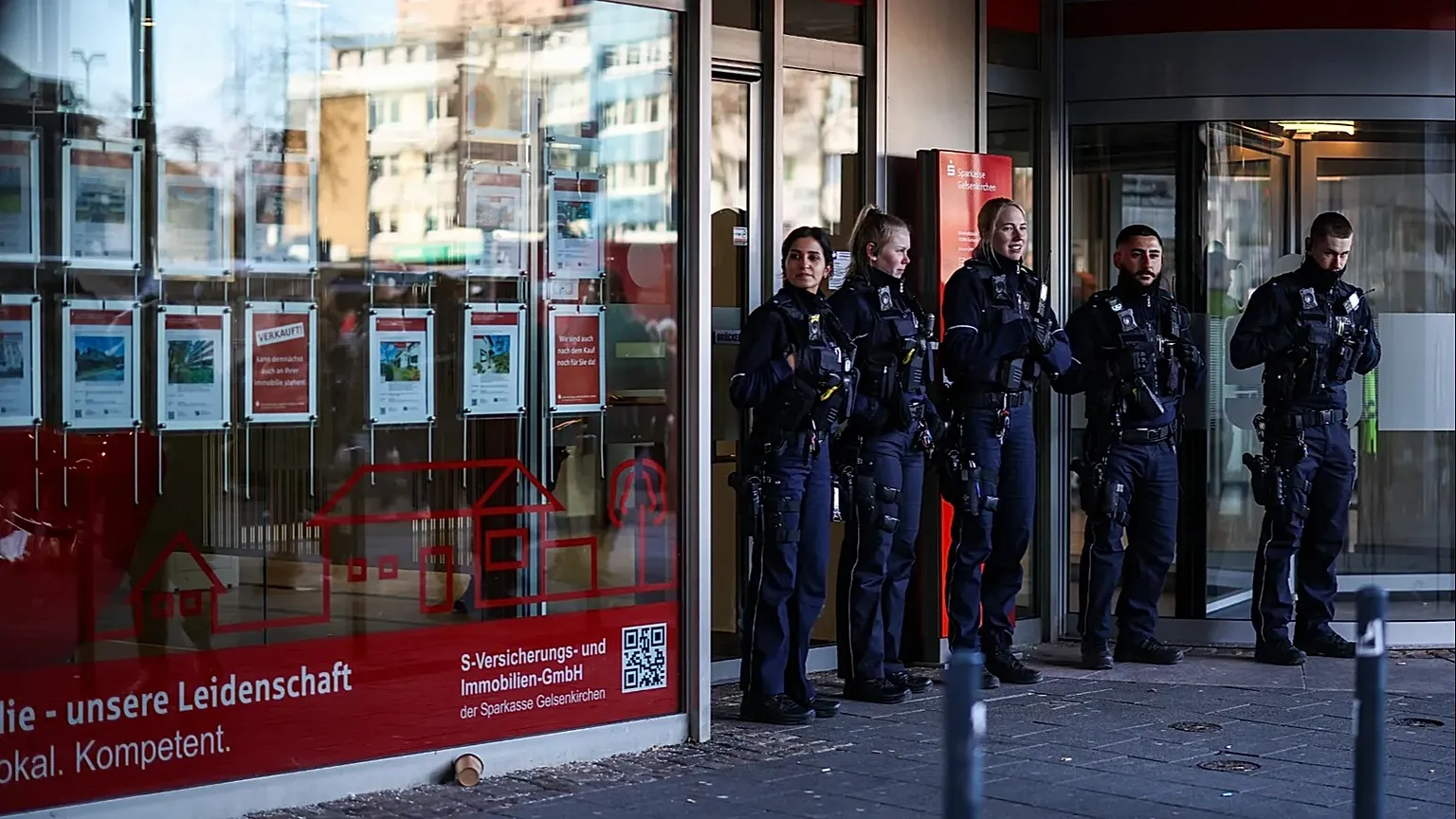
The operation unfolded without urgency, without violence and almost without witnesses.
Gelsenkirchen, Germany.
In the early hours following the Christmas holiday, a group of unidentified perpetrators carried out one of the most significant bank robberies in recent German history, breaching the vault of a local savings bank branch and escaping with assets valued at up to ninety million euros. The theft, executed during a period of minimal activity, was discovered only after emergency services were alerted to smoke inside the building, long after the perpetrators had vanished.
Investigators believe the robbery was the result of extensive preparation rather than opportunistic crime. The perpetrators gained access to the bank’s lower levels and used heavy drilling equipment to penetrate reinforced concrete walls, reaching the vault without triggering immediate alarms. The precision of the breach suggests professional familiarity with structural layouts, response timings and the limitations of conventional security systems during extended closures.
What distinguishes this incident is not only the scale of the losses, but the nature of what was taken. The majority of the stolen assets were not held by the bank itself, but by thousands of private customers who rented safety deposit boxes inside the vault. These boxes contained cash, jewelry, documents and personal valuables, making the total value difficult to calculate and widening the range of estimates provided by authorities.
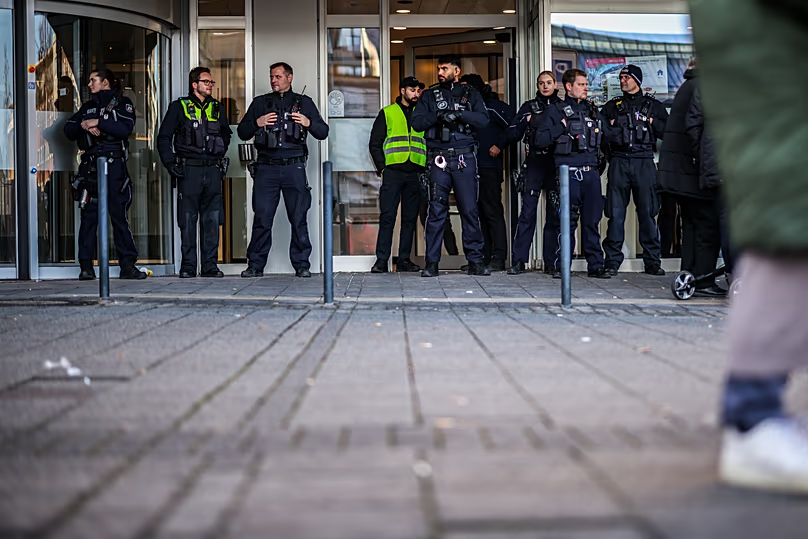
Approximately 2,700 depositors were affected. For many, the loss is not only financial but deeply personal, as items stored in the vault included family heirlooms and irreplaceable objects. The bank remains closed while forensic teams continue to examine the site, and customers have been advised that full assessments may take weeks due to the complexity of cataloguing privately owned contents.
The timing of the robbery was critical. The Christmas period offered long stretches without regular staff presence, reduced foot traffic and predictable security routines. This temporal window allowed the perpetrators to operate methodically, without the pressure of immediate detection. The absence of violence or confrontation underscores the nature of the operation: this was not a robbery designed for speed, but for control.
Authorities have confirmed that the perpetrators escaped using a stolen vehicle, later abandoned. Surveillance footage shows masked individuals transporting large bags, but no clear facial identification has been made public. At this stage, no arrests have been announced, and investigators are coordinating across regional and federal levels to trace movements, tools and potential logistical support networks.

The case has prompted renewed scrutiny of physical security in financial institutions, particularly the continued reliance on vaults and safety deposit boxes as perceived zones of absolute protection. While digital banking risks dominate public discourse, this incident highlights the persistent vulnerabilities of physical infrastructure, especially when human oversight is reduced.
From a structural perspective, the robbery exposes a critical asymmetry. While banks invest heavily in digital security and fraud prevention, physical safeguards often rely on assumptions of deterrence rather than resilience. Reinforced walls, alarms and cameras are effective only insofar as they are continuously monitored and integrated into adaptive response systems. In this case, silence itself became a vulnerability.
German banking authorities have indicated that internal reviews are likely, focusing on alarm response protocols, monitoring during holiday closures and the insurance frameworks governing privately held assets. The incident raises complex questions about liability, compensation and the limits of institutional responsibility when customer property is involved.
Beyond the immediate investigation, the robbery carries symbolic weight. It reflects a broader pattern in which high-value crimes increasingly exploit predictability rather than force. The perpetrators did not challenge the system directly; they waited for it to pause. In doing so, they turned routine closure into opportunity.
For customers and observers alike, the event disrupts a deeply held assumption: that certain spaces remain secure by default. The bank vault, long a symbol of permanence and protection, proved vulnerable not through dramatic failure, but through calculated patience.
As authorities work to reconstruct the sequence of events, the case is likely to influence security standards well beyond this single city. The question is not whether similar robberies can occur elsewhere, but whether institutions are prepared to treat time, routine and absence as active risk factors rather than neutral conditions.
The heist did not rely on chaos. It relied on quiet.
Detrás de cada dato, hay una intención. Detrás de cada silencio, una estructura.
Behind every data point, there is an intention. Behind every silence, a structure.