

 Phoenix 24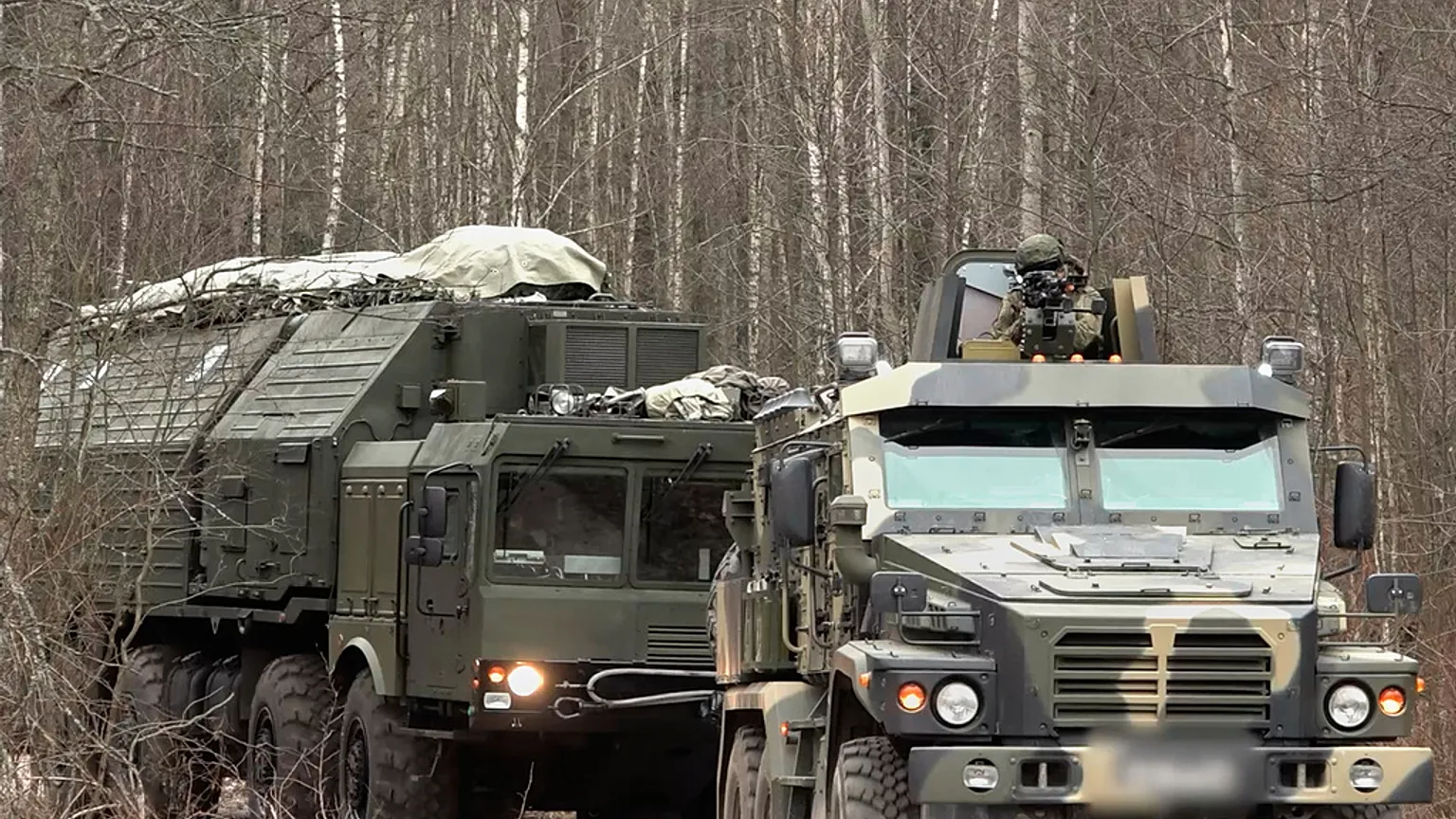
The deployment is less about immediate combat utility than about compressing time, space and decision-making across the eastern flank.
Minsk, Belarus.
Russia has confirmed the deployment of its Oreshnik missile system with nuclear capability on Belarusian territory, a move that alters the strategic balance in Eastern Europe by physically advancing Moscow’s deterrence posture closer to NATO borders. The announcement marks a new phase in the military integration between Russia and Belarus and reinforces the role of Belarus as an extension of Russia’s strategic depth rather than a merely allied buffer state.
According to official statements, the missile system has been placed on combat duty as part of a bilateral defense framework between Moscow and Minsk. The deployment follows earlier political commitments by Belarusian authorities to host advanced Russian weapons systems and reflects a gradual but deliberate militarization of Belarusian territory since the start of the war in Ukraine. While framed by both governments as defensive in nature, the geographic implications are unambiguous.
The Oreshnik system is described by Russian sources as an intermediate-range missile capable of carrying either conventional or nuclear warheads. Mounted on mobile launch platforms, it is designed to enhance survivability and flexibility, allowing rapid repositioning and complicating adversary targeting. Its range and speed significantly reduce warning times for potential targets, a factor that has drawn concern in Western military assessments.
Placing such a system in Belarus shortens the distance to critical infrastructure and political centers across Central and Eastern Europe. In strategic terms, this is not merely an increase in firepower but a compression of reaction windows. Deterrence in this configuration relies less on overwhelming force and more on uncertainty, ambiguity and speed, elements that raise escalation risks even in the absence of active hostilities.
For Belarus, the deployment further blurs the line between sovereignty and subordination. While Minsk formally retains control over its territory, operational authority over the missile system and any associated nuclear payloads remains under Russian command. This arrangement reinforces Belarus’s role as a forward operating space for Russian strategic assets, limiting its autonomy in matters of security policy while deepening its dependency on Moscow.
The decision must also be read in the context of broader regional signaling. As diplomatic channels related to the Ukraine war remain fragile and inconclusive, Moscow has repeatedly used weapons deployments as a form of strategic communication. The Oreshnik’s presence in Belarus sends a message not only to NATO but also to domestic and allied audiences: Russia retains escalation dominance and is willing to externalize its deterrence beyond its own borders.
Western governments have expressed concern that such deployments undermine regional stability by increasing the risk of miscalculation. Intermediate-range systems stationed closer to alliance territory reduce margins for error in early-warning and response systems. Even without intent to use them, their mere presence forces defensive adjustments, increases alert levels and accelerates planning cycles on both sides.
From a military-technical perspective, the deployment fits into Russia’s broader emphasis on mobile, survivable missile systems that can operate below the threshold of strategic intercontinental forces while still carrying nuclear significance. This category of weapons occupies a gray zone between tactical and strategic use, making them particularly potent as tools of coercion and signaling rather than battlefield employment.
The integration of such systems into Belarus also carries symbolic weight. It demonstrates Moscow’s willingness to project nuclear-capable assets beyond its traditional borders in defiance of Western norms that had, for decades, constrained the forward basing of similar systems in Europe. In doing so, Russia challenges not only NATO’s deterrence posture but also the residual architecture of arms control that once governed missile deployments on the continent.
For NATO members along the eastern flank, the response is unlikely to be immediate or symmetrical. Instead, it will involve recalibrations in air and missile defense, intelligence monitoring and alliance coordination. The strategic effect of the Oreshnik is therefore cumulative rather than instantaneous, reshaping threat perceptions and planning assumptions over time.
The deployment also reinforces a broader trend: the erosion of clear boundaries between national territory and allied platforms in modern conflict. Belarus functions increasingly as a strategic extension of Russia’s military geography, while Moscow leverages alliance structures to distribute risk and complicate adversary responses. This diffusion of strategic assets makes containment more complex and crisis management more fragile.
Ultimately, the presence of the Oreshnik system in Belarus is not about an imminent strike scenario. It is about positioning, leverage and narrative control. By advancing nuclear-capable systems westward, Russia asserts relevance, tests red lines and embeds escalation potential into the regional security environment.
In an already saturated strategic landscape, the deployment adds another layer of instability that operates quietly, without immediate confrontation, but with lasting consequences. It reinforces a reality that European security planners increasingly confront: deterrence is no longer static, borders are no longer fixed in strategic terms, and weapons now speak as loudly through where they are placed as through whether they are used.
Detrás de cada dato, hay una intención. Detrás de cada silencio, una estructura.
Behind every data point, there is an intention. Behind every silence, a structure.