

 Phoenix 24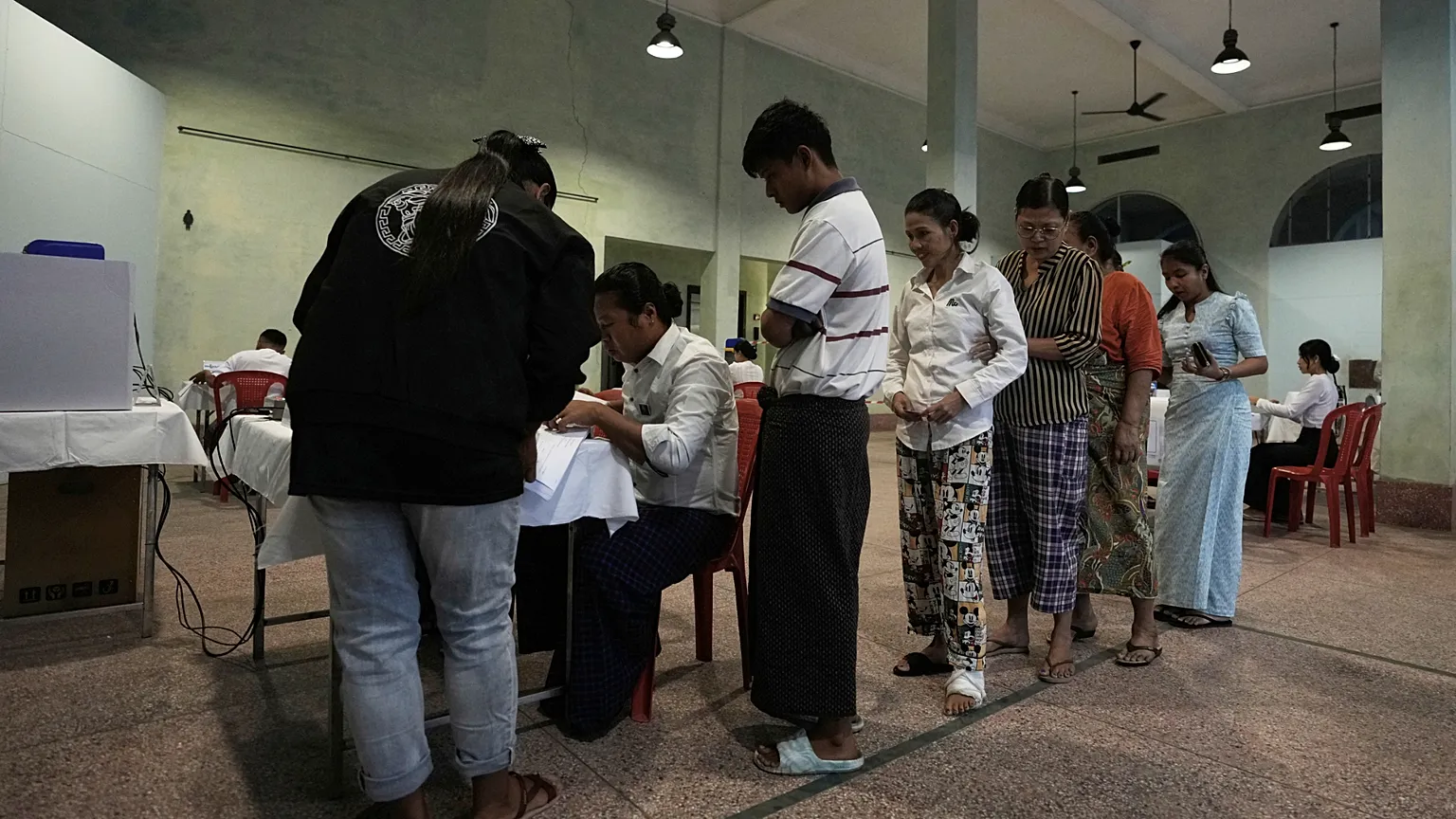
Ballots can move, regimes rarely do.
Naypyitaw, December 28, 2025.
Myanmar has launched the first phase of its long delayed general elections, marking the most significant political exercise since the military seized power in 2021. The vote, conducted in selected townships under heavy security, unfolds in a country fractured by conflict, repression, and institutional paralysis. While the authorities present the process as a step toward normalization, its structure and context suggest a managed political transition designed to preserve military dominance rather than restore democratic governance.
The elections are being held in stages, reflecting both logistical constraints and the fragmented territorial control that now defines Myanmar’s landscape. Large portions of the country remain outside the effective reach of the central administration, controlled either by ethnic armed groups or resistance forces formed after the coup. In these areas, voting has been postponed or rendered impossible, reinforcing the perception of a partial and uneven electoral map.
Since the overthrow of the civilian government, political space has narrowed dramatically. Major opposition forces have been excluded from the process through legal bans, administrative disqualification, or intimidation. The absence of competitive parties transforms the election from a contest of ideas into a procedural exercise, where outcomes are shaped before ballots are cast. Participation, under these conditions, reflects compliance rather than choice.
The military leadership frames the elections as a necessary step toward constitutional order, arguing that stability must precede political openness. This narrative positions the armed forces as guarantors of national unity amid ongoing violence. Yet for large segments of the population, the vote is perceived less as a bridge to reconciliation than as a mechanism to formalize the power structures established by force four years earlier.
Security remains the dominant variable. Polling stations operate under the presence of armed personnel, and electoral activity is tightly controlled. The ongoing civil conflict, marked by displacement, economic collapse, and persistent human rights abuses, forms the backdrop against which voting takes place. In this environment, political participation carries risk, and abstention becomes both a protest and a survival strategy.
International skepticism has been consistent. The absence of inclusive participation, independent oversight, and basic political freedoms undermines the credibility of the process. While regional actors observe cautiously, the broader international community views the elections as lacking the conditions required for legitimacy. The staged nature of the vote does little to address these concerns, instead extending uncertainty into the coming months.
For the military authorities, the objective is not immediate legitimacy but structural endurance. By reactivating electoral mechanisms without relinquishing control, the regime seeks to recalibrate its image while maintaining dominance over the state apparatus. The vote functions as insulation, not transition.
Myanmar’s first phase of elections does not signal political resolution. It exposes the gap between procedural form and substantive power. Until that gap narrows, ballots will continue to circulate in a system where outcomes remain predetermined, and the promise of representation remains suspended.
Detrás de cada dato, hay una intención. Detrás de cada silencio, una estructura.