

 Phoenix 24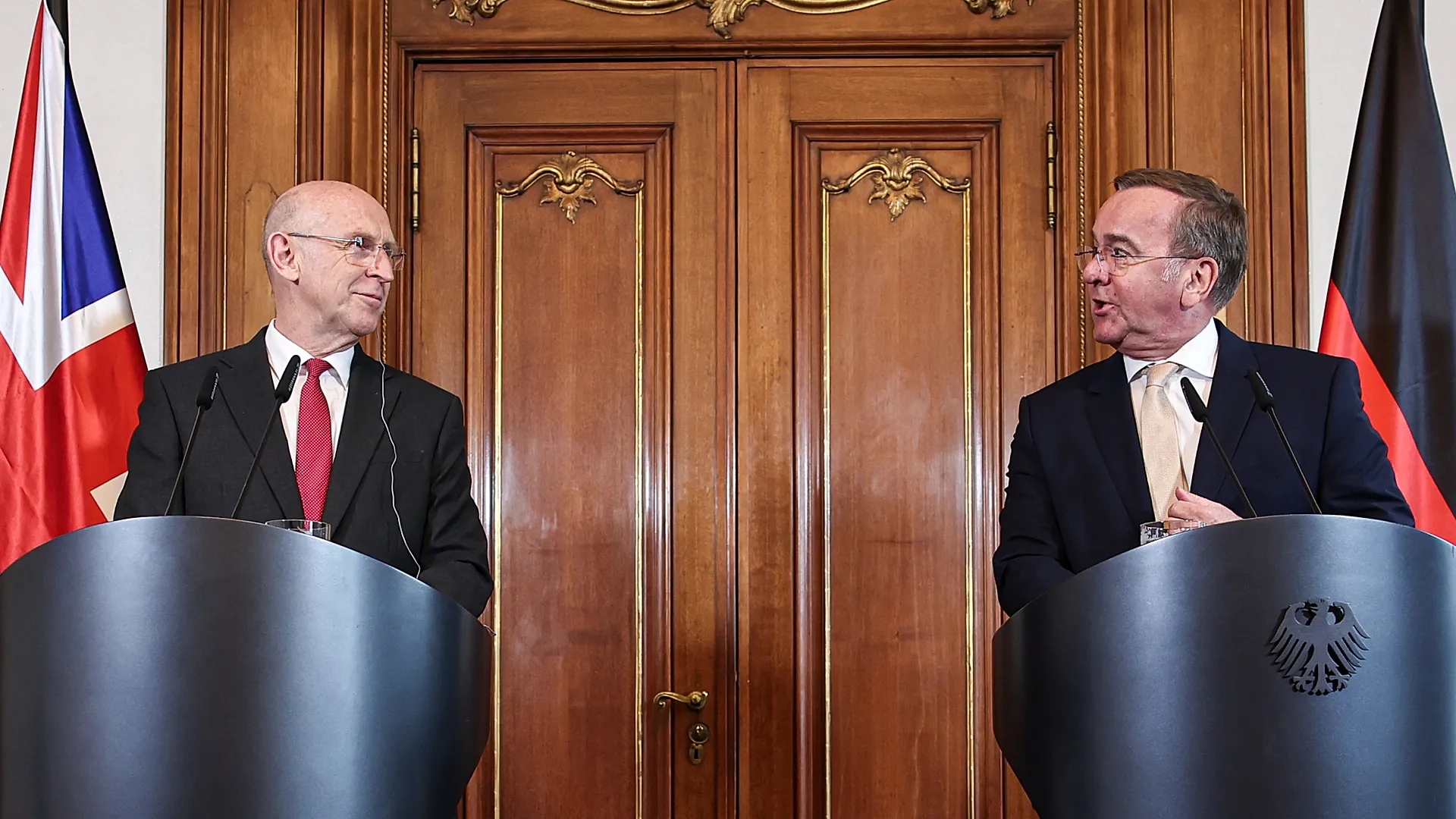
When rearmament accelerates quietly, strategy speaks louder than announcements.
Berlin, December 28, 2025.
Germany and the United Kingdom have taken a further step in consolidating their bilateral military cooperation with a joint initiative focused on the development and testing of a new generation of mobile artillery systems. The agreement, valued at approximately sixty million euros, reflects a deeper recalibration of European defence priorities as conventional land warfare regains strategic centrality across the continent.
The cooperation centers on a self-propelled artillery platform designed for high mobility, reduced crew requirements, and rapid deployment in contested environments. The system is intended to operate with minimal logistical footprint while maintaining long-range precision fire capability, responding directly to operational lessons drawn from recent conflicts in Eastern Europe. For both Berlin and London, artillery is no longer a legacy asset but a core instrument of deterrence and battlefield resilience.
The initiative is not framed as a procurement race but as a shared capability pathway. Initial units will be used for testing, integration, and doctrinal development, allowing both armed forces to align operational concepts before full deployment decisions are made. This phased approach signals a shift away from isolated national modernization toward cooperative force design, where interoperability is built into systems from the outset rather than retrofitted later.
For Germany, the move fits within a broader transformation of its armed forces following years of underinvestment. The Bundeswehr has increasingly prioritized systems that can integrate seamlessly into multinational operations, reflecting a strategic environment where collective defence outweighs national autonomy in practical terms. Artillery modernization, in this context, is as much about alliance credibility as it is about firepower.
For the United Kingdom, the cooperation reinforces a post-Brexit defence posture anchored in bilateral and multilateral military partnerships rather than institutional alignment alone. By deepening ties with Germany, London signals its intention to remain a central security actor in Europe, not through symbolic commitments but through shared operational capabilities. The focus on mobility and speed reflects British doctrinal emphasis on expeditionary flexibility and rapid response.
Beyond the technical dimension, the agreement carries political weight. It demonstrates convergence between two military cultures that historically evolved along different strategic trajectories. The decision to invest jointly in land systems indicates recognition that future European security challenges are unlikely to be confined to air and cyber domains alone. Ground forces, once assumed to be secondary, are again being positioned as decisive instruments.
The timing is not accidental. As the war in Ukraine continues to reshape threat perceptions, European governments are reassessing the balance between deterrence, readiness, and industrial capacity. Joint initiatives such as this reduce duplication, accelerate innovation, and strengthen defence industrial ties at a moment when supply chains and production timelines have become strategic vulnerabilities in their own right.
This cooperation also reflects a broader trend toward modular defence integration. Rather than pursuing grand unified European armies, states are building dense networks of bilateral and trilateral capabilities that can be assembled rapidly under alliance frameworks. Germany and the UK’s artillery initiative fits this model, offering a scalable component that can plug into wider NATO operations without extensive adaptation.
What is emerging is not a single weapons program, but a template. A model of how European powers can align military modernization with political intent, operational reality, and alliance coherence. The focus on artillery underscores a sober assessment of contemporary warfare: precision, mobility, and survivability now define effectiveness more than sheer mass.
In strategic terms, the agreement is less about firepower than signaling. It communicates resolve, preparedness, and a willingness to translate defence rhetoric into tangible capability. At a time when Europe’s security architecture is under sustained pressure, such signals carry weight far beyond the battlefield.
Detrás de cada dato, hay una intención. Detrás de cada silencio, una estructura.