

 Phoenix 24
The latest chapter of the series reveals aesthetic nods that link 1980s genre pastiche with deeper cinematic lineages.
London, December 2025
In its concluding season, Stranger Things does more than resolve a sprawling narrative: it embeds within its visuals and tone a constellation of cinematic references that stretch beyond straightforward homage to 1980s pop culture. Behind the familiar echoes of practical effects and synth textures, the creative choices suggest a layered engagement with horror archetypes, auteur cinema, and post-war European film movements. Viewers attuned to these cues may discern how elements associated with characters like Freddy Krueger, the sensibilities of director Alfonso Cuarón, and the formal experiments of the French New Wave inform the final episodes’ stylistic rhythm and thematic depth.
The influence of classic horror figures such as Freddy Krueger — itself a creation rooted in the dream logic and corporeal surrealism of 1980s genre cinema — reemerges in this season’s dream-sequence architecture. The narrative’s play with subconscious spaces and liminal realities parallels the way A Nightmare on Elm Street once situated terror within sleep itself. This parallel is not accidental. By framing certain sequences around distorted perception and fragmented memory, the show evokes a lineage in which horror is structured not merely as external threat, but as an internalized psychological terrain, a space where character fears and desire for agency collide.
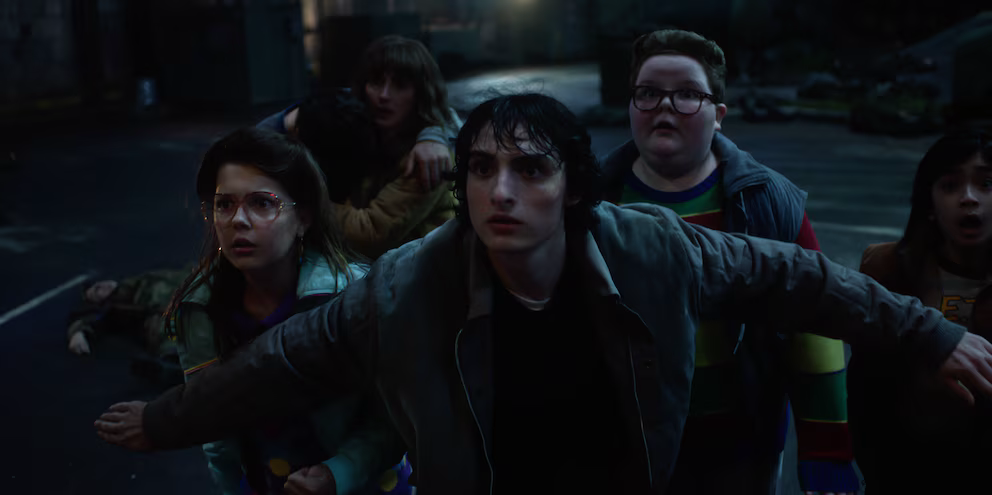
Yet the series does not deploy these references as mere pastiche. Much like the work of Alfonso Cuarón, whose films frequently fuse technical bravura with immersive subjectivity, the final season of Stranger Things uses its set pieces to foreground embodied experience. Cuarón’s influence — clear in the way long takes and atmospheric transitions allow characters to inhabit space as fully sensory subjects — appears most strongly in scenes where the environment itself feels like an extension of emotional states. This is less a direct stylistic mimicry and more an ideological affinity: both bodies of work prioritize continuity of perception and fluidity of movement, inviting audiences to experience narrative through the characters’ embodied field of awareness.
The French New Wave’s imprint, though subtler, can also be detected in formal choices that disrupt conventional genre syntax. Techniques associated with Jean-Luc Godard and François Truffaut — such as sudden temporal juxtapositions, reflexive camera movement, and a playful attitude toward genre boundaries — surface in the season’s editing gestures and narrative pacing. These moments intentionally fracture the comfortable rhythm of expectation, much as New Wave filmmakers did in the 1950s and 1960s, using cinema to question its own conditions of spectatorship. In Stranger Things, this manifests not as high theory, but as fleeting drift: brief scenes that foreground mise-en-scène over narrative causality, or sudden shifts that unsettle the viewer’s temporal bearings.
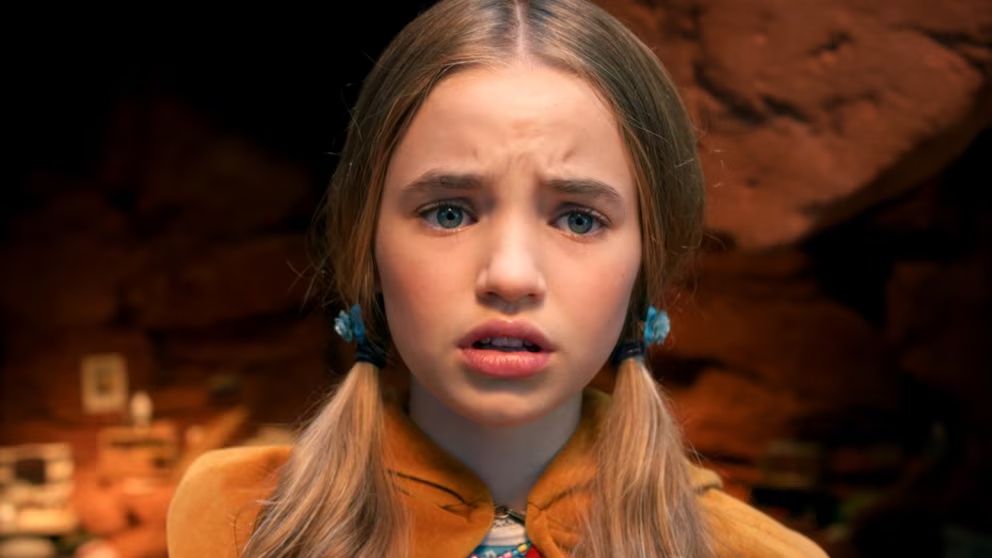
Taken together, these undercurrents suggest a broader aesthetic project: one that situates a seemingly nostalgic throwback within a lineage of cinematic innovation rather than mere replication. The final season, in this reading, operates simultaneously as genre entertainment and as a meta-textual reflection on how film history circulates through popular media. The recurrence of horror archetypes — whether in dream logic sequences or in the embodiment of antagonistic forces — is not simply referential but dialogic, engaging with the ways genre constructs meaning across time. Likewise, the formal echo of Cuarón’s immersive techniques invites audiences to attend to the continuity of spatial and emotional experience, rather than to isolated set pieces.
The French New Wave associations further complicate the show’s self-presentation as nostalgia. Whereas nostalgia tends to fixate on surface signifiers — period costumes, retro technologies, familiar soundtracks — the New Wave influence suggests a more critical temporality: one that recognizes the past not as a return to be idolized but as a texture to be reworked, refigured and interrogated. This aligns with the series’ broader narrative preoccupations, where temporal folds and alternate realities raise questions about memory, trauma and the persistence of unresolved histories. The show’s final season, in this sense, stages its own reflections on time and continuity, pushing the viewer to consider how genre conventions both emerge from and shape collective affect.
Audience reception to these subtle cues has varied. Some viewers, focused primarily on plot resolution and character arcs, may register these influences implicitly, sensing familiarity without pinpointing specific cinematic ancestors. Others with deeper familiarity with genre history and film movements may appreciate the ways in which these textures complicate the series’ aesthetic field. In either case, the effect is cumulative: Stranger Things invites its audience into a conversation not only with the 1980s but with a broader cinematic genealogy that spans decades and movements.
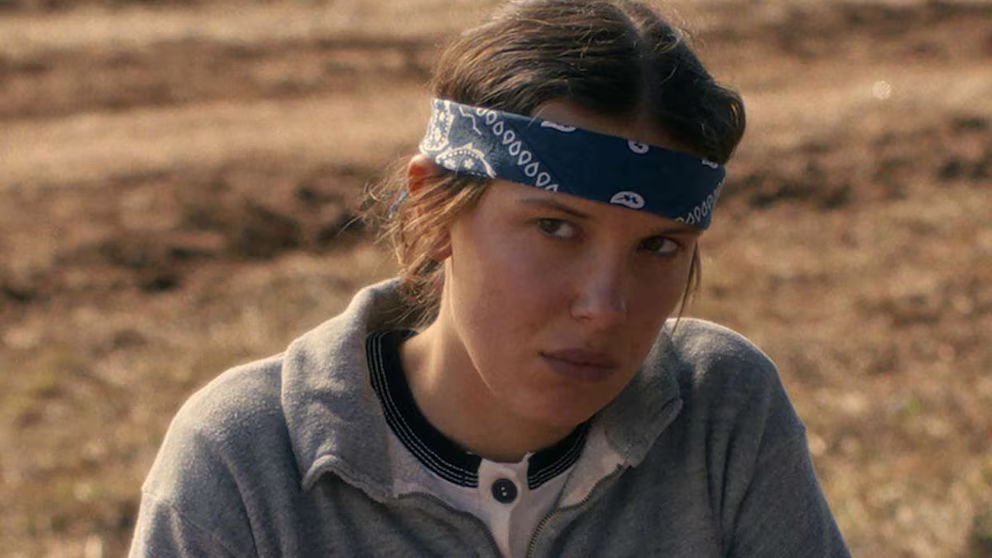
Ultimately, the final season functions on multiple levels: as entertainment, as homage, and as a site of stylistic negotiation with the history of cinema itself. By invoking horror archetypes, immersive cinematic practice, and formal disruptions associated with the French New Wave, the series positions its conclusion not as a derivative pastiche but as a generative space where popular genre and film history intersect. In doing so, it suggests that the legacy of film movements past is not static, but lives on in the ways contemporary creators recombine, reimagine and question the forms that shape our cultural imagination.
Every silence speaks.
Every silence speaks.