

 Phoenix 24
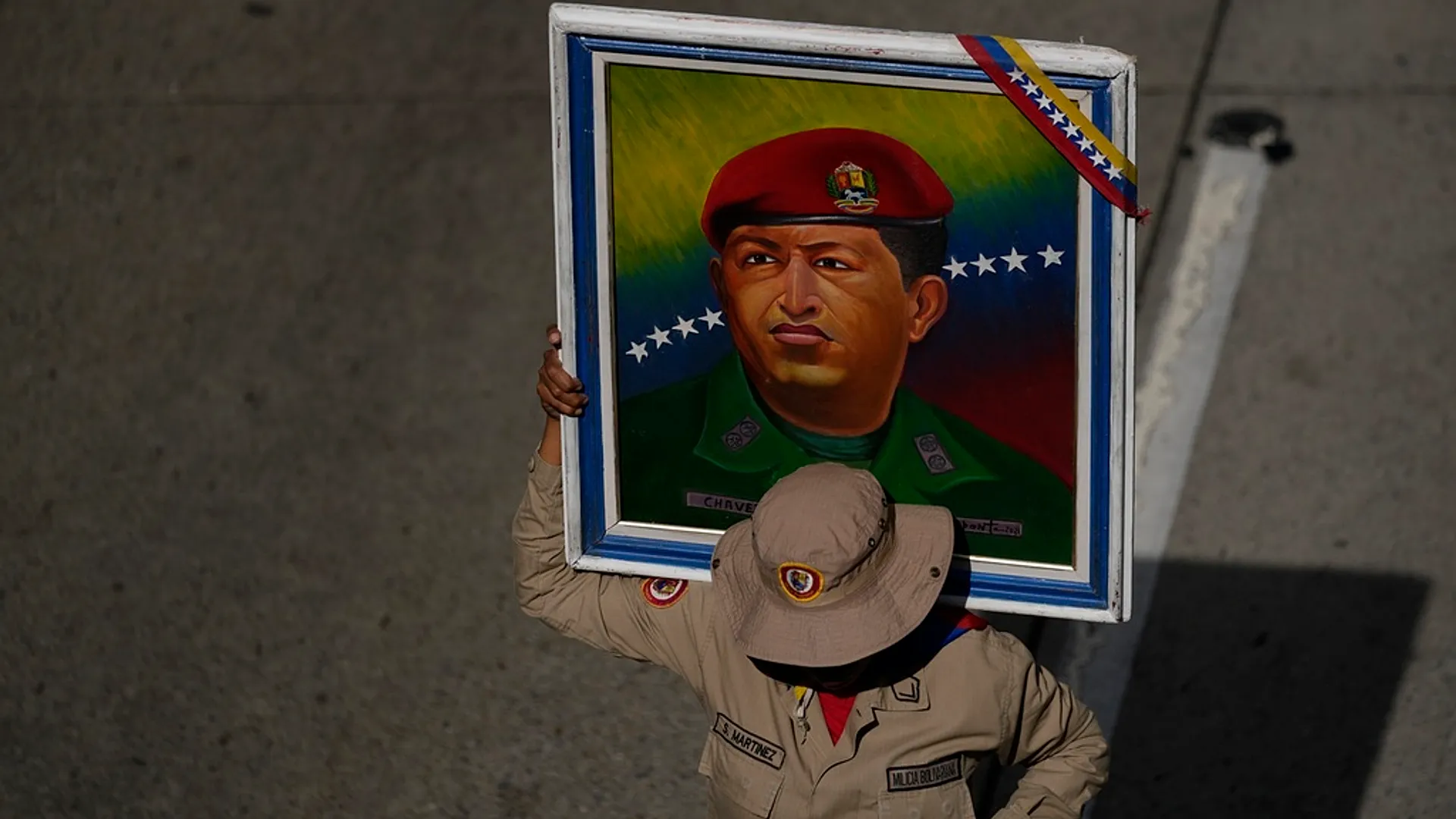
The interest is not born of rhetoric but of what lies beneath the ground, and in international politics that is often decisive.
Caracas, December 2025.
Venezuela has returned to the center of the United States strategic conversation not because of a sudden ideological shift or a meaningful change in its internal political structure, but due to a convergence of natural resources, institutional fragility and a global economic order under strain. In a world shaped by energy insecurity, trade fragmentation and intensifying competition among major powers, the South American country is once again perceived as a high value asset whose current condition is seen in Washington as both problematic and opportunistic.
The fundamentals remain striking. Venezuela holds the largest proven oil reserves in the world and possesses substantial deposits of natural gas, iron ore, bauxite and other minerals critical to industrial supply chains. According to assessments cited by the International Monetary Fund, the collapse of Venezuelan output over the past decade is not the result of resource scarcity, but of institutional breakdown, financial isolation and operational decay. That gap between potential and reality is precisely what reactivates external interest.
From Donald Trump’s perspective, now once again framed through an openly transactional view of foreign policy, Venezuela represents an extreme case of wasted wealth in the Western Hemisphere. His narrative does not revolve primarily around democratic norms or human rights enforcement, but around strategic assets and geoeconomic rivalry. Within that framework, allowing a resource rich country to remain outside Western aligned production networks, or worse, to deepen ties with rival powers, is interpreted as a strategic failure rather than a moral dilemma.
The broader international context reinforces this logic. Europe continues to face energy volatility linked to the war in Ukraine, while Asian economies sustain growing demand for hydrocarbons and critical minerals to support industrial expansion. The International Energy Agency has indicated that even under accelerated energy transition scenarios, oil and gas will remain central to the global energy mix for decades. In that environment, Venezuelan reserves regain significance beyond regional politics.
At the same time, the involvement of extra hemispheric actors in Venezuela has sharpened concern in Washington. China has participated in infrastructure financing and energy related arrangements, Russia maintains cooperation in the oil and defense sectors, and Iran has provided technical assistance in sensitive areas. For analysts at institutions such as the Council on Foreign Relations, this convergence positions Venezuela as a friction point within global power competition, particularly as the United States seeks to constrain the strategic reach of its rivals in regions it considers vital.
Economic sanctions remain a central instrument in this dynamic. Initially designed to pressure the government of Nicolás Maduro, they have also contributed to a sharp contraction in production and exports, deepening the domestic economic crisis. The World Bank has noted that this downturn produced one of the steepest declines in per capita income recorded in peacetime. Yet from a power politics standpoint, that weakening simultaneously creates leverage for future renegotiations over access to and control of strategic assets.
Trump’s discourse capitalizes on this landscape. By portraying Venezuela as a wealthy but failed state, he advances a narrative that resonates with his political base and with business sectors attentive to a potential reopening of the energy market. The focus extends beyond oil alone. It encompasses influence over logistics, regional trade flows and the possibility of reshaping hemispheric balances at a moment of global uncertainty.
The implications for Latin America are substantial. Renewed United States attention toward Venezuela revives long standing debates over sovereignty, intervention and economic dependency. Regional organizations and policy analysts have warned that strategies prioritizing resource extraction over social stability risk aggravating the humanitarian crisis and generating spillover effects, particularly in migration and security, across neighboring countries.
From Venezuela’s own vantage point, the country remains trapped between latent abundance and structural fragility. The Economic Commission for Latin America and the Caribbean has emphasized that economic reconstruction would require not only foreign investment but also deep institutional reforms and political agreements that currently appear out of reach. Without these conditions, natural wealth functions less as a foundation for recovery than as a source of vulnerability.
The Venezuelan case underscores a recurring pattern in international affairs. Resource rich states attract intensified external attention when institutions weaken and global conditions elevate the value of what they possess. At the intersection of energy demand, geopolitical rivalry and political calculation, Venezuela is once again viewed less as a society in crisis than as strategic territory. The appetite it awakens is not new, but it is now expressed with fewer illusions, in a global environment where economics and security increasingly merge.
Beyond the news, the pattern.
Beyond the news, the pattern.