

 Phoenix 24
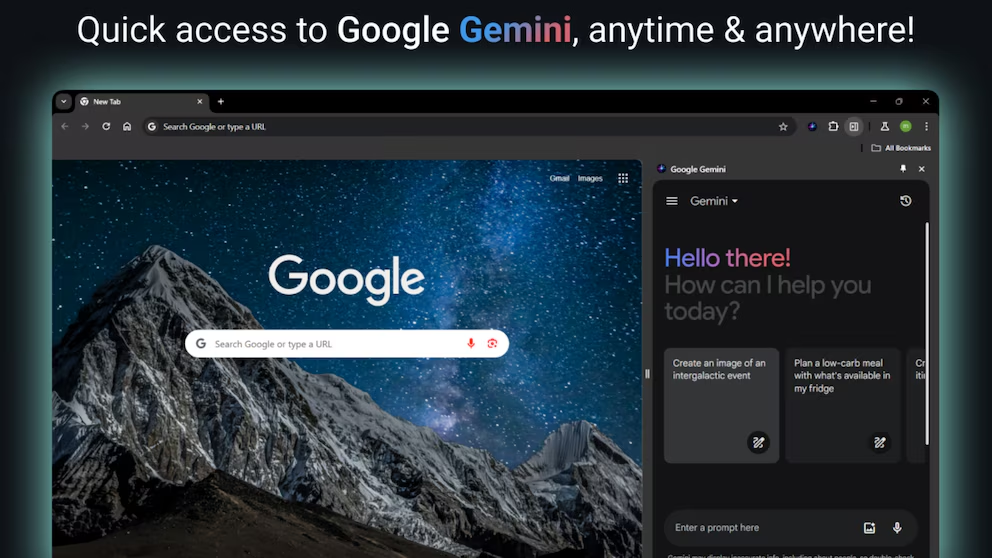
Artificial intelligence stops being a separate app and becomes part of the everyday flow of the web.
San Francisco, December 2025
Google has taken a significant step in its artificial intelligence strategy by integrating Gemini directly into Google Chrome for iPhone and iPad. The update brings advanced AI assistance into the core of the mobile browser, allowing users to interact with web content in a more active, contextual and assisted way without leaving the page they are viewing. This is not a cosmetic feature, but a structural shift in how information is consumed on Apple devices.
The new integration introduces direct access to Gemini from Chrome’s address bar on iOS. Once activated, the assistant can summarize long articles, simplify complex explanations, generate key questions about the content being read, or help compare information within the same browsing session. All of this happens in an overlay window that preserves the context of the open site, reducing the need to switch apps or open multiple tabs.
This move reinforces a direction Google has been pursuing for months: transforming the browser into an intelligent interaction space rather than a passive content viewer. On desktop computers and Android devices, the company has already tested this model. Bringing it to iPhone and iPad extends the same logic into an ecosystem traditionally more restrictive when it comes to deep integrations.
From a functional standpoint, Gemini in Chrome does not yet replicate the full capabilities of the standalone Gemini app, but it delivers a set of tools designed for everyday use. Automated summaries, text reformulation, learning support and contextual queries are the most visible features. The key distinction is that the AI operates directly on the page being viewed, rather than responding to abstract or disconnected prompts.
The rollout is gradual and comes with specific conditions. For now, the feature is available in selected markets and language settings, primarily English. It also requires users to be signed into Chrome and disables the function in private browsing mode. These limitations reflect both technical considerations and ongoing privacy and data control policies.
Strategically, the decision underscores Google’s effort to normalize generative AI in routine tasks. Instead of positioning artificial intelligence as a specialized tool, the company embeds it into everyday actions such as reading an article, understanding technical material or navigating practical information. The goal is to reduce friction between searching for information and actually comprehending it.
The arrival of Gemini in Chrome on Apple devices also has competitive implications. As browsers and operating systems increasingly compete to become the main entry point for AI assistance, Google is ensuring that its assistant remains present even outside its own hardware ecosystem. This strengthens the browser’s role as a strategic platform, rather than a neutral gateway to content.
From European and Asian technology policy perspectives, analysts note that such integrations point to a shift in information consumption habits. Linear reading gives way to AI mediated interaction, where summarizing, contextualizing and comparing become immediate actions. The browser is no longer just an intermediary, but an active participant in how content is interpreted.
Privacy and data governance remain central to the discussion. Integrating Gemini into Chrome means the assistant processes visible page content, raising questions about data handling and user consent. Google has stated that the feature operates within existing privacy frameworks and that users retain control over activation, but regulatory scrutiny, particularly in Europe, is expected to continue.
For end users, the change may feel subtle yet consequential. Browsing becomes more efficient and personalized, with less need to copy text, open new tabs or reformulate searches. Artificial intelligence functions as an invisible layer that accompanies reading and exploration, altering the relationship with information without disrupting the interface.
The integration of Gemini into Chrome for iPhone and iPad confirms that the competition around artificial intelligence is no longer confined to large models or standalone applications. It is now unfolding inside everyday tools where millions of people read, compare and make decisions. The mobile browser, once a basic utility, is evolving into an active assistant that anticipates questions and structures answers.
In that quiet shift, Google is not just expanding Gemini’s reach. It is redefining the role of the browser in the era of integrated artificial intelligence.
Truth is structure, not noise. / La verdad es estructura, no ruido.