

 Phoenix 24

A household device long associated with entertainment is now at the centre of a technological debate about consent, surveillance and digital autonomy.
Berlin, December 2025.
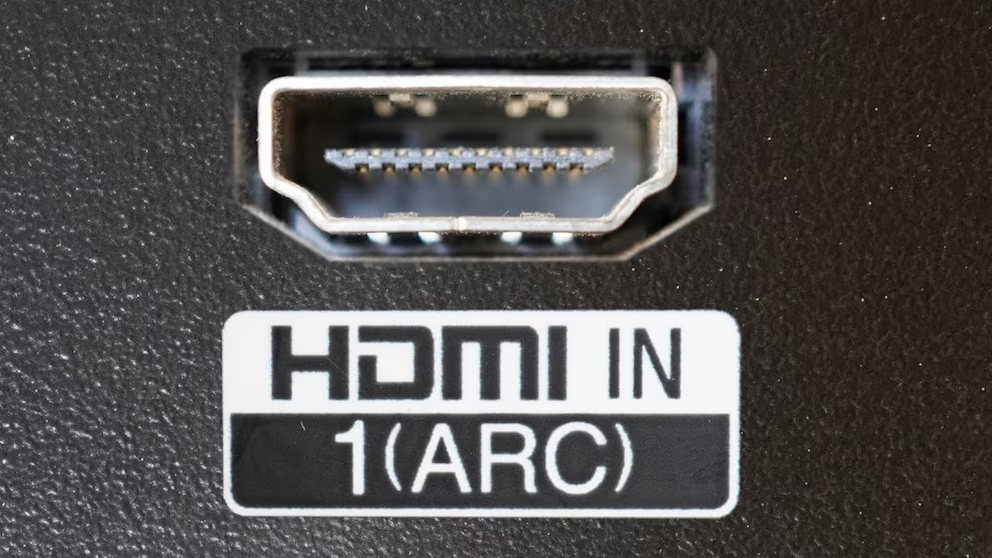
Concerns over Automatic Content Recognition, widely known as ACR, have intensified as security researchers confirm that many smart TVs continue collecting viewing data even when the screen is used solely as a monitor through an HDMI connection. Investigators in Europe and North America have documented how several major brands transmit metadata related to what appears on the screen at regular intervals, allowing companies to map viewing patterns with surprising precision. The behaviour does not depend on streaming platforms or built in apps. It is tied to the television’s operating system, meaning that external devices such as consoles, laptops or media players offer no inherent protection. Analysts familiar with network tracing techniques observed that the outbound data sometimes includes identifiers linked to user accounts, creating a potential bridge between viewing habits and personal information.
Although companies describe ACR as a tool for improving recommendations or supporting analytics, specialists in Asia and South America argue that the practice raises deeper questions about informed consent and commercial profiling. When users accept the terms upon initial configuration, they rarely understand that the system may monitor everything displayed on screen, including private content unrelated to entertainment. This distinction matters because the boundary between public consumption and personal activity disappears once every visual signal becomes part of a data set. Cybersecurity laboratories in multiple regions have stressed that repeated transmissions from smart TVs follow a predictable pattern, often occurring in intervals of seconds, which allows external servers to build detailed behavioural models without explicit awareness from users.
The challenge extends beyond individual privacy. Regulators and policy advisers warn that ACR blurs the line between device optimisation and intrusive tracking. European institutions evaluating consumer protection laws have highlighted that the design of ACR relies on passive collection rather than active user choice. American and Asian analysts emphasise that such mechanisms reflect a broader shift in which household technologies adopt surveillance-driven business models. For manufacturers, the aggregated metadata offers strategic value for advertising, competitor analysis and trend forecasting. For the public, the consequences remain imbalanced because the benefits are limited while the exposure is continuous.
Consumers who discover this hidden feature often report a sense of unease. Many believed that disconnecting their smart TV from streaming platforms or using an HDMI source would shield them from data harvesting. Yet technical assessments show that once the device is connected to the internet, its operating system can continue sending information even if smart functions appear disabled. This architecture demonstrates how modern electronics integrate persistent connectivity as a default rather than an optional feature. Analysts in Australia and the Middle East underline that the convenience of smart TV ecosystems often obscures the internal processes that transmit data silently in the background.

Despite the complexity of the issue, practical solutions exist. The most direct measure involves disabling ACR within the television’s privacy settings. Manufacturers rarely advertise this option, and the wording used in menus can be vague. However, disabling content recognition significantly reduces or stops outbound transmissions linked to screen monitoring. Another approach involves severing the device’s internet access entirely and relying on external media players that do not engage in behavioural tracking. Privacy researchers recommend this approach for users who treat their TV primarily as a display rather than a smart hub. For households with advanced security requirements, the safest method is to isolate the television on a network that prevents it from reaching external servers.
The debate surrounding ACR highlights a broader trend. As devices become more capable, they also become more opaque. Transparent consent is replaced by long agreements that mask intrusive practices. Users become data sources feeding analytical engines that few fully understand. While international efforts to regulate digital privacy have accelerated, enforcement remains uneven. Experts warn that without explicit standards requiring companies to disclose tracking operations clearly, ACR and comparable technologies will persist and expand.
Still, awareness is an important first step. Households often treat TVs as passive appliances rather than active nodes in the digital environment. Reframing them as devices that participate in data collection changes expectations and encourages informed choices. The shift also prompts a broader societal reflection: technologies meant for entertainment increasingly function as instruments of measurement. Whether this transformation benefits or harms consumers depends on regulation, transparency and public understanding.
In the end the issue raises a simple question with complex implications. Should a living room screen act as an observer of the household. For millions of users that question is emerging for the first time. The answers will influence how future devices are designed, how regulations evolve and how privacy is defined in a world where the boundary between viewing and being viewed grows faint.
Phoenix24. Clarity in the grey zone.
Phoenix24. Claridad en la zona gris.