

 Phoenix 24
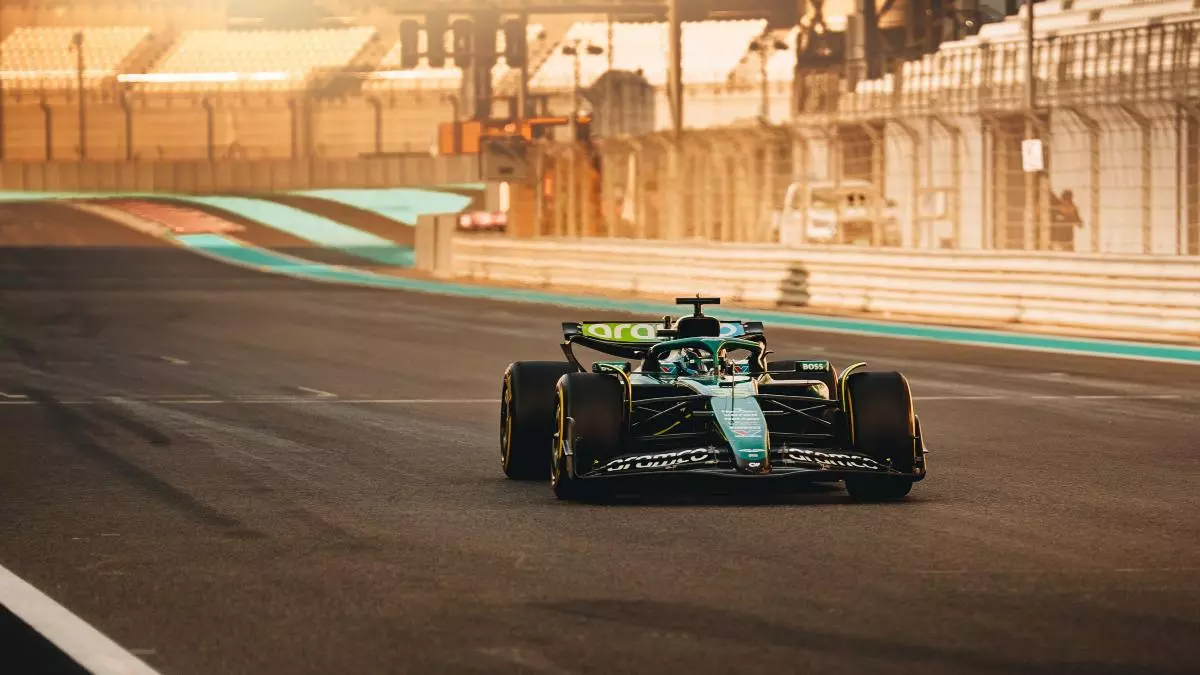
A quiet morning sun over Yas Marina became the backdrop for an unexpected headline that closed the 2025 Formula One season with a note of promise and disruption.
Yas Marina, December 2025.
The final post season test brought together established drivers, rising talents and technical departments eager to gather one last block of data before the sport enters a year of sweeping regulatory change. In the middle of this transitional atmosphere, Jak Crawford delivered the fastest time of the day and sent a message about the future of both his own trajectory and the direction of the grid. Driving the Aston Martin AMR25, he set a time that placed him ahead of a field composed of rookies, reserve drivers and a handful of experienced competitors who shared the track for the testing program. Engineers close to several teams remarked that the consistency of Crawford’s laps suggested a level of maturity unusual for a driver still adapting to the demands of Formula One machinery.
The test featured two different technical configurations. Novice drivers ran cars in standard 2025 specifications while development crews worked with modified versions designed to simulate the reduced aerodynamic load and narrower tyres planned for 2026. These parallel programs created a complex environment in which each lap served a distinct purpose. Some teams focused on long distance data to evaluate thermal behaviour, while others explored mechanical balance under the new tyre footprint. Even with these divergent agendas, the times recorded offered insight into how different teams have interpreted their final window of experimentation. Kimi Antonelli, representing Mercedes, registered a competitive benchmark among full time drivers although his time remained short of Crawford’s fastest effort.
Observers noted that test sessions rarely reflect the true competitive hierarchy. Teams conceal fuel levels, engine modes and detailed run plans. Nonetheless, the accumulation of telemetry from this final outing holds considerable value. Technical staff will spend the coming weeks analysing braking patterns, tyre degradation cycles, energy recovery distribution and aerodynamic behaviour in order to ensure that their 2026 cars perform efficiently under the revised rule set. Engineers from independent consultancies in Europe and Asia highlighted that the shift toward lower downforce platforms will require a new balance between drag reduction, energy deployment and tyre conservation, placing additional pressure on drivers to adapt their style.
The day unfolded with minimal interruption. A single red flag momentarily halted the session after a mechanical irregularity on one of the development cars, but the incident was resolved without further consequence. The calm nature of the test contrasted with a season filled with fluctuating performance trends, intense midfield battles and ongoing discussions about the future composition of the grid. With several driver contracts expiring and technical departments engaged in restructuring efforts, the test symbolised an important pause before a year of systemic reinvention.
For Crawford, the result strengthens his integration into Aston Martin’s broader development strategy. His upcoming role as third driver for 2026 places him at the centre of the team’s evolving technical program. Team insiders have repeatedly emphasised the need for reserve and development drivers to contribute to simulation work, aerodynamic correlation and tyre modelling. The data Crawford produced in Yas Marina will feed directly into software tools used to validate the design of the next generation car. Analysts from Formula One publications in the Americas and Europe have remarked that such roles often become launching pads for future race seats, particularly when young drivers demonstrate adaptability and precision under testing pressure.
Beyond Crawford’s performance, the session reflected a farewell to the architecture that has defined the turbo hybrid era. Power unit suppliers are finalising transitions toward updated energy systems, and aerodynamic departments are preparing for a new set of constraints expected to reconfigure overtaking patterns and chassis design. Teams from Asia and the Middle East have been investing heavily in simulation infrastructure to anticipate how the revised regulations will alter cornering speeds and car behaviour on circuits with varying elevation profiles. The collaborative nature of the test provided valuable comparative data and deepened cooperation among groups that rarely share insights during the regular season.
It is also a reminder that Formula One’s competitive environment extends far beyond race weekends. Hours of analysis, thousands of simulations and the nuanced work of correlating track data with virtual models shape the final performance of each car. The drivers who participated in the test spoke of the importance of adapting early to the sensations of the new tyre and aerodynamic changes. One European engineer commented privately that mastering weight transfer, throttle modulation and braking sensitivity will be essential for the first phase of the 2026 campaign.
As the sun set over Yas Marina, teams packed their equipment with an awareness that a transformative year awaits. The test did not produce a championship point, but it offered something equally important. It revealed which teams are aligning their technical vision and which drivers are ready to shoulder the responsibility of a sport that continues to evolve with remarkable speed. Crawford’s fastest time stood as a symbol of that transition, a preview of the shifting momentum that will shape the next chapter of Formula One.
Facts that do not bend.
Hechos que no se doblan.