

 Phoenix 24
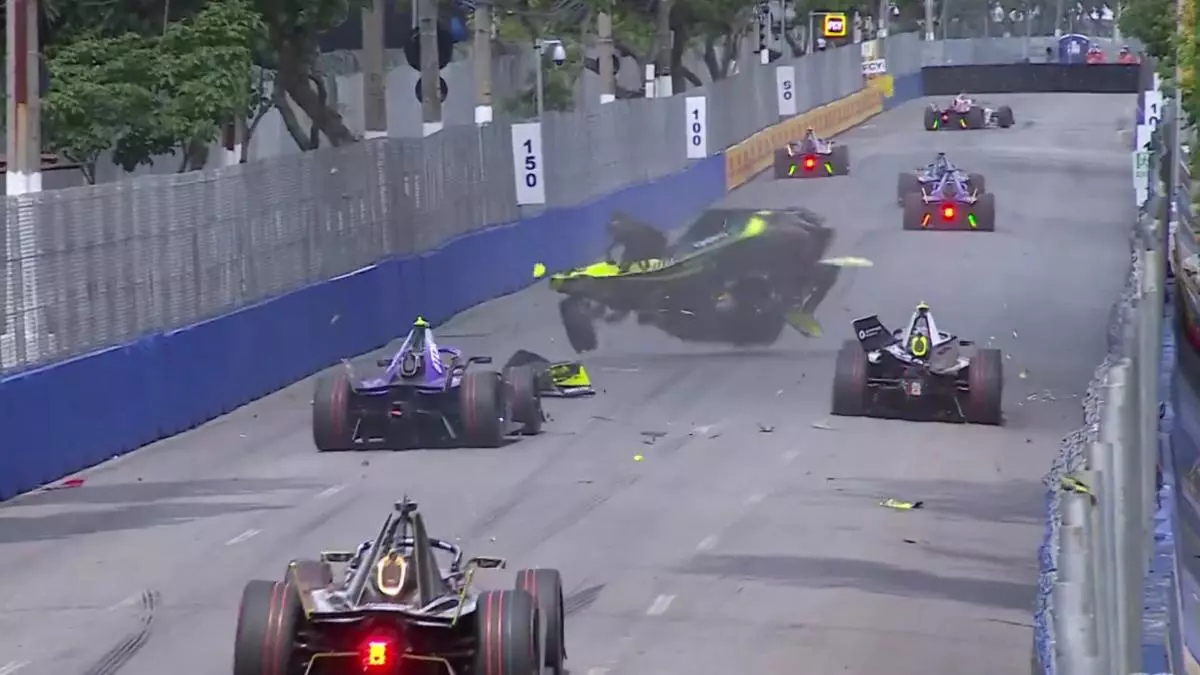
Some victories do not rely on speed alone but on the precision of knowing when pressure becomes opportunity.
São Paulo, December 2025
Jake Dennis opened the new Formula E season with a performance that combined strategic discipline and controlled aggression, turning a front row start into a defining win on one of the most unpredictable circuits in the championship. The São Paulo layout, notorious for its energy demands and its narrow overtaking zones, forced drivers into a tactical battle where timing mattered more than raw pace. Dennis mastered that tension, maintaining composure through multiple race interruptions and emerging at the finish with a victory that recalibrates expectations for the year ahead.
Observers across Europe noted that his early pace was only part of the story. The sequence of safety car periods forced repeated resets, creating conditions where drivers often lose rhythm or surrender crucial track position. Dennis instead used the interruptions to reinforce his energy management plan, preserving resources for a decisive late attack. Analysts following the race for major British outlets stressed that this kind of composure is uncommon in season openers, where technical uncertainty and new team dynamics often unsettle even experienced contenders.
In North America, motorsport analysts highlighted that Dennis’s team, strengthened through a refined collaboration with their powertrain partner, approached the race with a sharper operational model. The adjustments included simulation based strategy layers that allowed the team to anticipate fluctuations in race pace and adapt Attack Mode timing accordingly. When the field bunched up in the final third, Dennis deployed his remaining activation with precision, reclaiming the lead at a moment when rivals were forced into more conservative energy maps.
Further commentary from Asian media pointed out that the win holds symbolic weight within the broader landscape of electric racing. São Paulo has historically resisted pole to victory conversions due to its long straights, heavy braking zones and safety car frequency. Breaking that pattern positions Dennis as a psychological benchmark for the grid, especially for teams working to close performance gaps that widened during the last championship cycle. The victory also signals that the competitive hierarchy for the new season may evolve differently than expected, with several established contenders still adjusting to technical updates and regulatory changes.
Behind Dennis, the battle for the podium told its own story. His closest pursuers struggled with energy deltas that widened as the race progressed, a sign of the demanding thermal profile and the difficulty of maintaining efficiency while defending position. Several drivers who appeared strong in qualifying were unable to translate that form into consistent race pace. Analysts from European racing institutes suggested that these fluctuations reflect how sensitive the new generation of powertrains is to ambient conditions, especially on circuits where braking events concentrate heat in ways that disrupt stability.
For Dennis, however, the result represents more than a start of season accomplishment. After a previous campaign marked by inconsistency, mechanical setbacks and strategic miscalculations, he entered São Paulo under significant scrutiny. Team insiders acknowledged that expectations were high, and the need to establish early momentum was essential for both morale and championship positioning. The victory therefore resonates internally as a confirmation that the structural adjustments made during the off season have begun to yield measurable performance gains.
International commentators also noted that the win reinvigorates a fan base eager to see tighter competition among leading teams. With regulations evolving to heighten strategic complexity, Formula E has entered a period where the margins separating success from failure hinge increasingly on decision making rather than pure engineering. Dennis’s victory becomes an early case study of how precision, patience and execution can outweigh horsepower metrics in an all electric championship defined by volatility and tactical depth.
As the night settled over São Paulo and the paddock dispersed, a sense of recalibrated possibility permeated the championship. Dennis’s control under pressure, his ability to read the flow of the race and the consistency of his responses to unpredictable conditions formed a narrative that extends beyond a single victory. It sets the tone for a season where the boundaries between technical mastery and strategic nerve will determine who remains competitive when the stakes escalate.
Analysis that transcends power.
Análisis que trasciende al poder.