

 Phoenix 24
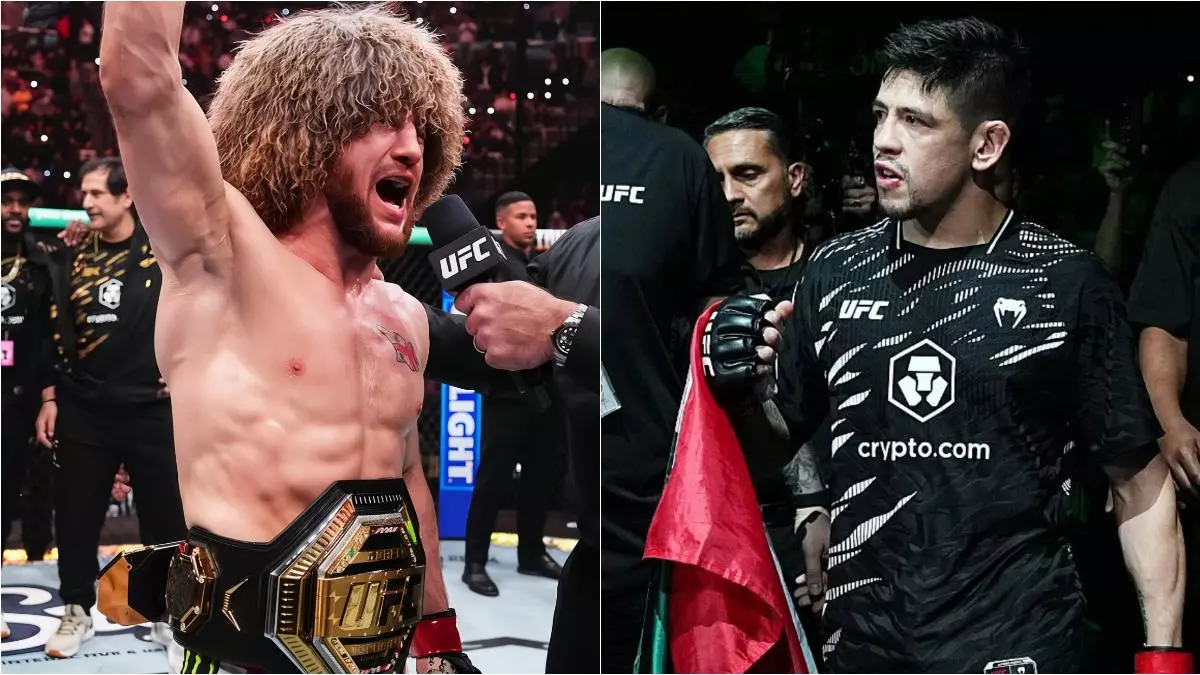
When a matchup collapses before it begins, the silence tells more than the promotion ever will.
Las Vegas, December 2025
The anticipation surrounding a potential clash between Merab Dvalishvili and Brandon Moreno evaporated as quickly as it had emerged. What many fans hoped would become a compelling inter-divisional showdown has been officially deemed impossible. According to information confirmed by the promotion’s internal coordinators, the fight cannot proceed under the current competitive structure of UFC. The announcement ended days de speculation and left the fan base grappling with yet another reminder of how volatile matchmaking can be in the modern era of mixed martial arts.
Interest in the matchup did not arise from contractual negotiations but from the public fascination with style contrasts. Dvalishvili has built a reputation as one of the most relentless pressure fighters in the sport. His pace, suffocating wrestling and extraordinary conditioning make him a uniquely disruptive force. Moreno, by contrast, is known for fluidity. He blends movement, timing and adaptability in ways that transform chaotic exchanges into opportunities for creative offense. Fans imagined the collision as a test of rhythm versus resistance, calculation versus pace, improvisation versus structure.
Yet those fantasies collided with the realities that govern the sport. Divisional boundaries, championship trajectories and the delicate architecture of rankings render certain crossovers unviable regardless of popular demand. UFC planners determined that aligning the competitive needs of both athletes within a shared event was neither strategically useful nor contractually coherent at this stage. The decision halts a narrative that had begun to grow on social platforms and among analysts, who were already dissecting the hypothetical keys to victory for two fighters known for their durability and resilience.
The withdrawal of the possibility leaves lingering questions about how matchups are shaped in an industry where promotion and speculation often blur. The rapid circulation of rumours, the hunger for headline fights and the globalisation of fan communities create pressure that does not always align with organisational logic. In the case of Dvalishvili and Moreno the distance between expectation and feasibility proved too wide. The fight did not collapse. It simply never belonged to the realm of the possible.
Inside the gyms where both fighters train the focus remains unchanged. Dvalishvili continues refining the relentless forward momentum that has become his trademark. Coaches describe him as an athlete whose confidence is built on repetition, suffering and constant experimentation inside controlled adversity. Moreno, meanwhile, chisels his timing through sparring sequences that demand intuition and adaptability. Their trajectories remain intact even without the imagined intersection that fans projected onto the coming season.
The fact that the matchup gained traction despite lacking institutional foundation reveals how combat sports operate in the digital age. A single spark of speculation can ignite a global conversation. Analysts debate strategic angles. Fans create storylines. Influencers propel narratives that sometimes acquire more gravitational pull than the official schedule itself. The UFC, however, still functions within a framework where ranking logic, contractual agreements and divisional hierarchies impose limits that enthusiasm alone cannot erase.
This episode also underscores the vulnerability of expectations within MMA culture. Audiences seek novelty. They crave stylistic puzzles and mythic showdowns. Yet the sport, governed by physical risk and competitive integrity, cannot be reshaped arbitrarily to satisfy every emerging demand. Dvalishvili’s rise follows a distinct path defined by contenders within his category. Moreno’s trajectory equally depends on challenges rooted in his own weight class. For both athletes the present requires discipline and direction rather than detours.
Although the fight will not materialise its brief life in the ecosystem of MMA conversations offers a lesson about how narratives expand in the absence of verification. The modern fan experience is instantaneous. Information becomes emotional before it becomes factual. The disappointment that followed the clarification reflects an attachment not to official announcements but to the imagined spectacle two elite fighters might have created if circumstances aligned.
As the dust settles the sport moves forward. Schedules remain in flux. Divisions continue to evolve. New rivalries emerge while others fade before taking shape. The names of Dvalishvili and Moreno will return to headlines soon enough through separate storylines forged by merit, preparation and opportunity. Their careers remain trajectories of ambition rather than intersections of fantasy.
The bout that never was now joins the long catalogue of hypothetical clashes that electrify the imagination but never reach the cage. For fans it is a reminder of the fragility of possibility. For analysts it is proof that the distance between speculation and reality defines much of the sport’s psychology. For the fighters it is simply noise outside the gym, a distraction that dissolves once the training bell rings.
Phoenix24. Truth is structure, not noise. / Phoenix24. La verdad es estructura, no ruido.