

 Phoenix 24
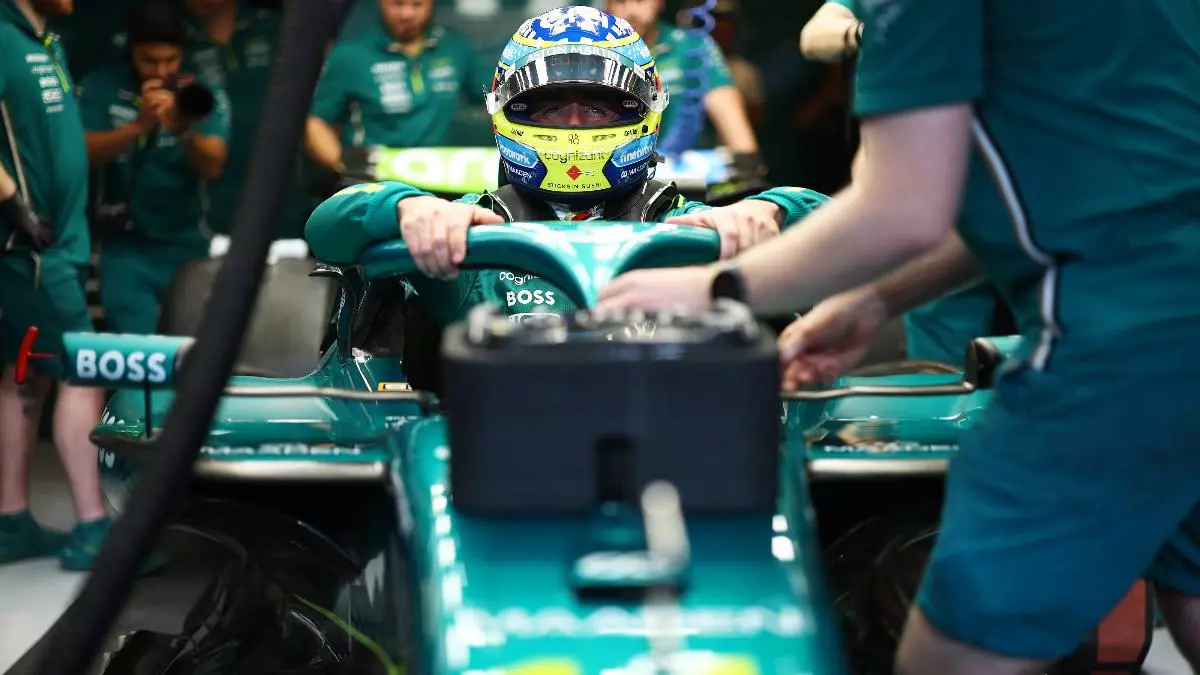
Sometimes a driver reads the car better than any telemetry can, and his conclusion echoes louder than the engine itself.
Abu Dhabi, December 2025
Fernando Alonso did not hide behind polite qualifiers when he assessed Aston Martin’s prospects ahead of the final race of the season. After a series of unpredictable sessions at the Yas Marina Circuit, the veteran driver admitted that finishing in the points would be difficult. His tone suggested more than a tactical caution. It reflected the trajectory of a team that began the year with lofty ambitions yet struggled to maintain consistency against rivals who adapted more quickly to the regulatory and aerodynamic demands of the 2025 campaign.
Across Europe, motorsport analysts have framed Aston Martin’s decline as one of the more puzzling arcs of the season. The team started with structural optimism and a car that appeared competitive in early wind tunnel simulations. Yet as months passed, performance stagnated while competitors introduced sharper upgrades. Engineers in the paddock point out that modern Formula One has become a battlefield governed by microscopic adjustments, data driven modeling and near perfect energy efficiency. In that environment, even small deficits become insurmountable. Alonso’s remarks simply brought public voice to a private concern.
Observers in Latin America, where Alonso retains a large fan base, interpret his warning as a candid acknowledgment of a technical gap that was never fully closed. They highlight that Aston Martin’s race pace repeatedly faltered in long stints, particularly under heavy fuel loads or on circuits demanding high traction stability. In their view, the driver’s evaluation aligns with what weekly race analyses have shown. Modern F1 cars demand a harmonious blend of mechanical grip, aerodynamic balance and energy deployment. Aston Martin struggled to synchronize those elements, leaving Alonso to manage races with experience rather than speed.
Asian commentators see a broader pattern. For years, teams that undervalued mid season upgrades or struggled to streamline internal decision making suffered steep declines. They argue that Aston Martin’s inconsistencies reveal a development philosophy still in transition. The team made ambitious structural investments, but translating those into sustained competitiveness requires time, coordination and resilience. Alonso’s frankness, they suggest, may serve as a catalyst for recalibration ahead of 2026.
The atmosphere inside the team has reflected both frustration and determination. Engineers acknowledge privately that the car’s behavior under changing track temperatures has been one of the season’s most persistent challenges. Subtle aerodynamic adjustments that produced gains in simulation did not always translate into real conditions. Understeer in low speed corners, instability under braking and difficulties in maintaining tire temperature windows created a cycle of compensations rather than improvements. By the time the championship reached the closing races, rivals had executed two or three major upgrade packages. Aston Martin introduced fewer, each with limited effectiveness.
Drivers can often mask structural limitations through racecraft, but only to a point. Alonso’s decades of experience allowed him to salvage results that the underlying pace did not guarantee. His adaptability, aggressive overtaking style and capacity to manage tire degradation kept the team competitive in select weekends. Yet even he recognized that performance gaps of several tenths per lap cannot be solved purely on instinct. His recent comments, therefore, reflect realism rather than pessimism. They reveal the gap between expectation and capability, a gap widened by the relentless evolution of the grid.
Global observers also point to psychological dimensions. A driver like Alonso, known for extracting maximum performance from imperfect machinery, rarely offers such a stark prognosis unless the situation demands transparency. His assessment may be intended as a signal to the organization, a push to accelerate internal restructuring or rethink development priorities. Formula One is not merely an engineering competition; it is a political, strategic and cultural contest. Statements made on Fridays often travel into boardrooms before Sunday’s race begins.
Still, optimism has not completely evaporated. Team principals remind that the final race often produces unexpected results because caution, miscalculations and track evolution can drastically affect outcomes. Yet they also understand that the structure of the modern championship rewards long term consistency far more than isolated flashes of performance. For Aston Martin, the weekend in Abu Dhabi represents both an ending and an inflection point. It will illuminate not only how the season concludes, but how the team intends to reframe its identity going into 2026.
As scrutiny intensifies, one truth remains: success in Formula One requires relentless reinvention. Teams march forward or fall behind. Drivers either defy the limits of the machinery or accept the reality it imposes. Alonso has chosen honesty. And in a sport defined by precision, honesty can be the sharpest diagnostic tool of all.
Phoenix24: journalism without borders. / Phoenix24: periodismo sin fronteras.