

 Mario López Ayala, PhD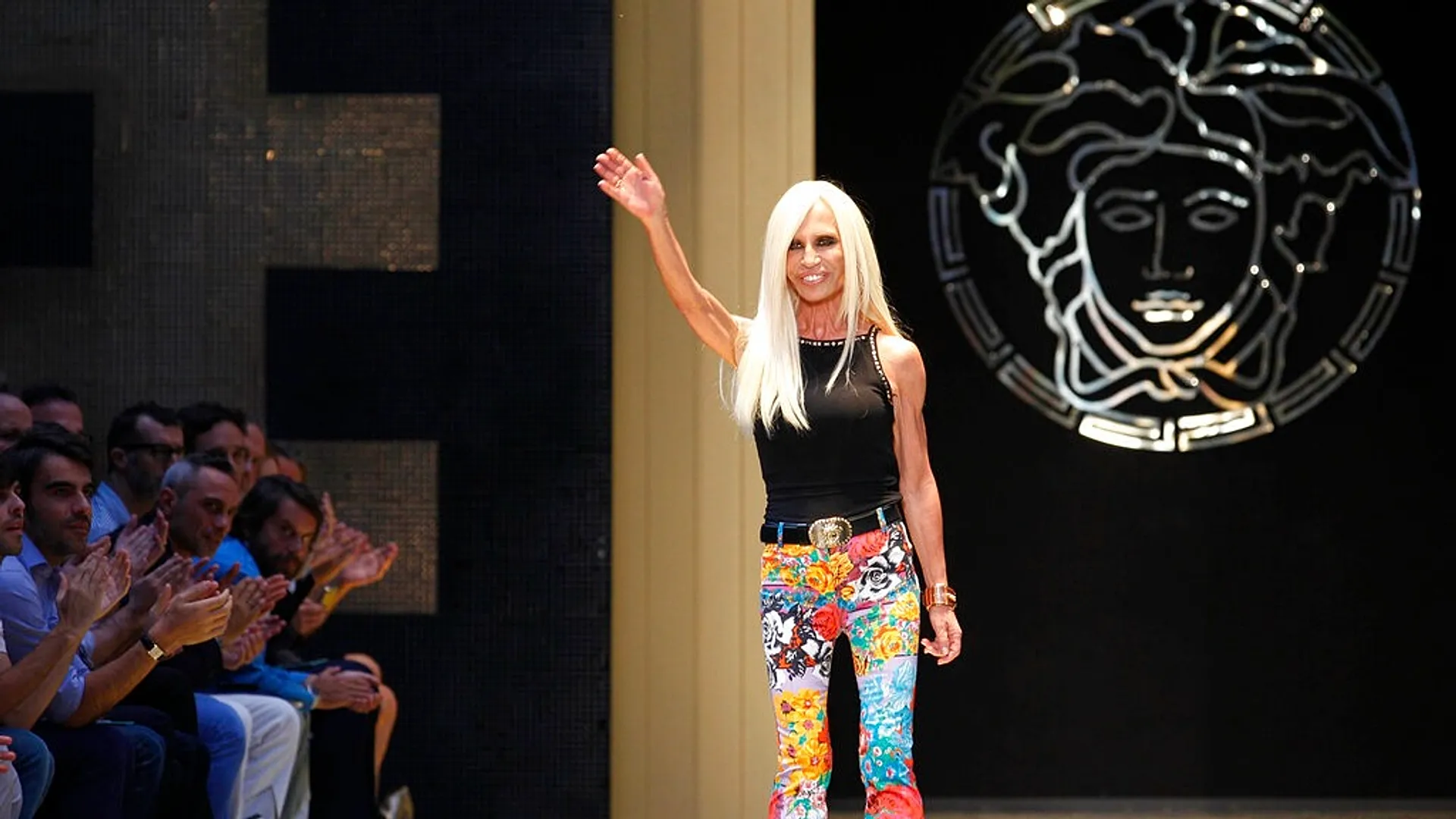
The rescue of a fallen icon often reveals more about the future of an industry than the fate of the brand itself.
Milan, December 2025
Prada’s acquisition of Versace for 1.25 billion euros has become the most consequential realignment in the European luxury sector in more than a decade. The move signals not only the recovery of a house long defined by glamour and theatricality but also a strategic bid by Italy to consolidate influence in a market increasingly dominated by French conglomerates. The transaction places two contrasting visual philosophies under the same corporate roof, merging Prada’s cerebral minimalism with the exuberant sensuality that has defined Versace for generations.
Versace enters this new chapter after years of uneven performance. Once a global reference of bold design, the brand struggled to adapt to shifting consumer preferences that favoured understatement and the aesthetic known as quiet luxury. Industry analysts in Europe describe this period as a structural mismatch between Versace’s DNA and the global appetite for subdued prestige. The acquisition therefore arrives at a critical moment, one in which the house needed capital, infrastructure and strategic coherence. Prada’s leadership, aware of this vulnerability, moved decisively to secure the brand and reshape the competitive map of the luxury landscape.
The deal is remarkable not only for its size but for what it represents. It marks the largest acquisition in Prada’s history and effectively reconfigures the hierarchy of Italian fashion. Economic observers draw parallels with earlier integrations in the luxury world that shifted market power toward those capable of managing multiple identities under a unified operational model. Institutions such as the OECD have noted that consolidation trends tend to accelerate during periods of global financial uncertainty, as stronger firms absorb legacy brands struggling to adapt. In this sense, Prada’s move is both defensive and expansionist, anchoring its portfolio while positioning Italy as a formidable contender against established power blocs.
Within the creative sphere, the acquisition triggers a tension that is both productive and symbolic. Prada’s design language, marked by intellectual precision and deliberate eccentricities, contrasts sharply with the Mediterranean opulence for which Versace is renowned. Italian cultural commentators argue that the merger could redefine the country’s role in global fashion, creating a uniquely Italian counterweight to the polished homogeneity of corporate French luxury. The alliance also mirrors a broader evolution in consumer psychology, where heritage brands must demonstrate relevance through narrative reinvention rather than mere stylistic repetition.
This strategic shift unfolds against a backdrop of global competition. Market observers in Asia, particularly those following editorial analyses from publications such as the South China Morning Post, report that European luxury houses now face an increasingly assertive consumer base in Asian markets. The appetite for bold, identity-driven fashion remains strong in regions where cultural reinterpretation fuels demand. In this context, Versace’s visual vocabulary retains significant potential, provided it is supported by the logistical and technological resources that Prada brings to the table. The merger therefore represents more than a financial rescue, functioning instead as a bid to reclaim cultural influence in regions where trend cycles accelerate rapidly.
On the operational front, Prada intends to integrate Versace gradually into its vertically structured production system. The company’s network of factories, distribution channels and digital ecosystems provides the infrastructure necessary for a full-scale relaunch. European analysts specialising in industrial organisation describe this as a textbook case of strategic absorption, where manufacturing capacity becomes the key to unlocking creative ambition. Versace’s revival, they argue, hinges on its ability to translate theatrical identity into products that meet contemporary standards of quality, sustainability and global distribution.
Yet the acquisition also reveals the fragility of luxury brands in an era defined by volatile demand. American financial analysts point out that the performance of heritage houses often depends on their ability to capture narrative dominance rather than merely produce goods. The United States has become an influential benchmark in shaping luxury discourse, and observers note that Versace’s resurgence will require a renewed storytelling strategy grounded in authenticity and modernity. Prada’s leadership seems aware of this imperative, emphasising that the goal is not to dilute Versace but to amplify its core essence through disciplined innovation.
The broader implications extend beyond the fashion world. European business strategists highlight that the move strengthens Italy’s internal cohesion in a sector often fragmented by rivalry. By consolidating two major houses, Italy positions itself as a global force capable of contesting the cultural and economic hegemony traditionally held by its French counterparts. At the same time, the acquisition reflects a continental trend in which luxury firms navigate geopolitical uncertainty by expanding scale and diversifying identity portfolios, ensuring resilience against external shocks.
For Versace, the transition is both a rescue and a rebirth. Its identity, long anchored in mythological symbolism and high-voltage glamour, now faces the challenge of modern reinterpretation under a parent house known for intellectual discipline. The success of this union will depend on the delicate balance between preserving visual exuberance and imposing structural coherence. If accomplished, the partnership could rewrite the dynamics of the luxury market, giving rise to an Italian powerhouse capable of shaping global taste for years to come.
The news may focus on the transaction, but the underlying transformation hints at a deeper truth: luxury thrives not only on aesthetics but on the capacity of its institutions to adapt, absorb and evolve without losing their narrative soul.
Analysis that transcends power.