

 Phoenix 24
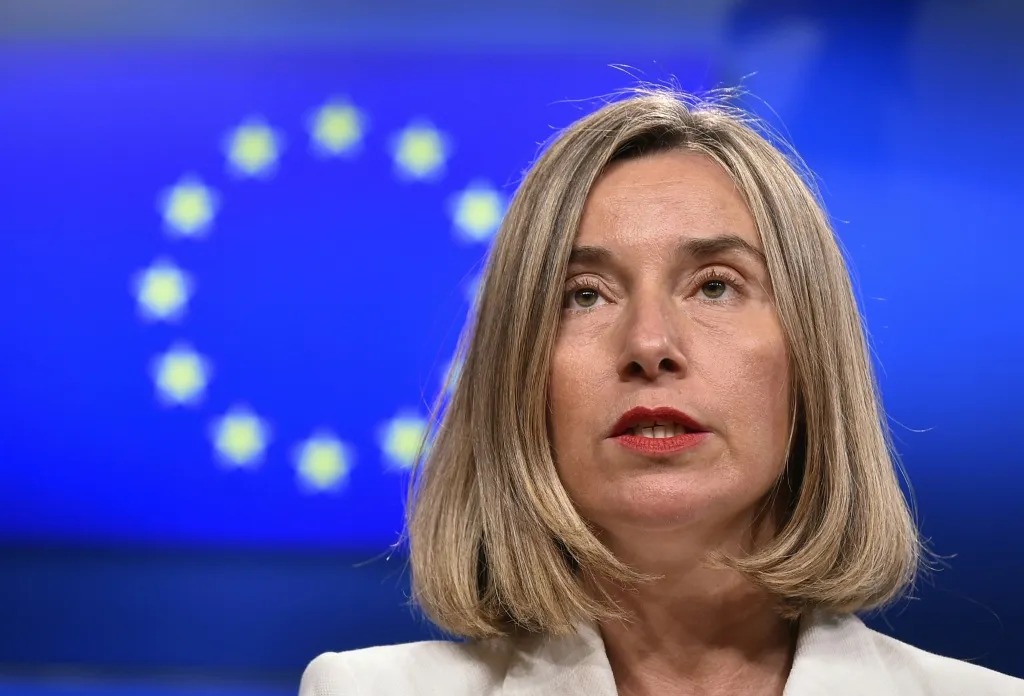
Power does not always collapse with a scandal; sometimes it trembles when the institutions built to protect it turn inward.
Brussels, December 2025. The arrest of Federica Mogherini, once one of the most recognizable faces of European diplomacy, sent waves of disbelief through political corridors across the continent. The former EU High Representative for Foreign Affairs, who now serves as the rector of a prominent European academic institution, was taken into custody as part of a sweeping investigation into suspected fraud linked to a publicly funded diplomatic training program. For a Union that prides itself on transparency and procedural rigor, the sight of federal investigators entering offices associated with the European diplomatic apparatus marked a moment of institutional rupture.
The operation was ordered by the European Public Prosecutor’s Office, a body mandated to investigate crimes involving EU funds. According to officials familiar with the early findings, simultaneous searches were carried out at multiple locations, including offices linked to the European External Action Service in Brussels, administrative buildings in Bruges and private residences connected to suspects. Mogherini was reportedly one of three individuals detained. Another was identified by European media as a senior diplomat with extensive influence in strategic planning. Investigators consider both figures central to the contested procurement process that awarded a multimillion euro contract for the training of young diplomats.
Experts in European governance highlighted that the nature of the accusations is unusually severe. The investigation focuses on potential manipulation of tender procedures, the leaking of confidential information and the possibility of orchestrated favoritism that may have undermined principles of equal competition. Institutional analysts in London noted that accusations of fraud, corruption and breach of professional secrecy strike at the core of the EU’s administrative identity. The Union has spent decades building a reputation as a legalistic powerhouse defined by rules rather than personalities. The current situation, however, exposes vulnerabilities that critics have attempted to highlight for years.
In parallel, regional security researchers in Germany pointed out that the scandal could erode public trust in Europe’s diplomatic machinery at a moment of heightened geopolitical volatility. With conflicts intensifying near the EU’s borders and renewed pressure on the bloc to show strategic cohesion, the arrest of a former top diplomat is likely to create uncertainty among partner states. Analysts at the Stockholm International Peace Research Institute remarked that institutional corruption, even if limited to procedural misconduct, weakens bargaining credibility during international negotiations. In moments when the EU seeks to present itself as a normative actor, cases of internal misconduct can be weaponized by rival powers to delegitimize European positions.
That dynamic was already visible in commentary emerging from Moscow, where political strategists seized on the arrest to frame the EU as hypocritical. They argued that the Union regularly lectures other states on governance and transparency while struggling to maintain the integrity of its own diplomatic networks. Meanwhile, observers in the Middle East noted that countries with tense relations with Brussels might use the episode to question EU funded democracy programs or development assistance. Though these reactions follow predictable geopolitical patterns, they underscore the broader symbolic damage the case has already produced.
Inside Europe, the atmosphere is marked by both confusion and vigilance. Senior officials in Brussels, speaking privately, acknowledged that the scale of the searches suggests the investigation is not an isolated episode but rather part of a deeper audit into the management of funds allocated to diplomatic training. Several current contracts involving educational institutions may come under revised scrutiny, raising concerns about continuity in programs that form the backbone of the EU’s diplomatic pipeline.
Scholars in Paris who specialize in European administrative law observed that the arrest of such a high profile figure is procedurally unusual. While EU officials can face legal consequences in national jurisdictions, the lifting of immunities and the coordination between prosecutors and EU bodies indicate a carefully structured process built to withstand legal challenges. Analysts clarified that the case will now require a long evidentiary pathway, with procurement documents, internal communications and financial flows likely subject to forensic review.
Beyond the legal realm, the psychological and political impact is profound. European citizens accustomed to viewing their institutions as technocratic and stable may interpret the event as a signal of deeper structural fragility. Communication experts in Geneva stressed that institutional crises feed public skepticism when political elites appear vulnerable to the same misconduct commonly associated with less consolidated political systems. In the wake of the arrest, EU spokespersons attempted to balance firmness with reassurance, noting that the Union’s oversight mechanisms are precisely what allowed the investigation to proceed without obstruction.
From an economic perspective, analysts at the Peterson Institute explained that corruption cases involving EU funded programs rarely trigger market volatility but can affect the allocation of future resources, reshape oversight frameworks and slow institutional operations. If the investigation expands, it could temporarily hinder training initiatives crucial to the formation of future diplomatic staff, potentially affecting the Union’s long term external engagement strategies.
For many in Europe’s political and academic communities, the arrest was unthinkable until it happened. Mogherini, associated for years with the EU’s external identity, symbolized a generation of officials who navigated turbulent global transitions. Her detention marks a transformative moment in which the boundaries between public accountability and political legacy collide with full force. The Union now faces a delicate balance: defending the integrity of its institutions while managing the reputational risks that accompany the fall of one of its most emblematic representatives.
Whether the investigation will expand or narrow remains uncertain. What is clear is that Europe has entered a phase of introspection. The institutions that once projected stability now confront a crisis born from their own internal mechanisms. The fallout will shape political narratives, bureaucratic reforms and diplomatic interactions long after the legal process concludes.
Every silence speaks. / Cada silencio habla.