

 Phoenix 24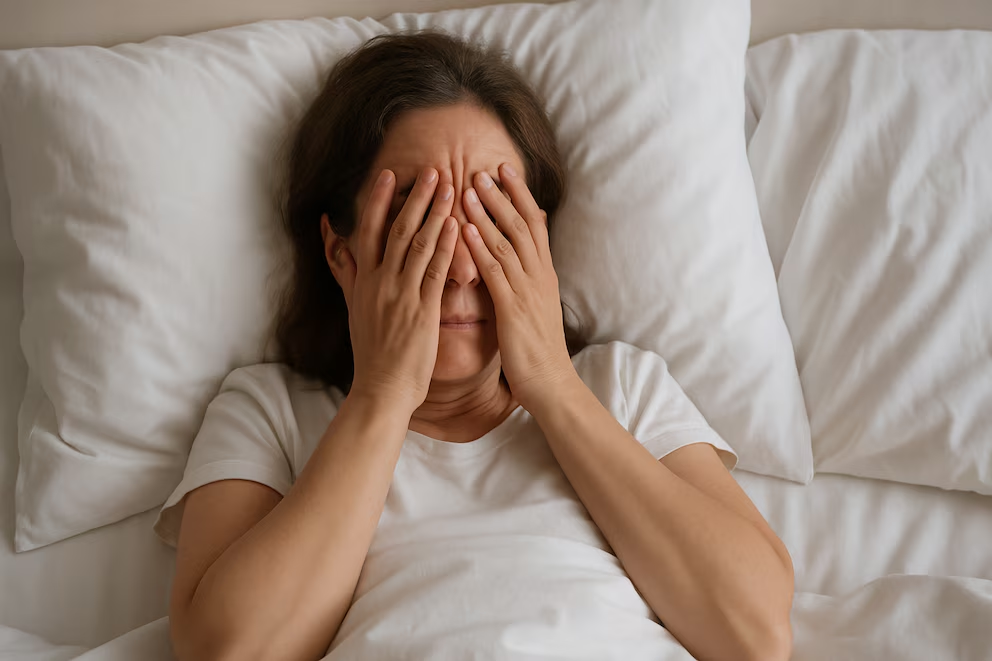
It starts with a familiar routine, a final glance at a screen that feels harmless, a quick check of notifications that turns into minutes, then into the quiet erosion of the very moment when rest should begin.
Brussels, December 2025. A new wave of scientific findings warns that a significant share of teenagers are experiencing poor sleep quality linked to extended evening use of electronic devices. Researchers estimate that close to forty percent of adolescents show signs of disrupted rest, shorter sleep cycles or irregular patterns that correspond to high daily exposure to screens. What appears to be a simple habit has become a global health concern that touches cognition, emotional balance and long term development during one of the most vulnerable stages of life.

The biological mechanisms behind this trend are increasingly understood. Light from electronic screens delays the body’s natural preparation for sleep by altering signals that regulate circadian rhythms. It interferes with the production of melatonin and keeps the brain in a state of alertness that makes falling asleep more difficult. For adolescents, whose neural circuits are still undergoing rapid formation, this disruption produces a cascade of side effects. Studies from Europe, North America and Asia converge on a similar conclusion. When teenagers spend long hours on their phones or tablets before bedtime, they fall asleep later, awaken more frequently and feel less restored in the morning.
The consequences extend beyond fatigue. Poor sleep quality in adolescence is strongly associated with reduced concentration, impaired memory, unstable mood and higher levels of anxiety. Mental health professionals note that prolonged sleep disruption can increase vulnerability to depressive symptoms, especially when combined with social media pressures that amplify stress during late hours. Teachers often observe declines in academic performance, reduced motivation and an increase in irritability among students who show persistent sleep irregularities. These patterns are not isolated. They reflect a structural shift in how young people manage time, stimulation and rest.
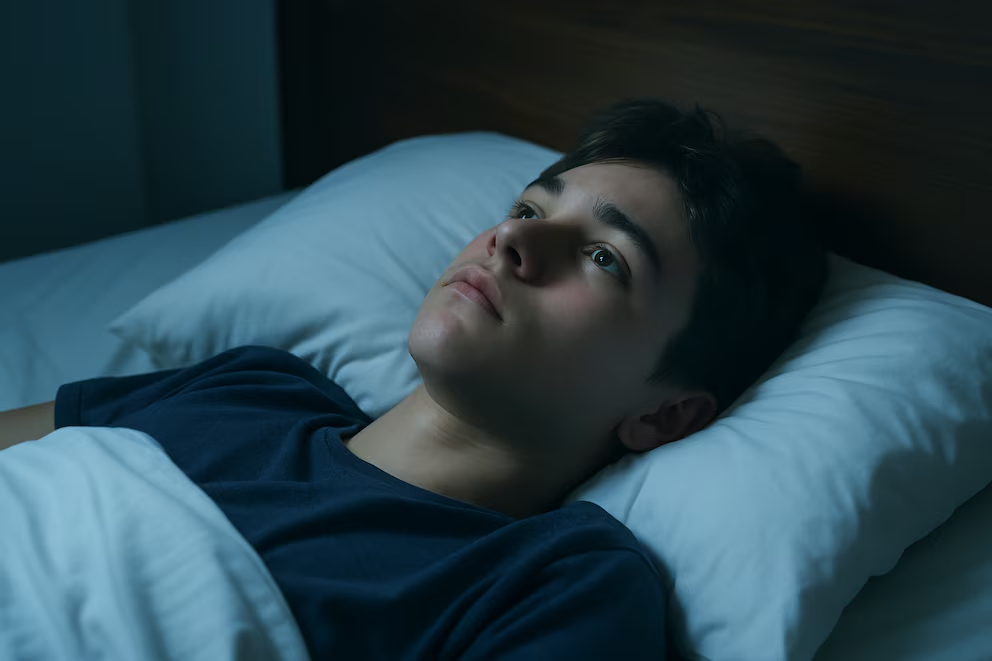
The problem is not simply the presence of screens but their timing. Evening hours were traditionally reserved for winding down and lowering sensory input. Digital devices, however, introduce continuous stimulation. Messages arrive at unpredictable moments. Social media feeds invite endless scrolling. Video platforms encourage prolonged viewing. For many adolescents, nighttime becomes an extension of the daytime environment rather than a transition toward calm. Sleep researchers explain that this extended activation makes the brain resist disconnecting even when fatigue is evident.
Parents and educators often underestimate the scale of the issue. What appears to be normal teenage behavior may in fact be a pattern of chronic sleep restriction. Signs such as difficulty waking up, daytime sleepiness, loss of interest in activities once enjoyed or sudden changes in academic performance may indicate that rest is being compromised. Families sometimes attempt informal limits, but without consistent habits and awareness of the underlying science, these efforts produce inconsistent results. Public health specialists recommend establishing routines that encourage adolescents to disconnect from screens well before bedtime and to maintain a regular sleep schedule throughout the week.
Technology companies have introduced features intended to reduce nighttime usage, such as dimmed color modes, scheduled pauses or reminders to take breaks. While helpful, these tools cannot replace the need for a cultural shift that recognizes sleep as a cornerstone of adolescent well being. Schools can support this shift by incorporating sleep education into health programs, highlighting the impact of evening screen exposure on academic and emotional functioning. Some institutions have considered later start times to accommodate the biological tendencies of teenagers, though such changes require broad coordination.
Not all adolescents are equally affected. Those who live in environments with high academic pressure or limited recreational alternatives often turn to screens as the primary source of connection or escape. In such contexts, nighttime device use can feel like the only accessible space for social interaction. Psychologists warn that addressing the problem demands empathy rather than punishment. Restrictive measures alone may intensify stress or secrecy. A more effective strategy encourages dialogue about sleep health and digital habits while offering alternative evening routines that promote relaxation and separation from stimulating content.
Despite regional differences in culture and lifestyle, the phenomenon appears globally consistent. Studies from Europe align with research in the Middle East, Latin America and Asia. Adolescents everywhere face similar temptations and similar physiological responses to screen exposure. The challenge is universal and does not depend on socioeconomic background. The digital environment has become woven into daily life, and the transition toward healthier practices requires coordinated efforts from families, schools, health systems and technology developers.
The stakes are high. Sleep is not a luxury. It is a biological requirement for emotional stability, memory consolidation and physical development. When adolescents lose the deep rest they need, the effects accumulate. Day by day, their capacity to learn, regulate emotions and build resilience weakens. If current habits persist unaddressed, a generation may reach adulthood carrying the consequences of chronic underrest that began long before they realized the cost.
The solution does not require fear but awareness. Healthy nighttime environments, predictable routines and conscious limits on evening screen exposure can restore balance to the adolescent sleep cycle. The quiet hours of the night once belonged to rest. Reclaiming them is now an urgent task.
Phoenix24: every silence speaks. / Phoenix24: cada silencio habla.