

 Phoenix 24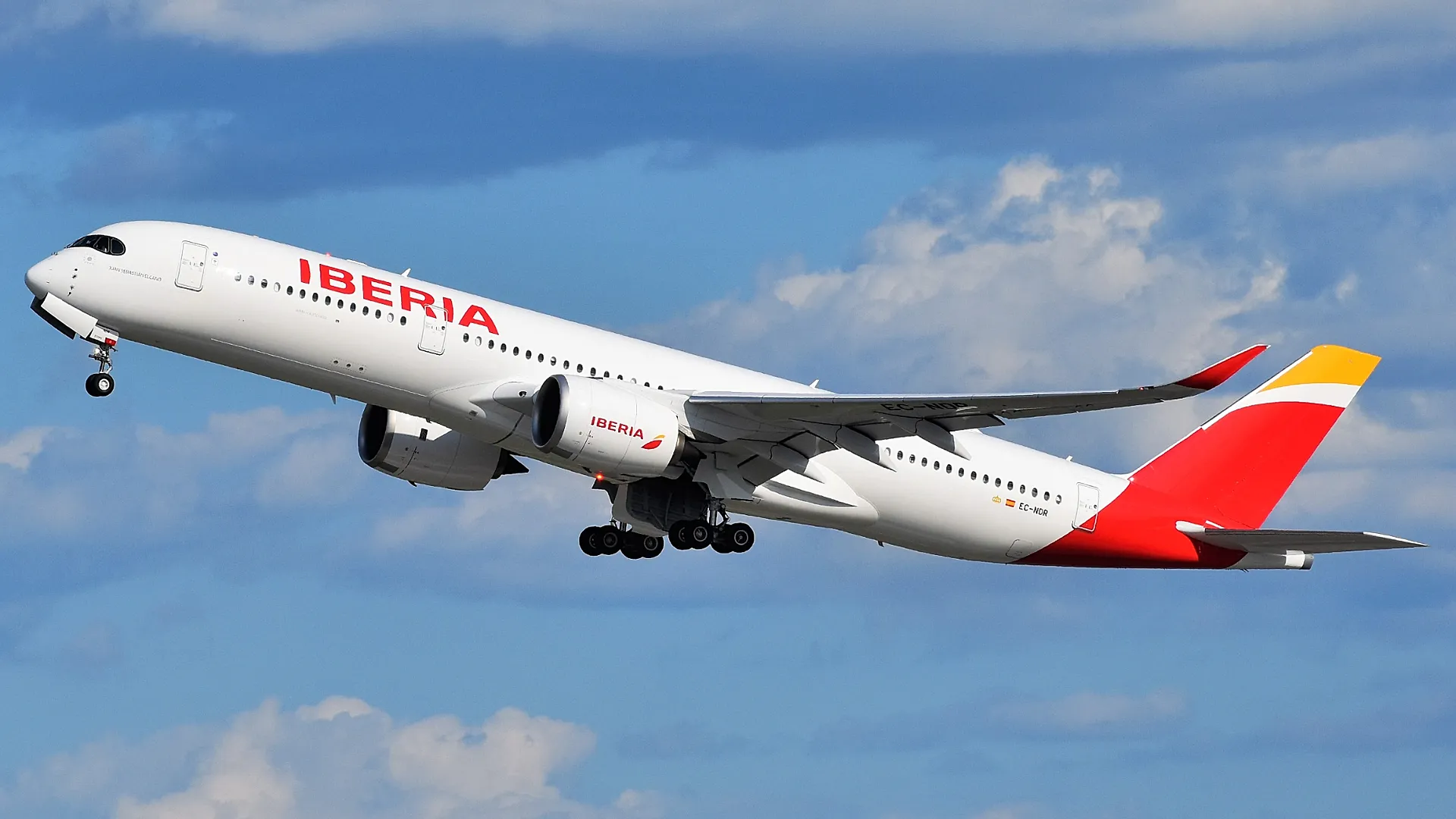
It was not weather, nor mechanical fault, nor any of the familiar operational disruptions that ground aircraft. It was something more intangible yet far more dangerous, a certainty shared quietly among regulators and airline executives that the air above a nation had ceased to be reliably safe.
Brussels, December 2025. Iberia’s announcement that it will suspend all flights to Venezuela until the thirty first of December marked a rupture in a long standing transatlantic corridor that connects Spain with one of its most historically intertwined destinations. The decision, presented as a precautionary measure aligned with risk assessments from European aviation authorities, immediately reshaped travel plans for thousands and signaled an escalation in concerns about regional airspace security. The airline clarified that operations will only resume when conditions permit what it describes as full safety guarantees, a threshold that at present appears difficult to satisfy.
Behind the official explanation lies a complex mosaic of developments in the Caribbean basin and northern South America. Over recent months, the region has experienced an intensification of military activity, airspace advisories and logistical alerts that extend beyond routine operational fluctuations. Reports from international observers describe a pattern of aerial movements, radar anomalies and maritime exercises that complicate flight routes near Venezuelan territory. Within aviation circles, such patterns are often seen as early indicators of zones where risk evaluation becomes fluid and where civil air traffic faces heightened exposure to the unpredictability of political tension.
For travelers, the impact is immediate and personal. Families attempting to reunite during the holidays find themselves stranded. Business plans collapse into uncertainty as companies seek alternative routes through third countries. Students, medical travelers and members of the Venezuelan diaspora confront yet another barrier in a landscape already shaped by currency controls, migration restrictions and logistical fragility. Customer service teams across Spain and Latin America face a wave of rebookings and refund requests, a cascade that underscores how air connectivity remains an essential lifeline in cross border exchange.
For the aviation industry, however, the implications extend far beyond disrupted itineraries. Airlines cannot ignore even low probability risks in air corridors where the presence of armed actors, contested airspace boundaries or irregular military maneuvers may generate unexpected hazards. In modern civil aviation, risk does not need to be imminent to warrant action; it merely needs to be plausible and poorly documented. Iberia’s decision reflects that calculus. If the operational environment presents uncertainties that cannot be mitigated through standard procedure, the responsible move is suspension, even at the cost of revenue and customer dissatisfaction.
Spain’s regulatory authorities have reinforced this stance, emphasizing that flight permissions are contingent upon verifiable assurances that aircraft, crew and passengers will not be exposed to abnormal threats. The emphasis on verification is not trivial. In an era when hybrid conflicts blur the line between military and civilian spheres, airspace conditions can shift quickly. A nation’s internal turbulence, especially when accompanied by contested sovereignty or external pressure, can create conditions that inadvertently endanger air routes. European transportation analysts observe that the same principles used to evaluate conflict zones in the Middle East or Central Asia now guide decisions regarding certain parts of Latin America, a shift that underscores how regional instability has become globalized.
The suspension also raises questions for Venezuela, whose international carriers have already faced restrictions on various routes due to regulatory disputes and safety concerns. Losing direct access to Spain, a central gateway for commerce, tourism and diaspora networks, weakens the country’s aviation ecosystem and further isolates it within global logistical chains. For Venezuelan authorities, restoring trust in the nation’s aviation environment will require more than assurances. It will demand demonstrable stability, predictable governance of airspace and a diplomatic engagement that reduces flight risk classification at the international level.
In the broader geopolitical arena, Iberia’s move resonates as a quiet acknowledgment of shifting priorities. Foreign ministries across Europe have been revisiting contingency plans for citizens abroad, reevaluating evacuation routes and assessing the security implications of sudden disruptions in air travel. The decision of one airline may appear isolated, yet it contributes to a cumulative perception that the region is entering a phase where the integrity of airspace can no longer be taken for granted. American analysts point out that when civil aviation adopts a cautionary posture, it often reflects risk assessments that governments hesitate to articulate publicly.
What remains uncertain is the timeline for resolution. Even if conditions improve, reversing a suspension requires layered verification, governmental cooperation and an environment where military actors refrain from activities that could compromise civil air traffic. Iberia’s announcement included no concrete forecast for reinstatement, suggesting that the company anticipates a complex path ahead. Travelers may need to rely on indirect routes through other Latin American hubs, though such alternatives introduce their own unpredictabilities.
For now, the skies between Spain and Venezuela remain symbolically and materially interrupted. The empty corridor serves as a reminder of how fragile international mobility becomes when security, politics and aviation intersect. In an industry defined by precision and predictability, the current uncertainty underscores that the ground can shift quickly and that the decision to fly is never detached from the world it traverses.
Phoenix24: clarity in the grey zone. / Phoenix24: claridad en la zona gris.