

 Phoenix 24
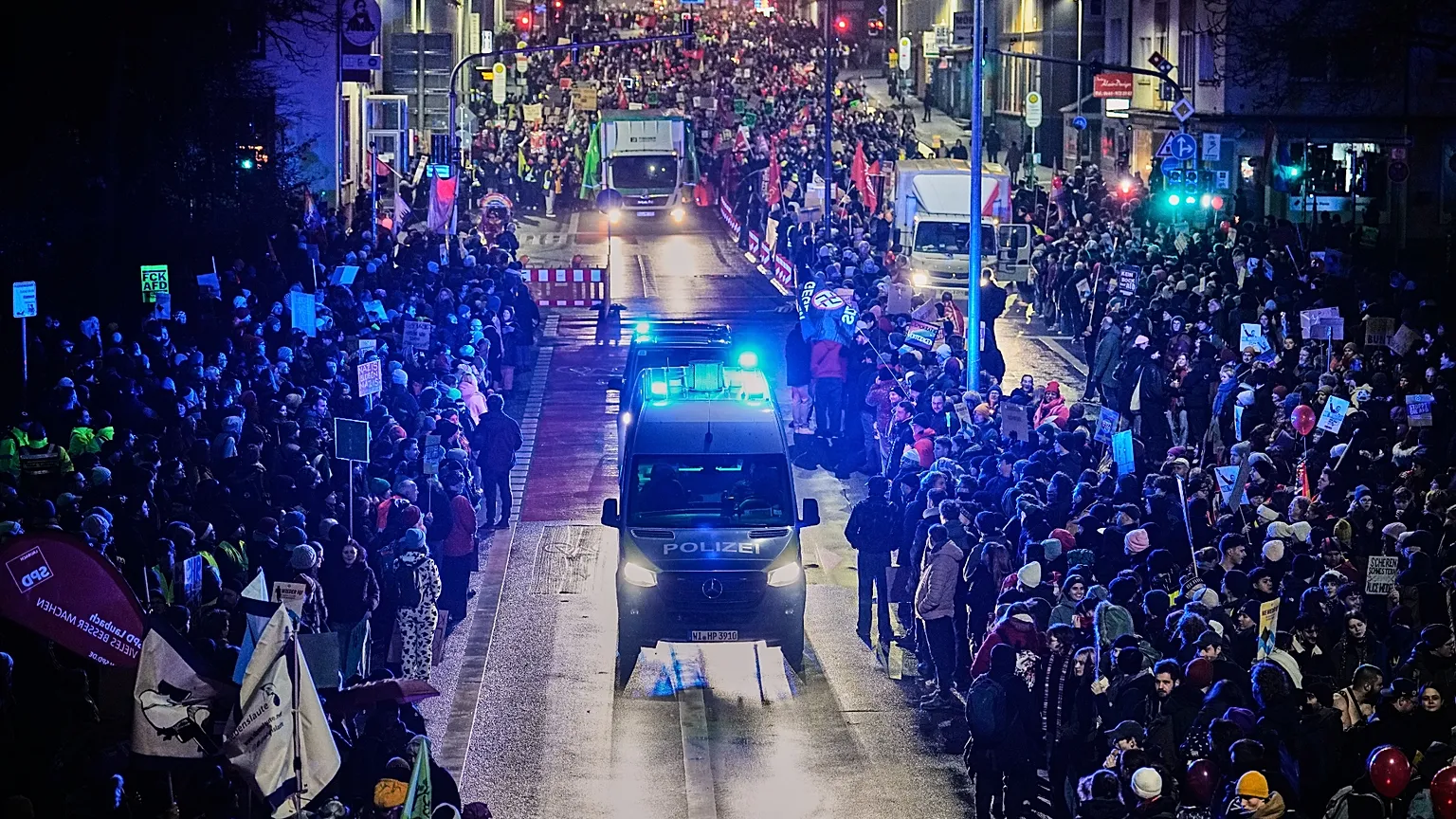
A wave of demonstrators shut down roads and access routes in Gießen to stop the far right from consolidating its new youth platform.
Gießen, November 2025
Thousands of protesters converged on Gießen from across Germany to obstruct the founding assembly of the new youth organization aligned with AfD. From early morning, highways and regional roads surrounding the city were blocked by coordinated groups determined to prevent delegates from reaching the venue. The disruption forced authorities to deploy an extensive police operation rarely seen for an internal party gathering, underscoring the tension surrounding the event.
The mobilization brought together grassroots unions, student associations, antifascist collectives and civic networks alarmed by the resurgence of structures previously identified as extremist by German security agencies. Many participants described the youth project as an attempt to rebuild ideological platforms once dismantled by state oversight. Their banners and chants reflected a broader insistence that public vigilance is essential when political actors attempt to normalize exclusionary narratives under institutional labels.
As the morning progressed, AfD delegates began entering the conference center under tight security. Armored vehicles, reinforced checkpoints and tactical police units secured the perimeter to ensure that the internal congress could proceed. Observers monitoring democratic processes estimated that more than a thousand delegates would take part in votes to define the statutes, leadership and strategic orientation of the new organization. The presence of senior party figures suggested that the initiative was designed to strengthen long term influence among younger constituencies.
Although most demonstrations remained peaceful, moments of tension emerged when groups attempted to move closer to the venue. Police responded with irritant spray and water cannons to disperse crowds approaching restricted areas. Stones were thrown in isolated exchanges, but the confrontations did not escalate into broader violence. Medical volunteers treated minor injuries on site while civil society organizations maintained support stations throughout the surrounding streets.
Analysts specializing in extremism across Europe noted that the clashes in Gießen mirror a rising concern throughout the continent: the rapid growth of youth structures tied to populist parties promoting nationalist and anti immigration narratives. Research centers in North America have warned that these organizations can build digital ecosystems quickly, while security specialists in the Middle East highlight that youth based ideological hubs often evolve into influential laboratories for future electoral strategies. The convergence of these dynamics helps explain the scale of public resistance in Germany.
Throughout the day, the city became a mosaic of marches, vigils and simultaneous gatherings. Families, students, workers and migrant communities joined the demonstrations, signaling that the opposition to the new youth wing extends across diverse social sectors. The atmosphere blended disciplined indignation with a collective determination to defend democratic norms perceived as increasingly at risk.
While the founding congress proceeded under heavy police protection, the intensity of the protests marked a defining moment. For many participants, the mobilization demonstrated that civil society is prepared to confront political structures that seek legitimacy while deepening social fractures. The tension between public resistance and party organization revealed a shifting landscape in Germany, one where debates over democratic protection are entering a far more confrontational phase.
Truth is structure, not noise. / La verdad es estructura, no ruido.