

 Mario López Ayala, PhD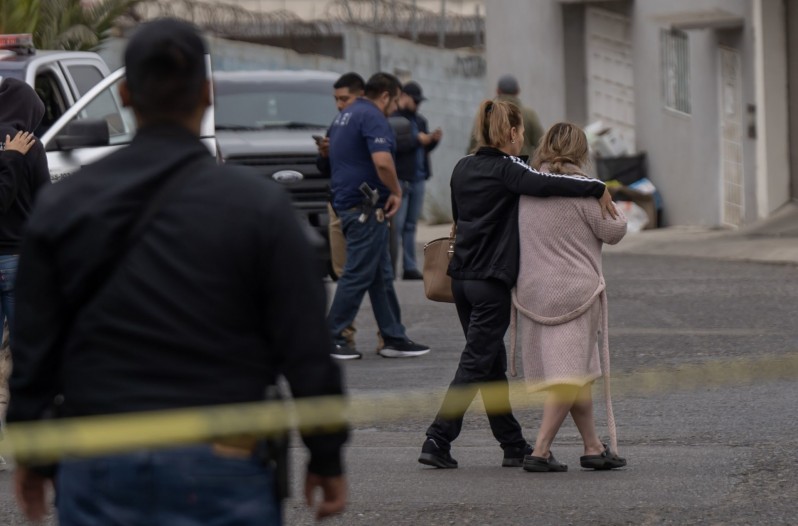
When the State steps away, Mexico does not surrender. It becomes collective conscience.
Mexico City
There are days when Mexico seems to walk with an ancient weariness, as if the country carried memories not only of this generation but of all those that never had a choice. You don’t need to turn on the television to feel it; it is present in the eyes of those who line up at five in the morning for a medication that never arrives, in the farmer who looks at his harvest as if it were a lottery ticket with no prize, in the teacher who works in classrooms without resources, and in the young person who learns far too early that violence can reach him without asking permission. That collective pulse, a mixture of exhaustion, pride, anger, and hope, is the true thermometer of a country fighting against its own institutional abandonment.
Reality became even harsher when the shortage of medicines stopped being a statistic and became a routine. Entire families turned into improvised experts in hospital logistics, community fundraising, and desperate searches for treatments. The promise of a universal and free healthcare system dissolved between official denials, empty shelves, and explanations that never make it to waiting rooms. At the same time, rural Mexico discovers that sowing is no longer enough; one must protest, block roads, demand, and risk everything just to force the State to acknowledge the obvious. The Mexican farmer no longer competes only with market fluctuations; he competes with the systematic indifference of those in power.
But the deepest wound is not only in the institutions; it lives in the violence that cuts through public life. And Sinaloa is living proof of it. For more than a year and four months, the state has been the epicenter of an internal war between Los Chapitos and Los Mayos, two factions of the same cartel that now operate like armies with their own rules, routes, and borders. This dispute, silent in official discourse yet deafening to the population, has left the dead, entire communities displaced, schools closed, and a fear that people inhale before stepping outside their homes. It is not a war between criminals distant from daily life; it is a war that determines who rules in territories where the State has ceased to exist.
To this landscape we must add the political violence that claimed the life of Carlos Manzo, a community leader who represented the possibility of contesting public space without owing anything to organized crime. His murder ignited an unexpected spark: the spontaneous uprising of Generation Z, which took to the streets to remind the nation that youth apathy is a myth invented by those who fear their strength. Their signs, their chants, their silences, and their outrage were not a partisan act; they were an act of dignity. These young people were not marching only for Manzo; they were marching for all those who can no longer march for themselves.
Meanwhile, on the economic and legislative fronts, the country receives yet another blow. The 2026 Economic Package includes severe cuts to education, science, and public universities. And in Mexico, that is far more serious than a budget adjustment; it wounds a pillar essential to public life and to the future of young people. Public education is the only mechanism that guarantees both social mobility and critical thinking in millions of households. At the same time, various congressional bodies approved salary increases for legislators and officials, as if the country were enjoying prosperity, as if taxpayers were not already suffocated by a harsher fiscal regime and an increasingly uncertain economy. It is difficult to demand trust when the political apparatus itself seems detached from the reality of its citizens.
Legal uncertainty, fiscal pressure, and territorial violence have triggered a constant drip of capital leaving the country quietly yet with profound consequences. Investment does not flee from risk; it flees from arbitrariness. And when markets perceive that rules may change according to the mood of those in power, they pack their bags before raising their voice. The result is an economy that does not collapse overnight, but slowly empties out, like sand slipping away while everyone pretends not to notice the loss.
The most painful cost is the emotional wear left by this accumulation of open fronts. There is a social fatigue that does not scream but is palpable. A civic exhaustion hiding behind humor, routine, and the normalization of fear. Distrust became instinct, disbelief became defense, and anger became an energy that, if not channeled, ends up consuming everything. And even amid the wreckage, the country preserves an almost mystical force: the conviction that there will always be a breaking point toward something better, even if we still don’t know when it will arrive.
Because Mexico has a characteristic that unsettles those who underestimate it: it awakens when no one expects it. It awakens from below, from those who never appear on television, from those who work, study, sow, teach, and resist. It awakens in a youth protest, in a teacher who refuses to give up, in a farmer who will not abandon his land, in a mother demanding justice, in a student who refuses to accept that his future is already written. And when that awakening comes, it transforms far more than the political class imagines.
That is why, even along this long street of bitterness, even amid anger, exhaustion, and pain, a truth continues to beat within the national heart: there is no place like Mexico. And sooner or later, because our history, our memory, and our identity demand it, Mexico will rise again and soar high, as high as the Eagle itself.
Mario López Ayala is a senior Mexican journalist, geopolitical analyst, and applied psychologist at Phoenix24. His work integrates strategic intelligence, cybersecurity, and algorithmic governance with the study of collective behavior in high-pressure political and media environments. He is an active member of the International Federation of Journalists (IFJ/FIP), the world’s largest organization of journalists, representing 600,000 media professionals from 187 unions and associations across more than 140 countries, headquartered in Brussels. In Mexico, he is also part of the United Communicators Organization of Sinaloa (OCUS), where he promotes professionalization and critical analysis of the contemporary media architecture and its implications for security and democratic governance.