

 Phoenix 24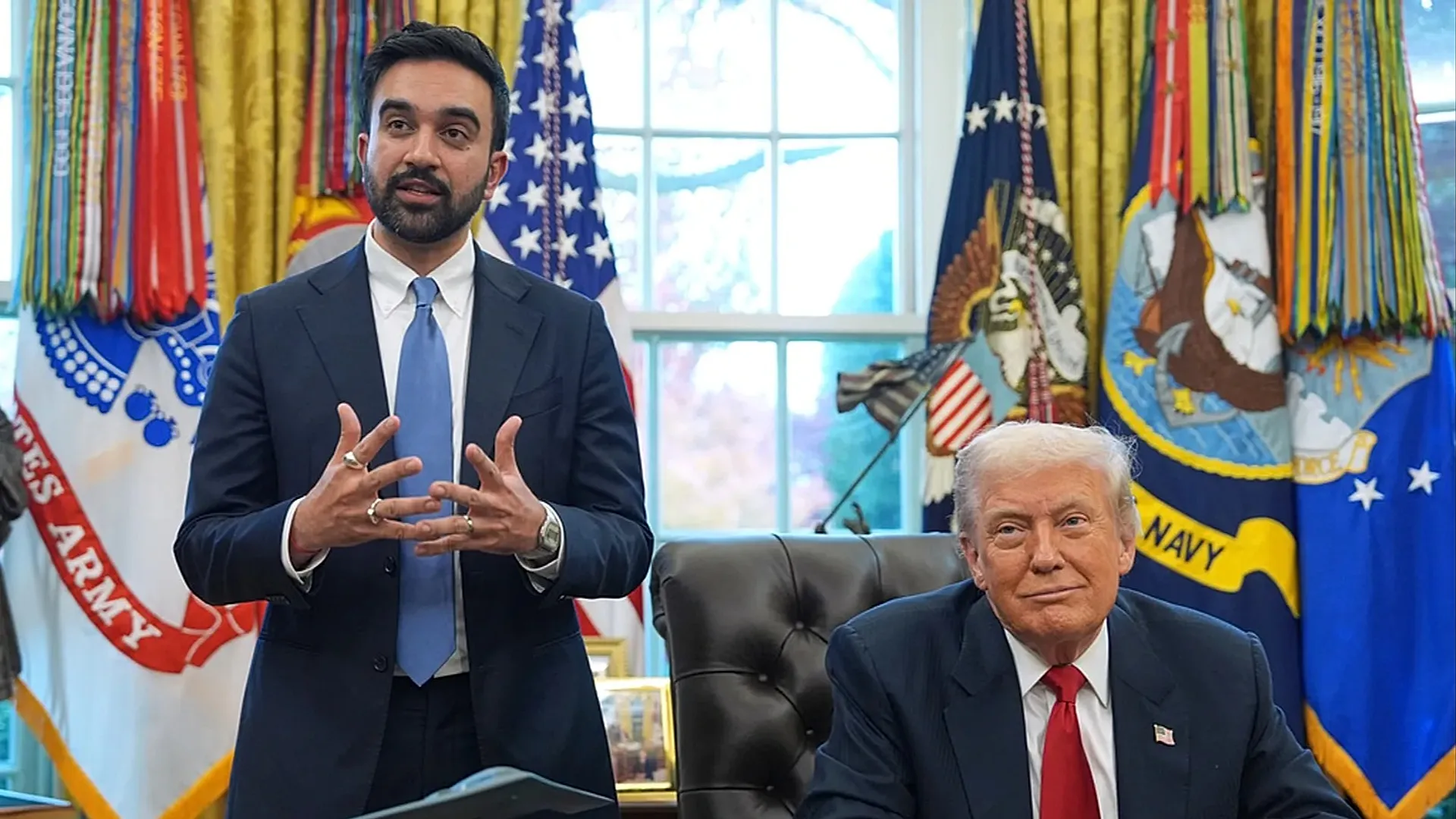
Sometimes the unexpected handshake reveals more about power than a year of speeches.
Washington, November 2025
The encounter between President Donald Trump and New York legislator Zohran Mamdani stunned Washington by transforming what was expected to be a tense ideological clash into a public display of cooperation. The White House confirmed that the two met to discuss affordable housing, urban security and federal support for New York communities, yet the cordial tone that emerged from the Oval Office quickly rippled across both parties. For Republicans and progressives alike, the meeting became a moment of recalibration, exposing how political antagonism can shift when the pressures of governance and social unrest narrow the margins for confrontation.
Analysts cited by the New York Times noted that the meeting had not been designed to signal alignment. It originated from appeals by New York community leaders seeking access to federal resources for housing and economic revitalization. Mamdani, known for his left wing positions and outspoken criticism of Trump, entered the meeting expecting turbulence. Trump, for his part, had prepared for confrontation. Yet witnesses reported that the conversation quickly turned pragmatic, emphasizing shared concerns rather than ideological fault lines. Such a shift surprised both negotiating teams and immediately became a subject of speculation in Washington’s policy circles.
European diplomats interviewed by Reuters expressed astonishment at the tone of the meeting, suggesting that unexpected alliances of this kind may alter perceptions of U.S. leadership abroad. In parallel, analysts from Middle East Eye argued that Trump’s ability to reposition himself with domestic critics sends a message to international partners who monitor Washington’s internal cohesion as a barometer of geopolitical predictability. The demonstration of flexibility carries implications for regions where U.S. foreign policy oscillates between engagement and confrontation.
Inside the Republican Party, reactions ranged from bewilderment to concern. Several lawmakers loyal to Trump admitted privately that they found the meeting “unsettling,” given Mamdani’s history of criticism toward the administration. Progressives in New York expressed similar confusion, with some interpreting Mamdani’s gesture as a tactical risk and others as a potential opening to secure long sought concessions. Reporting from the Asia Times suggested that the episode illustrates how political actors turn to negotiation when economic pressures and social instability make ideological rigidity unsustainable.
During the meeting, Mamdani pushed for expanded tenant protections, investment in public housing and reinforcement of social infrastructure in marginalized neighborhoods. Trump, meanwhile, appeared keen to demonstrate responsiveness to urban communities where his support had declined. The brief convergence between both agendas created the possibility of pilot programs that could be replicated in cities governed across ideological lines. Though not all proposals reached agreement, the encounter laid the groundwork for further negotiation and delivered political capital to both leaders.
Behind the public cordiality, the calculus was complex. Mamdani sought to strengthen his standing in immigrant communities and present himself as a negotiator capable of delivering federal commitments. Trump aimed to broaden his appeal and project an image of pragmatic leadership beyond partisan divides. The Financial Times reported that the White House welcomed any dynamic that could ease urban tensions at a time when global economic indicators signal instability and the administration faces mounting domestic demands.
International observers also highlighted the symbolic weight of the meeting. Analysts at Al Jazeera stressed that U.S. domestic politics and global perception remain deeply intertwined. When political rivals display unexpected cooperation, it signals resilience within democratic institutions and challenges assumptions about the rigidity of American political polarization. For allies and adversaries alike, the meeting showed that Washington retains the ability to produce moments of cross-ideological negotiation even under internal strain.
Still, the alliance is fragile. Mamdani faces criticism from progressive activists who view collaboration with Trump as a betrayal of core principles. Trump confronts backlash from supporters who argue that engaging with a left wing critic risks diluting the administration’s ideological clarity. These pressures may erode the goodwill forged in the Oval Office or transform the episode into a pivot point in the relationship between the White House and communities long marginalized by federal policy.
What remains clear is that the meeting redefined expectations about political behavior in a polarized America. The image of Trump and Mamdani speaking calmly, exchanging commitments and projecting tactical unity will echo through think tanks, newsrooms and diplomatic briefings. Less for the agreements themselves, and more for the fact that two ideological adversaries chose negotiation over spectacle. In a moment marked by fractures, the encounter widened the boundaries of what is politically imaginable.