

 Phoenix 24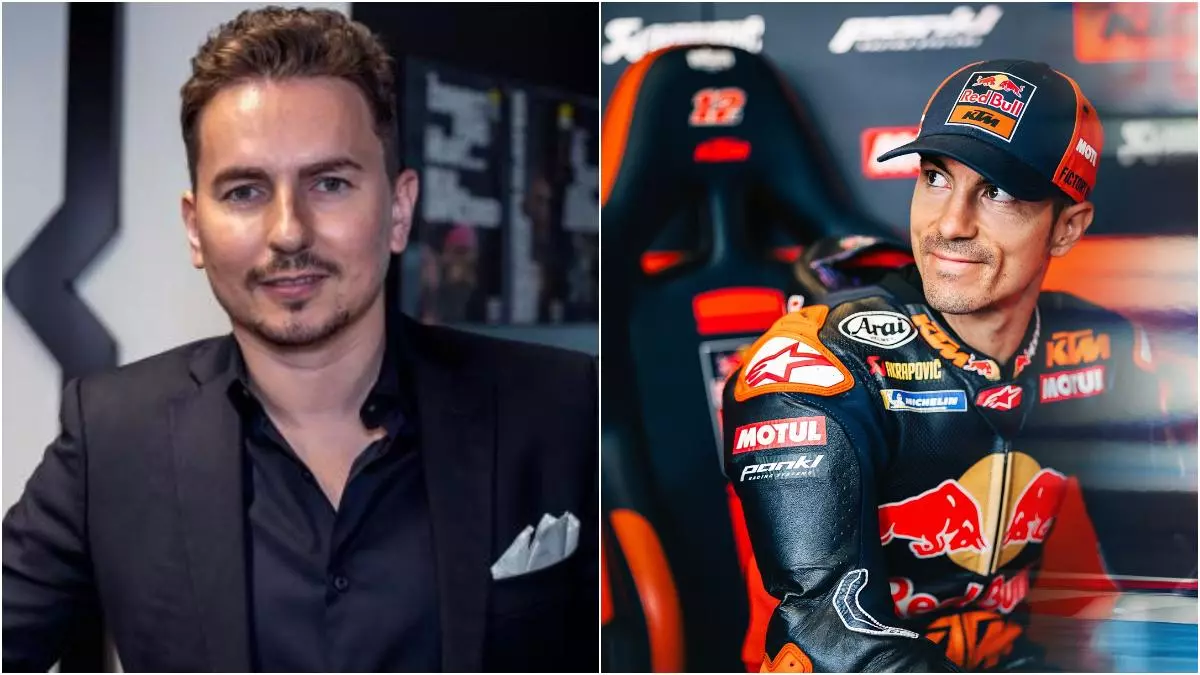
A familiar silhouette has begun to reappear around the circuit, carrying the weight of past championships and the promise of a new partnership.
Barcelona, November 2025.
Jorge Lorenzo, former MotoGP world champion and one of the most technically refined riders of his generation, has agreed in principle to return to the paddock in a new role supporting Maverick Viñales as a performance coach for the upcoming season. The arrangement marks a significant shift in the dynamics of the sport, as one of its most celebrated figures transitions from the intensity of competition to a position focused on strategic guidance, mental preparation and race weekend execution. The move arrives at a moment when Viñales is searching for greater consistency and competitive stability after a series of fluctuations that have hindered his trajectory across recent seasons.
Across Europe, specialists from racing development institutes noted that Lorenzo’s unique riding philosophy has long been considered one of the most technically elegant approaches in modern MotoGP. Analysts emphasized that his precision, controlled aggression and cornering technique defined an era in which his rivalry with other legends shaped the championship. These experts suggested that translating such experience into coaching could provide Viñales with a decisive advantage, offering guidance on tire management, race pace distribution, braking discipline and the psychological patterns that often determine performance on Sunday afternoons. They also highlighted that Europe’s racing ecosystem increasingly values the transfer of veteran expertise to active riders in search of competitive refinement.
In the United States, commentators connected to motorsport analytics observed that the arrival of Lorenzo in a coaching role suggests an evolution in how MotoGP teams interpret performance development. They argued that similar models in American motorsport, where former champions support rising contenders, have yielded significant improvements in rider consistency and tactical decision making. Analysts noted that Viñales’s career has oscillated between exceptional speed and unpredictable results, making the addition of a mentor with Lorenzo’s background both strategically ambitious and potentially transformative.
Observers in Asia examined the decision through the lens of rider psychology and competitive culture. Experts in Japan and Indonesia remarked that having a former world champion in close proximity can alter the mindset of a rider struggling to convert raw pace into results. They explained that Lorenzo’s disciplined routines, rigorous feedback methods and structured approach to adaptation could bring a level of internal stability that Viñales has been pursuing for years. Analysts from racing academies across the region added that the partnership may also attract greater attention from Asian fan bases, who historically follow riders with strong stylistic identities and technical sophistication.
Inside the paddock, early reactions focused on how Lorenzo’s presence may reshape weekend workflows. Team personnel privately acknowledged that Viñales’s search for external insight reflects both his ambition and his frustration with recent inconsistencies. Engineers have often praised his natural speed but noted recurring challenges in translating competitive pace into sustained race long performance. Lorenzo, known for his analytical approach, is expected to dissect telemetry data, interpret riding patterns and propose incremental adjustments capable of unlocking stability in corner entry, mid corner balance and exit acceleration. These changes, although subtle, often determine tenths of a second that accumulate across races.
The agreement also signals a broader trend emerging across MotoGP. Veteran riders with championship pedigree are finding new relevance as mentors in an increasingly complex competitive environment dominated by technical evolution, aerodynamic experimentation and data driven decision making. Analysts across Europe have argued that such roles reflect the maturation of the sport, where experience becomes an asset capable of bridging the gap between talent and repeatable success. They noted that younger riders often benefit from the presence of mentors capable of identifying patterns invisible from the pit wall or team monitors.
For Viñales, the partnership represents an opportunity to reframe his narrative. His career, marked by brilliant performances interspersed with abrupt declines in competitiveness, has long puzzled analysts and team principals. Bringing in Lorenzo indicates a willingness to confront internal inconsistencies and to integrate external insight into his training and mental conditioning. Those familiar with the arrangement suggest that Lorenzo’s influence may stabilize Viñales’s approach to qualifying preparation, tire selection and early race strategy, all areas where decisive improvements could translate into podium contention.
As the paddock prepares for the upcoming season, the collaboration stands as one of the most compelling developments of the year, blending nostalgia with strategic innovation. Lorenzo’s return, even in a non racing capacity, activates a sense of renewed energy within MotoGP. Fans who witnessed his peak performances now observe his evolution into a mentor capable of shaping the next chapter of the sport. Viñales, meanwhile, enters a critical phase where discipline, consistency and competitive resilience determine whether he can reestablish himself as a genuine contender.
More than a reunion of two Spanish riders, the partnership symbolizes MotoGP’s shifting landscape, where expertise circulates fluidly between generations and where the search for performance now extends beyond machines and into the realm of psychological mastery and strategic precision. The coming months will reveal whether Lorenzo’s return can catalyze a transformation powerful enough to alter Viñales’s trajectory and redefine what coaching means in the highest tier of motorcycle racing.
Global narrative resilience.
Resistencia narrativa global.