

 Phoenix 24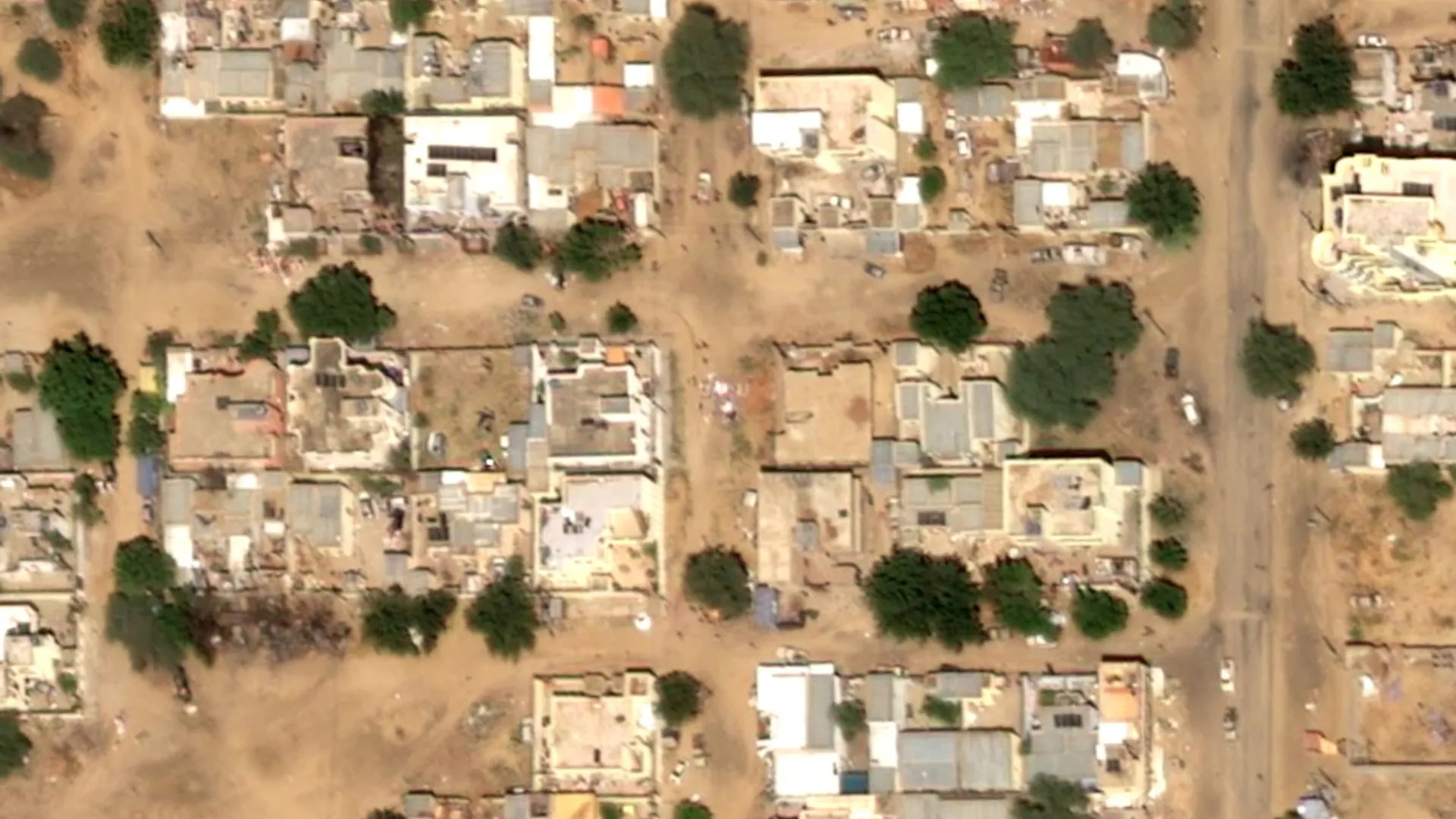
A nation collapses not in a single battle, but in the slow suffocation of its cities.
El Fasher, October 2025.
From orbit, the wounds of war trace the shape of a vanished city. Satellite images expose what diplomacy prefers to phrase in abstracts: burned districts, ghost markets, and stretches of scorched terrain where life once pulsed. El Fasher, the heart of North Darfur, has turned into a symbol of systemic disintegration—a city erased not by a single explosion but by months of unrelenting brutality.
Inside the ruins, the Rapid Support Forces rule through terror and silence. Humanitarian observers confirm that entire neighborhoods have been leveled, and that executions of civilians have reached industrial scale. The United Nations estimates that tens of thousands have fled on foot toward Chad, though many never arrived. Roads remain impassable, hospitals function without electricity, and the last journalists withdrew when the signal vanished from their phones. What remains is a geography of fear, charted only by satellites and survivors’ whispers.
The African Union describes Sudan as entering an “irreversible collapse.” State ministries exist in name only, and regional capitals operate as isolated fiefdoms. The European Union warned that the fall of El Fasher could fragment the country beyond repair, producing rival enclaves run by militias with foreign patrons. In Khartoum, what was once a government now circulates between safe houses. Every communiqué reads like a ghost transmission from a capital that no longer governs.
Data collected by the Humanitarian Research Lab at Yale University confirm multiple burn patterns consistent with mass graves on the city’s southern edge. The United States, supported by the Gulf Cooperation Council, has attempted to broker a truce, but there is no command structure left to enforce it. “What we see is not chaos—it’s organized collapse,” explained a field analyst from the International Crisis Group.
Humanitarian losses have reached staggering proportions. UNICEF reports that over three million children face starvation or disease across western Sudan. The World Food Programme conducts sporadic airdrops, yet many supplies fall into the hands of irregular forces. Refugees cluster around dry wells, rationing silence as much as food. Each failed convoy deepens the sense that what is dying in Sudan is not just a state, but the idea of a shared future.
In what remains of civil society, faint radio signals transmit appeals for help that fade into static. The African Union meets without quorum; the Arab League issues statements that dissolve before the ink dries. From above, satellites record every burned roof and every widening trench, but from the ground the world feels deaf. Sudan bleeds into invisibility, and the line between war and disappearance becomes indistinguishable.
Facts that do not bend. / Hechos que no se doblan.