

 Phoenix 24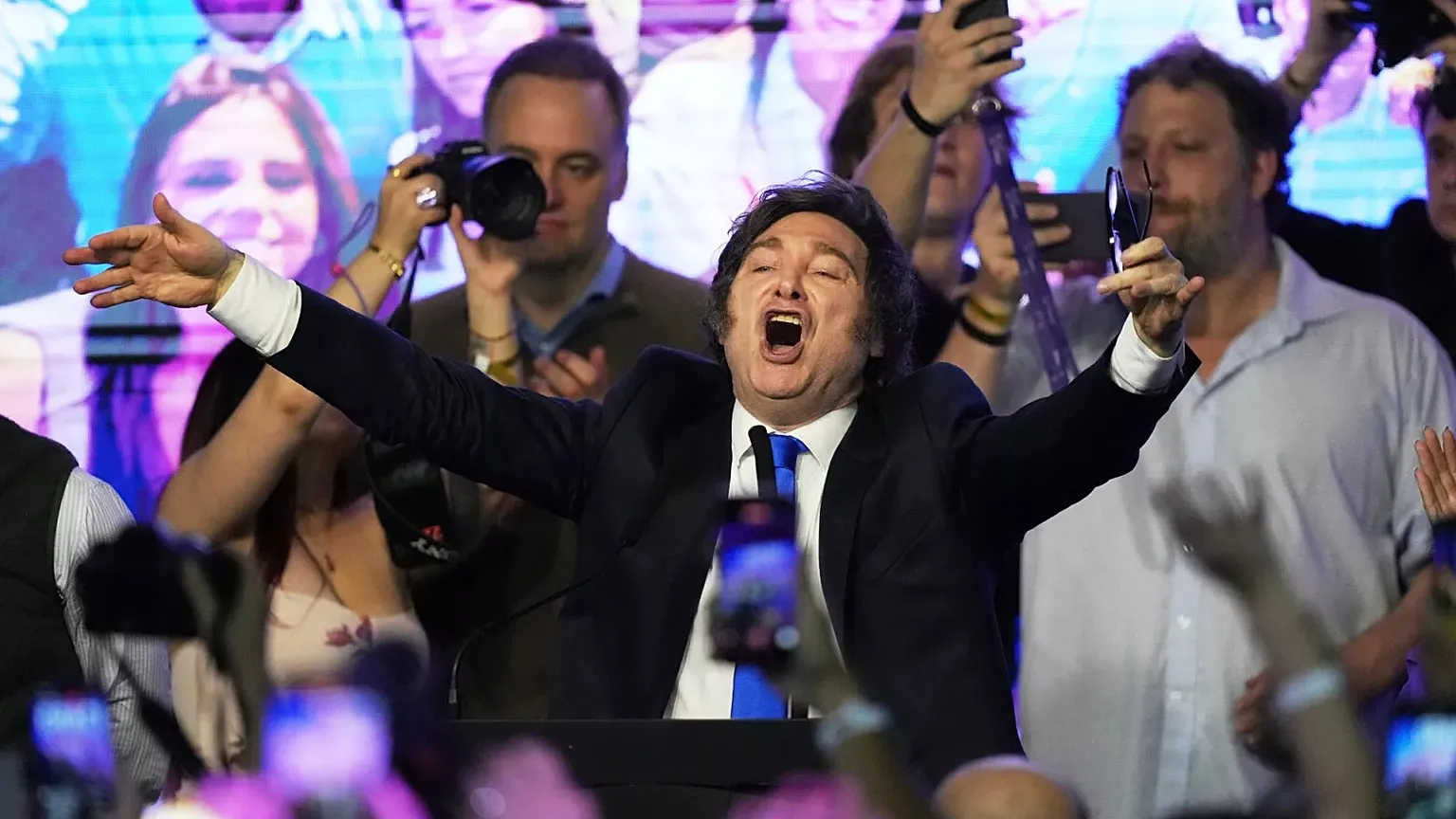
The election results redrew Argentina’s political geometry overnight, fusing shock, expectation, and volatility into a single moment of national reckoning.
Buenos Aires, octubre 2025.
Javier Milei’s movement, La Libertad Avanza, captured more than 40 percent of the national vote in the mid-term elections, securing a historic majority in the Chamber of Deputies and an unprecedented foothold in the Senate. The outcome not only consolidated the libertarian president’s mandate but also fractured the country’s long-standing political duopoly between Peronism and the traditional right.
In Buenos Aires Province — the heartland of Argentina’s electoral arithmetic — Milei’s candidates won districts that had resisted every liberal wave since the 1980s. Pollsters admitted surprise: the president’s campaign, focused on deregulation, fiscal discipline, and anti-establishment rhetoric, turned the economic crisis into a referendum on the old order. By midnight, Peronist leaders recognized the scale of defeat; their vote share fell below 31 percent, their lowest since the democratic transition.
According to the Argentine Electoral Chamber, turnout surpassed 72 percent, a sign that polarization had mobilized both hope and fear. The Clarín Institute of Political Analysis noted that Milei’s base expanded among independent voters disillusioned with inflation above 140 percent and a currency losing credibility by the week.
International observers interpreted the result as the formal end of Argentina’s “Peronist century.” From Washington, the Inter-American Dialogue described the election as “a structural realignment of Argentine democracy.” In Madrid, El País wrote that Milei’s populist libertarianism “has morphed into a governing machine.” Meanwhile, from Tokyo, the Nikkei Review underlined the implications for commodity markets, particularly soy, lithium, and gas exports, sectors expected to benefit from deregulation and a renewed inflow of private capital.
Financial reactions were immediate. The Merval index surged 18 percent in the first post-election session, sovereign bonds gained double-digit ground, and the peso appreciated 10 percent against the U.S. dollar. The Bank for International Settlements linked the rally to “expectations of policy coherence and structural reform.” Yet economists inside Argentina warned that optimism could fade if Milei’s coalition fails to translate political strength into administrative stability.
At the Organization for Economic Co-operation and Development (OECD), analysts emphasized that Argentina’s fiscal recovery will depend on re-negotiating debt with the International Monetary Fund (IMF) and stabilizing energy subsidies that consume nearly 4 percent of GDP. The IMF itself issued a brief note congratulating the country for its “democratic commitment” while quietly reminding that “economic discipline must remain the compass of recovery.”
From Brasilia, the Brazilian Foreign Ministry expressed “respect for the democratic process” but avoided references to ideology. In Santiago, the Chilean Finance Ministry described the result as “a signal that markets reward reform over protectionism.” In Paris, the Organisation Internationale de la Francophonie called for “balance between modernization and social cohesion.”
Inside Argentina, reactions were polarized. Unions and social movements warned that a libertarian supermajority could erode labor rights. “He speaks of freedom, but means the freedom of capital,” said the head of the General Confederation of Labor. Supporters countered that dismantling regulation is the only way to end decades of stagnation. At the Plaza de Mayo, crowds waved purple flags bearing Milei’s lion emblem, chanting that “Argentina will never go back.”
Political scientists point to three converging forces behind the victory: a disciplined communications strategy centered on direct digital outreach; a narrative of moral indignation against state inefficiency; and a generational revolt against bureaucratic elites. According to the Latin American Public Opinion Project, Milei’s popularity among voters under 35 reached 62 percent, the highest for any Argentine president in history.
From London, the Financial Times framed the event within the global rise of anti-system economics: “Milei’s libertarian surge echoes not populism but a radical market faith unseen since the Reagan-Thatcher era.” In Moscow, the TASS agency reported the results neutrally but noted Russia’s interest in Argentina’s openness to foreign investment. In Beijing, Global Times highlighted the “potential recalibration” of Chinese trade ties after Milei’s earlier criticism of Communist regimes.
Yet challenges multiply as swiftly as expectations. Milei must now balance fiscal orthodoxy with social peace in a country where 45 percent of citizens live below the poverty line. The Central Bank faces the dilemma of containing inflation without strangling growth. A report from the Peterson Institute for International Economics warned that “over-correction could lead to another contraction cycle if monetary tightening collides with subsidy removal.”
Diplomatically, Argentina’s new leverage could reposition it within South America’s balance of power. The Mercosur bloc — historically dominated by Brazil — may see Buenos Aires push for faster trade liberalization and strategic alignment with the Pacific Alliance. Meanwhile, Washington’s National Security Council signaled interest in “expanding coordination on energy transition and supply-chain resilience,” a coded message referring to lithium reserves critical for electric-vehicle production.
Socially, the election redrew class alliances. Middle-class professionals, long aligned with centrist parties, shifted toward Milei’s anti-bureaucratic message. In contrast, industrial workers and rural cooperatives divided along geographic lines. The sociologist María Soledad Aranda described it as “a revolt of exhaustion—the moment when economic fatigue becomes political conviction.”
As dawn broke over Buenos Aires, the celebration mixed triumph with disbelief. Supporters danced near the Obelisk, waving dollar bills as a symbol of future stability. Across town, opposition leaders met in private to discuss how to remain relevant in a political landscape suddenly rewritten.
Milei’s next test will be to convert campaign slogans into legislation without igniting the social volatility that has undone every Argentine reformer since 1989. For now, markets believe in him. History, however, is a tougher creditor.
Más allá de la noticia, el patrón. / Beyond the news, the pattern.