

 Phoenix 24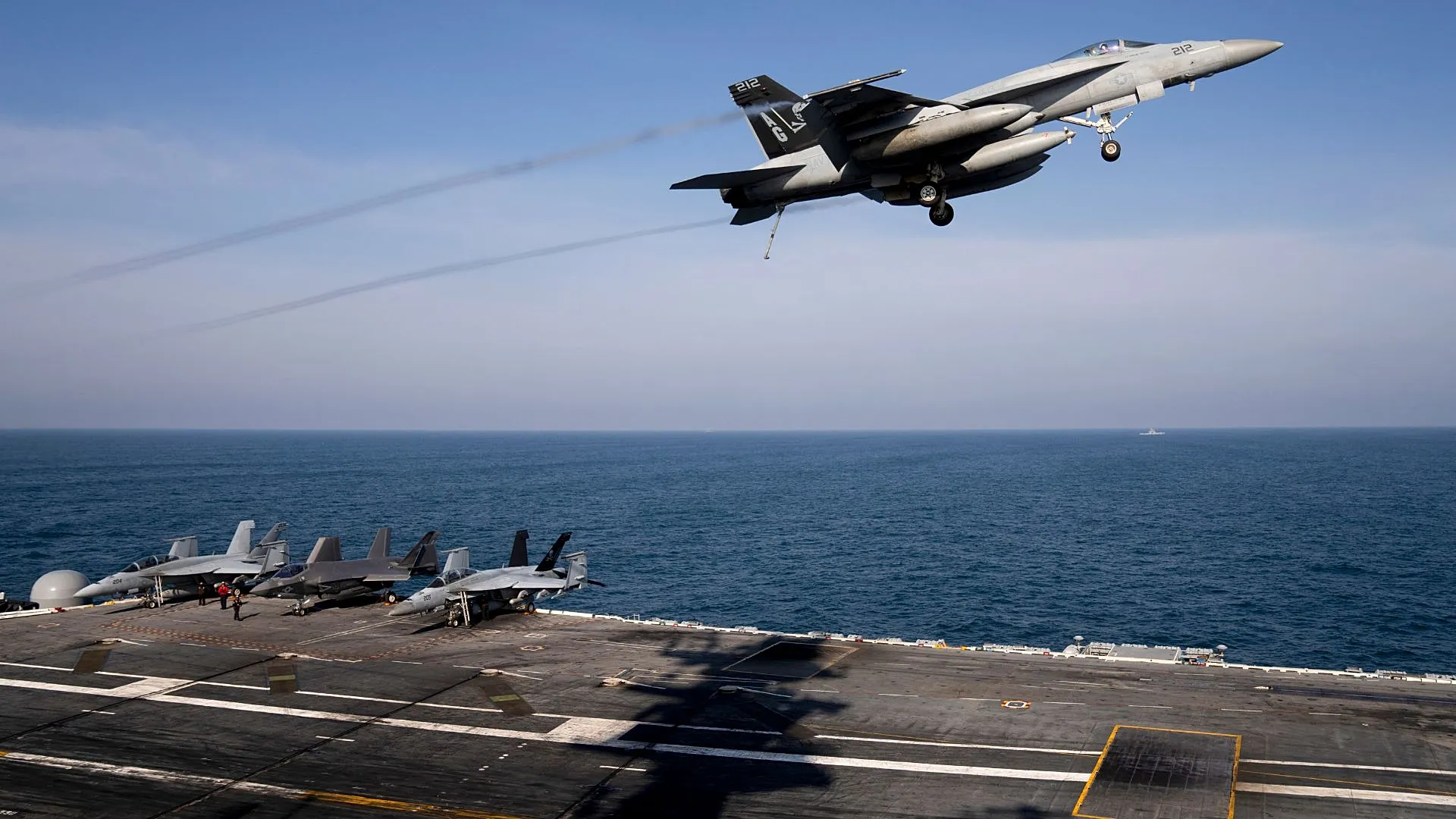
Two crashes in half an hour revive old questions about deterrence, maintenance, and maritime dominance.
Washington, October 2025.
Two U.S. Navy aircraft—a MH-60R Sea Hawk helicopter and an F/A-18F Super Hornet—went down almost simultaneously during operations in the South China Sea, one of the most contested maritime corridors on Earth. The incidents occurred within a thirty-minute interval, both involving units assigned to the USS Nimitz carrier group. The Pentagon confirmed that all five crew members were rescued and are in stable condition.
Although the Navy labeled the missions as “routine flight operations,” the location of the crashes instantly amplified their political and strategic meaning. The South China Sea is not an ordinary stretch of water: it is a theater where global commerce, military signaling, and territorial ambition converge. China asserts sovereignty over nearly the entire zone, while nations such as the Philippines, Vietnam, and Malaysia maintain overlapping claims. The United States, meanwhile, upholds the principle of freedom of navigation and regularly deploys carrier groups to demonstrate that right.
This double mishap arrives at a sensitive moment. Washington and Beijing have recently attempted to lower tensions after months of near-collisions between naval patrols. Chinese officials reacted cautiously, offering humanitarian assistance while restating that “foreign military presence repeatedly destabilizes regional peace.” Analysts from the Center for Strategic and International Studies in Washington interpret the gesture as a calculated blend of diplomacy and propaganda—a reminder that Beijing seeks moral ground even when crises are purely mechanical.
European defense circles, including assessments from the Royal United Services Institute in London, point out that consecutive failures in a single carrier group may expose systemic fatigue across U.S. forward-deployed forces. From a purely technical lens, the coincidence of two accidents within minutes suggests an environmental factor—possible fuel contamination or weather interference—yet investigations remain under way.
In the Asia-Pacific context, military scholars from the Lowy Institute argue that even non-combat incidents have psychological resonance. Each crash becomes a narrative event shaping perceptions of capability and control. If the U.S. investigation attributes the cause to maintenance or procedural error, Beijing could leverage the outcome to question the safety of American operations in what it calls “its adjacent waters.”
Across Latin America, the Chilean Center for Maritime Studies observes that naval aviation mishaps in contested seas historically trigger doctrinal reviews rather than escalations. “A tactical accident can alter operational doctrines without changing alliances,” its analysts note, comparing this episode with earlier Cold War maritime incidents that produced new safety protocols rather than open confrontation.
For Washington, the challenge is dual: reassure allies of operational confidence while avoiding overreaction that might validate China’s narrative. The Pentagon has already ordered a technical inspection of carrier-based aviation systems deployed in Indo-Pacific waters, focusing on fuel logistics, software diagnostics, and mechanical redundancies.
The South China Sea remains an arena where symbolism outweighs tonnage. Every maneuver, landing, or malfunction is interpreted through a geopolitical lens. Even as all crew members survived, the imagery of two aircraft lost near disputed reefs reinforces a message Beijing will not overlook: technological supremacy does not neutralize operational vulnerability.
If history is any guide, the United States will publicly frame the event as an accident but privately review the rhythm of its deterrence patrols. The question now is whether these parallel crashes represent an isolated episode—or a symptom of overstretch in the Pacific command structure.
Every silence speaks. / Cada silencio habla.