

 Phoenix 24
A predictive system turns everyday navigation into behavioral foresight.
Mountain View, October 2025
Google has quietly rolled out an artificial-intelligence feature that estimates when users will arrive home, even without entering a destination. The update, currently live for selected Android users, draws on movement patterns, real-time traffic and the app’s growing ability to interpret routine.
According to engineers involved in the project in California, the goal is simple: to reduce friction. Once a home address is stored, Maps automatically predicts the route back, displaying an arrival time capsule that updates every few seconds. What once required manual input now appears as intuition—an algorithmic sense of “you’re almost home.”
In Europe, digital-privacy observers have taken notice. Specialists at data-ethics centres in Berlin warn that such predictive convenience edges closer to behavioral surveillance, as the system learns not only where users go but when they tend to return. The balance between utility and intrusion, they argue, now rests on how transparently Google discloses data retention and model training practices.
Across Asia, analysts in Tokyo and Seoul see the feature as a step toward adaptive mobility—navigation that anticipates rather than reacts. They note that the same predictive logic could eventually suggest alternative departure times based on weather or energy efficiency, turning the phone into a real-time logistics assistant for individuals.
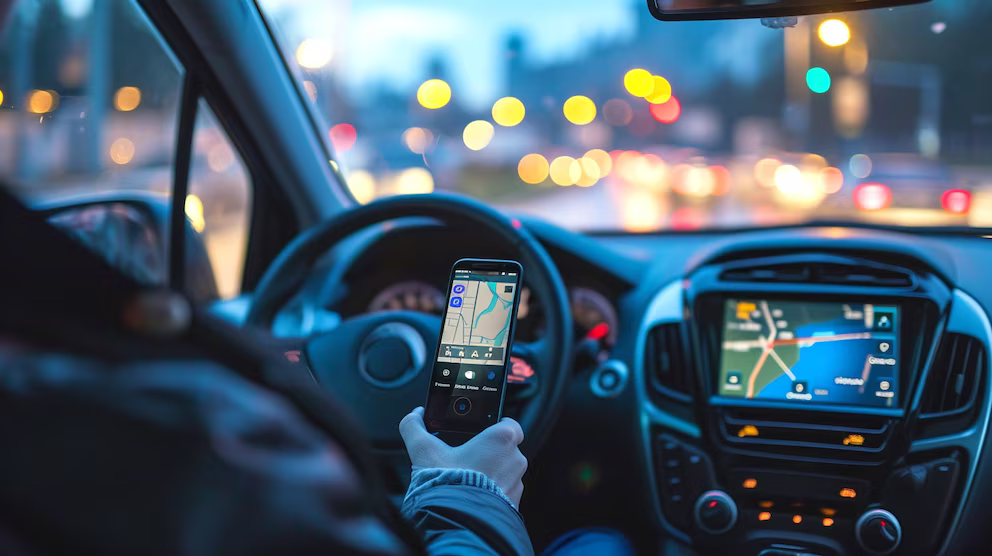
Beyond regional debates, the feature marks a subtle shift in how humans interact with technology. For decades, digital tools responded to commands; now they infer intent. The difference seems trivial until one realizes it changes the direction of agency: the map no longer waits for you—it predicts you.
Inside Google, the initiative is reportedly part of a broader transition toward “ambient assistance,” where devices collaborate quietly across services. The Maps team calls it “contextual navigation,” a stage where guidance blends into daily life so seamlessly that the interface itself becomes invisible.
Psychologists who study human-machine interaction interpret this evolution as double-edged. On one hand, predictive design reduces cognitive load and travel stress. On the other, it erodes the small rituals of autonomy—choosing when to check, when to ask, when to decide. The comfort of precision, they note, comes at the cost of surprise.
As the rollout expands, the feature will test not just Maps’ accuracy but the public’s tolerance for prescience. When a navigation app knows your habits better than you do, convenience turns into a quiet mirror of modern dependency.
Truth is structure, not noise. / La verdad es estructura, no ruido.