

 Phoenix 24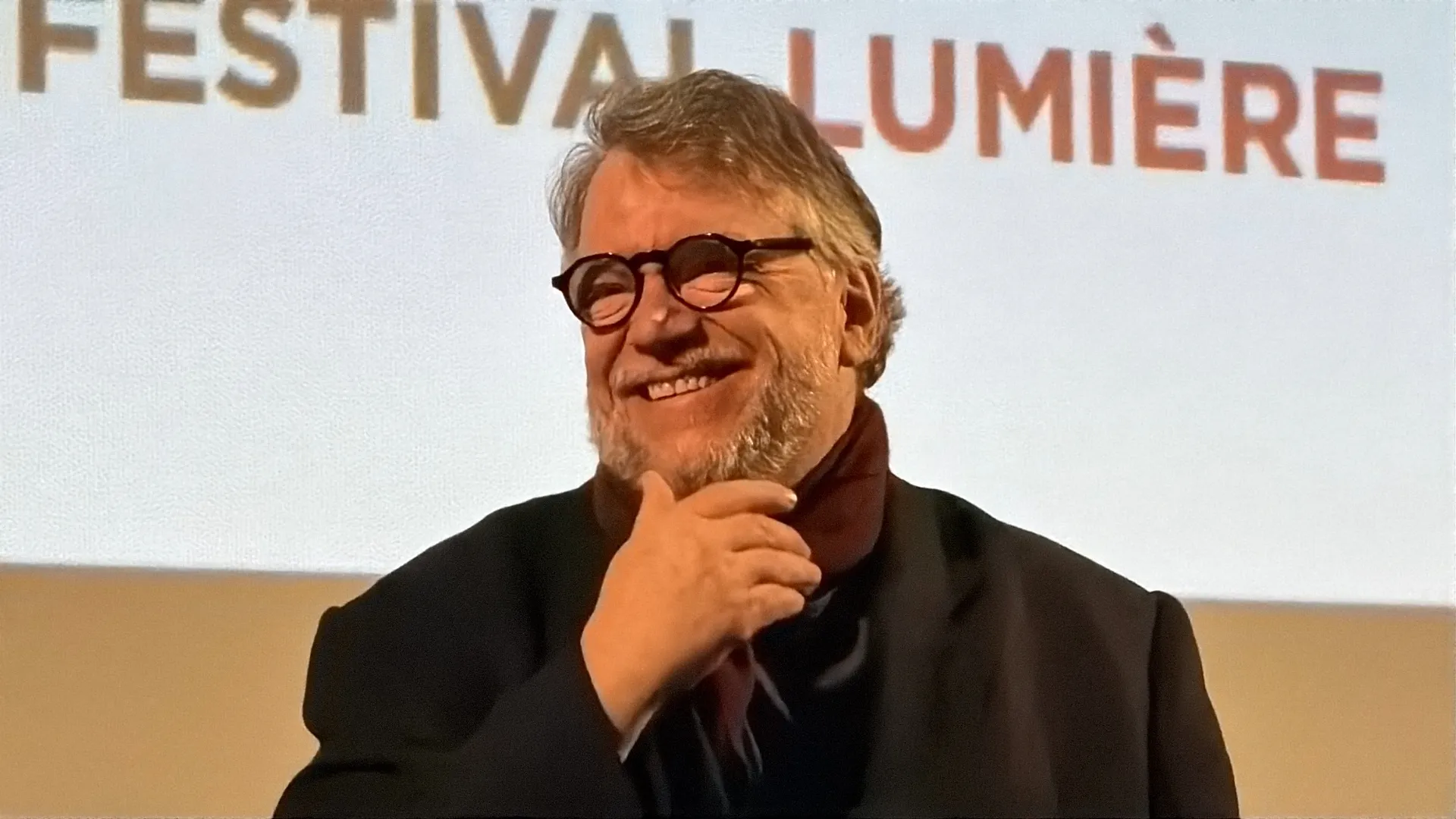
He didn’t speak as a filmmaker, but as a craftsman defending the soul of creation.
Rome, October 2025.
During a keynote at the International Film and Media Forum, Mexican director Guillermo del Toro delivered an impassioned critique of artificial intelligence, describing it as “a technological illusion that endangers the essence of art.” His remarks, greeted with standing applause, echoed far beyond cinema, touching on ethics, creativity, and the fragility of human expression in an automated world.
Del Toro, renowned for works such as Pan’s Labyrinth and The Shape of Water, argued that AI systems are not tools of inspiration but mechanisms of imitation. “Art is born of imperfection,” he told the audience. “What the machine replicates is precision, not emotion. The more we delegate imagination, the less we remember what it feels like to dream.”
The event, hosted by Italy’s National Film Academy, brought together filmmakers, designers, and digital theorists to debate the future of creative industries amid rapid technological transformation. According to the academy’s chair, the conversation reflects a broader concern: how to reconcile innovation with authenticity. Participants from France, Japan, and the United States shared similar anxieties about an entertainment economy increasingly shaped by algorithmic production and synthetic performers.
In Paris, the European Audiovisual Observatory recently published a report showing that AI-assisted scriptwriting tools have grown by more than 300 percent since 2023. In Los Angeles, the Screen Actors Guild continues to negotiate clauses that protect performers from digital cloning. Meanwhile, South Korean studios, long at the frontier of visual-effects technology, are now debating whether AI-generated extras violate creative labor rights.
Del Toro’s words, therefore, struck a nerve. “We live in dangerous times,” he warned, “because convenience has become more seductive than conscience.” He compared the current technological rush to the early twentieth century’s fascination with industrial progress, arguing that art is again at risk of being reduced to product. His appeal to the audience was simple: to defend the human pulse behind every image.
Italian filmmaker Alice Rohrwacher, who moderated the discussion, responded that del Toro’s stance captures a moral emergency shared by many creators. “The problem,” she said, “is not the machine—it’s the speed with which we surrender to it.” The remark drew murmurs of approval, highlighting the divide between those who view AI as a collaborator and those who see it as a usurper of meaning.
From New York, the Museum of Modern Art issued a statement praising del Toro’s defense of craftsmanship. The museum’s digital-art curator noted that “the future of cinema depends on our ability to preserve intention, not just production.” In Madrid, film critic Nuria Santos described the director’s speech as “a manifesto for the analog heart in a digital century.”
Industry executives, however, took a more pragmatic tone. Representatives from global streaming platforms insisted that AI remains a neutral instrument, citing its use in restoration, dubbing, and accessibility. Yet even within corporate circles, unease is growing. An internal report by the British Film Institute acknowledged that excessive reliance on automated editing tools could “erode the aesthetic unpredictability that defines cinematic language.”
Beyond the auditorium, del Toro’s message resonated as cultural resistance. Social media flooded with clips of his speech subtitled in multiple languages, spreading through creative communities that see in his warning not nostalgia, but survival instinct. “To make art,” he concluded, “is to remain imperfect on purpose.”
As night fell over Rome, the crowd lingered outside the auditorium, still debating whether technology would liberate or homogenize imagination. The director’s voice had turned the forum into something larger than protest—a reminder that art, at its core, is a dialogue between limitation and wonder.
Phoenix24: the visible and the hidden, in context. / Phoenix24: lo visible y lo oculto, en contexto.