

 Phoenix 24
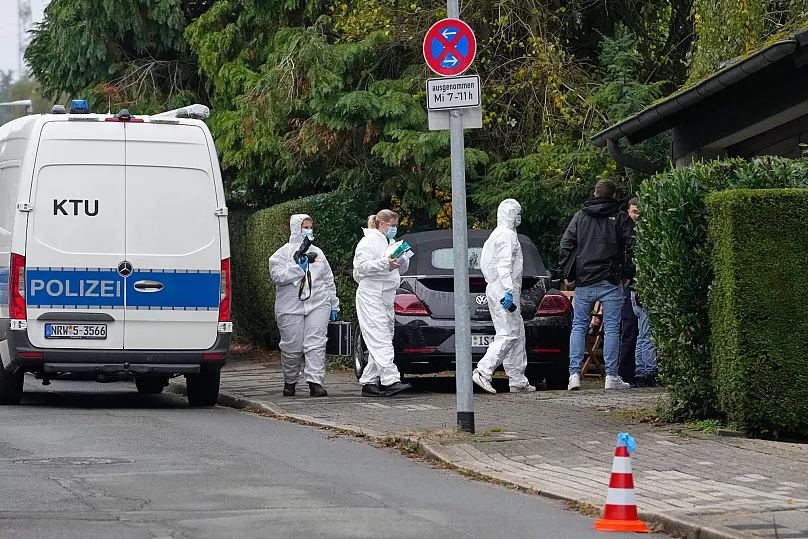
The attack shakes Germany’s political calm and exposes the invisible fractures of private violence in an era of public overexposure.
Herdecke, October 2025
Iris Stalzer, the newly elected mayor from Germany’s Social Democratic Party (SPD), was stabbed outside her residence in Herdecke, a city between Hagen and Dortmund. The 57-year-old official was set to take office on November 1 after winning the municipal election with 52.8 % of the vote. The assault left her in critical condition and required her to be airlifted to a nearby hospital.
Police in North Rhine-Westphalia have ruled out any political motive, focusing instead on a possible domestic conflict. Sources close to the prosecutor’s office confirmed that the main suspects are the mayor’s two adopted children, aged 17 and 15, who were present at the home during the incident. Both have been detained for questioning while forensic experts reconstruct the sequence of events.
Preliminary findings suggest that the attack occurred inside the house rather than on the street, as initially claimed by the teenagers. The crime-scene evidence contradicts that version: the blood pattern, wound trajectories, and signs of struggle indicate an indoor assault. Specialists from the Federal Criminal Police Office are assisting in the technical investigation to establish an accurate timeline.
German media recalled a previous domestic incident months earlier in which one of Stalzer’s daughters allegedly threatened her with a knife. What was once seen as an isolated family dispute now takes on deeper criminal and psychological implications. For the SPD, the event is a moral shock that transcends party lines. Chancellor Friedrich Merz condemned the stabbing as an “intolerable act” and called for a thorough investigation.
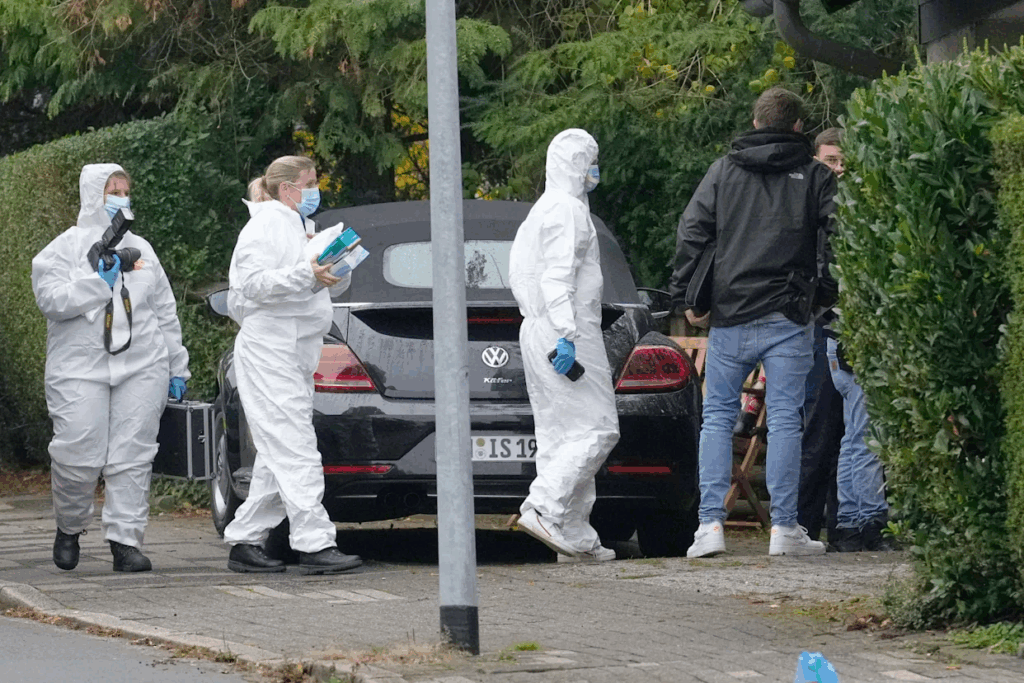
The regional Interior Ministry has reinforced security for several mayors and council members following the attack, although officials emphasize there is no evidence of ideological motivation. The German Association of Municipalities expressed solidarity and urged psychological support for local officials coping with the emotional aftermath.
European security institutes, including the International Institute for Strategic Studies and the Centre for the Study of Democracy, note that the boundary between private violence and political risk has blurred. The constant public exposure of local officials, amplified by social networks and polarized discourse, increases their personal vulnerability and erodes the distinction between public office and personal life.
In Herdecke, residents remain stunned. Neighbors describe Stalzer as approachable and methodical, known for her commitment to sustainable housing and youth programs. Candles now line the sidewalk in front of her home—a quiet vigil in a town trying to comprehend the fragility of safety and the depth of personal despair behind the headlines.
If investigators confirm that the attack was carried out by her own family members, the case will become a grim reminder of how violence penetrates even the most intimate spaces of local power. European politics, long accustomed to interpreting aggression through ideological lenses, now confronts a more uncomfortable truth: the collapse of emotional bonds within increasingly fractured societies.
Every silence speaks. / Cada silencio habla.