

 Phoenix 24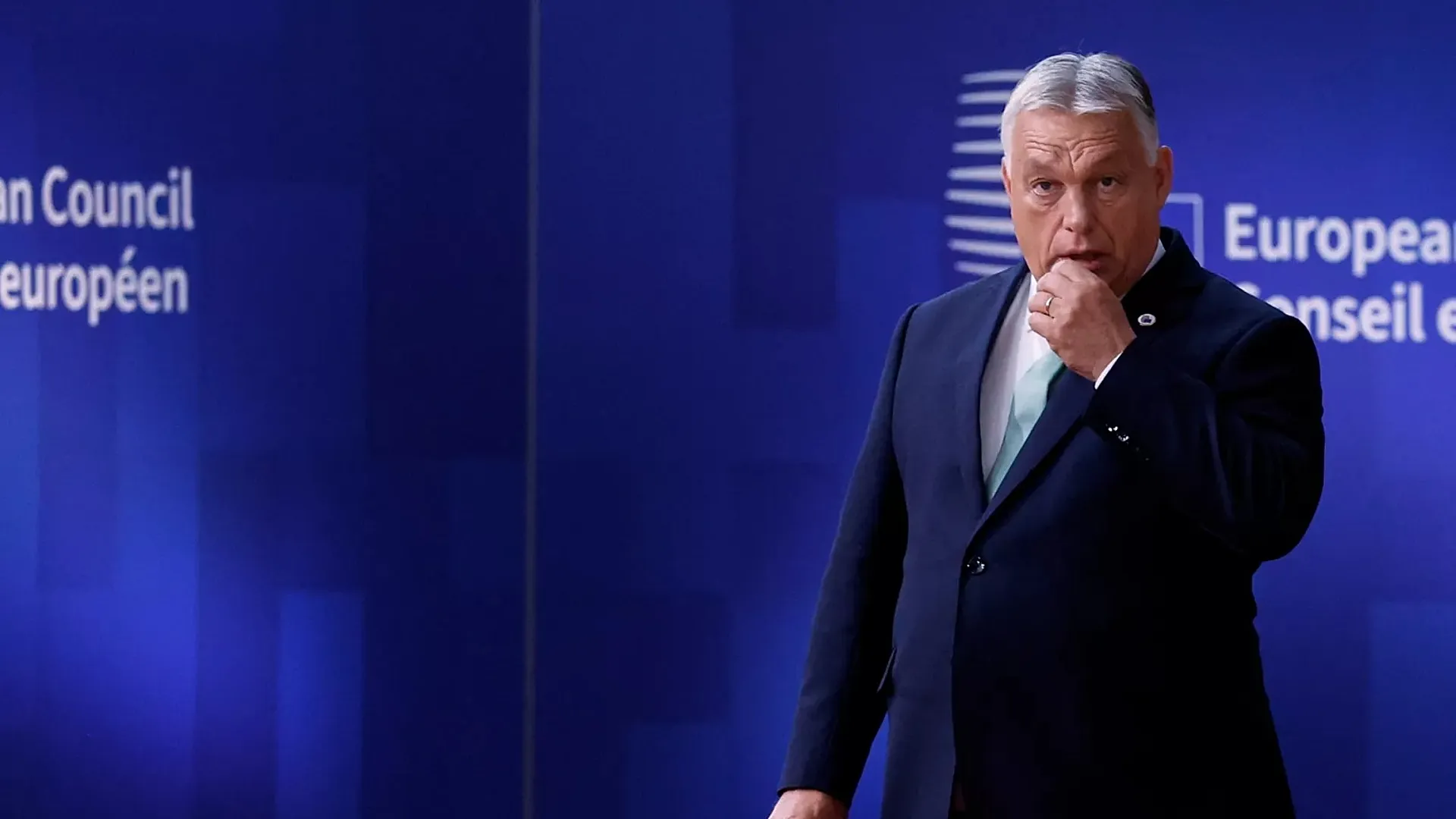
Budapest’s diplomatic provocation signals a potential shift from a military confrontation to a battle over state legitimacy.
Kyiv, September 2025
Hungarian Prime Minister Viktor Orbán has sparked an international uproar by downplaying the possible incursion of a Hungarian reconnaissance drone into Ukrainian territory and openly questioning Ukraine’s sovereignty. “Ukraine is not an independent or sovereign country,” Orbán declared, even if the incident were confirmed — a statement that goes far beyond an aerial violation and directly challenges the legal foundations of the European order.
The controversy erupted after President Volodymyr Zelensky denounced what he described as an unauthorized Hungarian drone flight over industrial sites in the Transcarpathian region, a clear breach of Ukrainian airspace. Hungary’s foreign ministry denied the accusation but did not completely rule it out. Orbán, for his part, refused to offer a categorical denial, instead suggesting that “Ukraine should focus on the Russian drones coming from the east” and insisting that Kyiv faced no threats from its Western neighbors.
The response from Ukraine was immediate and uncompromising. Government officials released flight path data that, according to Deputy Foreign Minister Andrii Sybiha, showed the drone’s route in detail. Ukrainian armed forces, he said, had collected evidence of the intrusion and demanded an official explanation from Budapest. Kyiv’s foreign ministry accused Hungary of spreading falsehoods and urged it to present verifiable proof or issue a public retraction.
The incident comes amid long-standing tensions between the two neighbors. Hungary has repeatedly adopted an ambiguous position on the Russia-Ukraine war, blocking certain EU sanctions against Moscow and questioning the bloc’s military and economic support for Kyiv. Orbán has previously warned that Ukraine’s accession to the European Union could harm Hungary’s economy and destabilize the bloc, while Budapest continues to cultivate economic ties with Russia despite the ongoing conflict.
The strategic significance of Orbán’s latest statement is far greater than it might initially appear. By explicitly questioning Ukraine’s sovereignty, Hungary is undermining the principles of territorial integrity and statehood that underpin not only European law but the entire collective security architecture. Diplomats in Brussels and Warsaw warn that if left unanswered, such rhetoric could normalize revisionist discourse and embolden other actors seeking to redraw post-Cold War borders.
Within the EU and NATO, the incident has triggered urgent discussions about the implications of a member state challenging the sovereignty of a country under attack. Officials from the European Commission and the European Council are reportedly considering issuing formal condemnations or initiating diplomatic proceedings. Should Budapest continue on this path, it could set a dangerous precedent — a member of the Union actively disputing the statehood of a partner nation in the midst of war.
The controversy illustrates a deeper truth about modern conflict: wars are not fought solely with weapons and drones. Battles over legitimacy, historical narrative, and international recognition can prove just as decisive as those fought on the battlefield. In this sense, the alleged drone intrusion — whether real or rhetorical — represents a critical test for Europe’s liberal order. If NATO and the EU fail to defend Ukraine’s sovereignty in the realm of political discourse as well as in the military sphere, they risk weakening their cohesion and resilience against future hybrid threats.
As this diplomatic confrontation unfolds, the stakes extend far beyond the skies over Transcarpathia. The dispute now centers on the very meaning of sovereignty and statehood in 21st-century Europe — and on whether the Western alliance has the resolve to defend those principles when they are challenged from within its own ranks.
Narrative is power too. / La narrativa también es poder.