

 Phoenix 24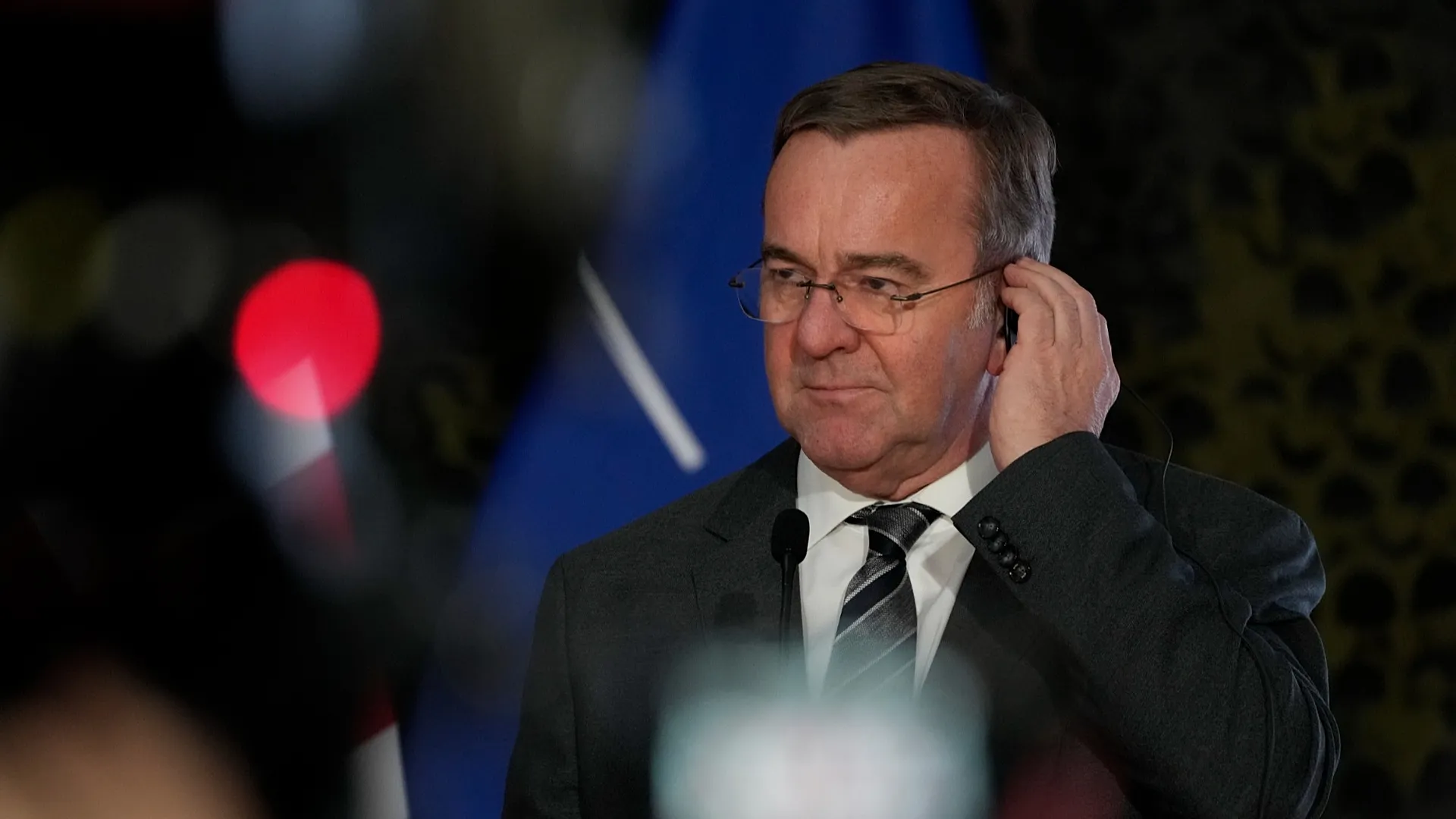
The blunt warning from Berlin signals a decisive recalibration of Europe’s security doctrine and a new era of confrontation with Moscow.
Berlin, September 2025
Germany’s Defence Minister, Boris Pistorius, delivered one of the starkest assessments yet of Europe’s security environment, declaring that Russia is now the “greatest and most immediate threat” to NATO. His statement, issued after a series of aerial and maritime incidents along the Alliance’s eastern flank, encapsulates a strategic pivot unfolding across the continent as European states brace for the next phase of confrontation with Moscow.
The warning follows a wave of Russian drone incursions into Polish and Estonian airspace and provocative overflights near a German naval vessel in the Baltic Sea — actions that, according to NATO intelligence assessments, form part of a broader pattern of probing allied defences and testing collective response times. Pistorius described the operations as “reckless and calculated,” stressing that they reflect a deliberate attempt by the Kremlin to exploit legal and operational grey zones while remaining below the threshold of direct war.
For Berlin, the message is clear: deterrence must now evolve from a theoretical posture into a visible and credible capability. Germany has announced plans to increase troop deployments to the Baltics, reinforce integrated air defence systems and expand joint training exercises under NATO’s Enhanced Forward Presence mission. These steps reflect a growing consensus within the Alliance that deterrence must be as psychological as it is military — projecting readiness not just to respond, but to pre-empt escalation before it spirals out of control.
Across the Atlantic, Washington has echoed Berlin’s warning. The Pentagon’s latest strategic review describes Russia’s hybrid tactics — from cyber operations to disinformation and energy leverage — as “a systemic challenge to transatlantic cohesion.” American defence officials argue that Moscow’s actions in Eastern Europe are not isolated provocations but components of a broader campaign designed to fragment NATO political unity and erode public trust in collective defence. Analysts at the RAND Corporation warn that this strategy seeks to “normalize” low-intensity aggression as a permanent feature of Europe’s security landscape.
In Brussels, the European External Action Service has intensified diplomatic efforts to develop a more coordinated deterrence architecture. A new initiative, currently under negotiation, would pool intelligence and integrate command structures between EU and NATO missions — a move long resisted by some member states concerned about overlapping mandates. European diplomats argue that such measures are now indispensable as Russia adapts its playbook to exploit bureaucratic inertia and strategic ambiguity.
The confrontation is not limited to Earth’s atmosphere. Pistorius and other European defence chiefs have repeatedly voiced concerns about Moscow’s expanding capabilities in the space domain, including satellite jamming, electronic interference and potential kinetic strikes on orbital infrastructure. The absence of territorial boundaries in space, they warn, exposes European command, navigation and communications systems to asymmetric attacks with strategic consequences far beyond the battlefield. The European Space Agency is now working closely with the United States Space Command and Japan’s JAXA to strengthen satellite resilience and rapid-replacement capabilities in the event of hostile action.
Moscow, for its part, rejects the Western narrative and insists that NATO’s eastward expansion is the root cause of the current crisis. Russian Foreign Minister Sergey Lavrov has accused the Alliance of waging a “real war” against Russia by surrounding it with bases and missile systems. The Kremlin argues that its recent operations — including airspace violations and aggressive maritime maneuvers — are defensive responses to what it perceives as encirclement. China, though more cautious in tone, has echoed Moscow’s criticism of NATO’s growing presence near Russian borders, urging all sides to avoid steps that could “undermine strategic stability.”
The stakes are rising beyond the military sphere. European intelligence services have reported a surge in Russian disinformation campaigns targeting public opinion in countries like Lithuania, Romania and Germany, aimed at eroding support for defence spending and questioning the credibility of NATO’s Article 5 commitments. Experts at the Atlantic Council warn that such efforts are part of a long-term strategy to shape domestic political environments and weaken resolve from within.
The strategic picture is therefore complex and volatile. NATO faces not only a resurgent Russia willing to challenge its red lines but also a spectrum of hybrid threats designed to paralyze decision-making without triggering a conventional response. As a result, alliance planners are shifting focus from reactive defence to proactive disruption — investing in early-warning systems, offensive cyber capabilities and counter-disinformation units. The logic is simple: the ability to deny Russia the initiative is as crucial as the capacity to defeat it on the battlefield.
Whether this evolving posture can preserve transatlantic unity remains uncertain. The months ahead will test not just NATO’s military readiness but its political cohesion — the ultimate target of Russia’s pressure campaign. As European capitals adapt to a new era of strategic confrontation, one truth is becoming increasingly clear: the Cold War’s frozen lines have thawed, and the contest for Europe’s security architecture is once again in motion.
Facts that do not bend. / Hechos que no se doblan.