

 Phoenix 24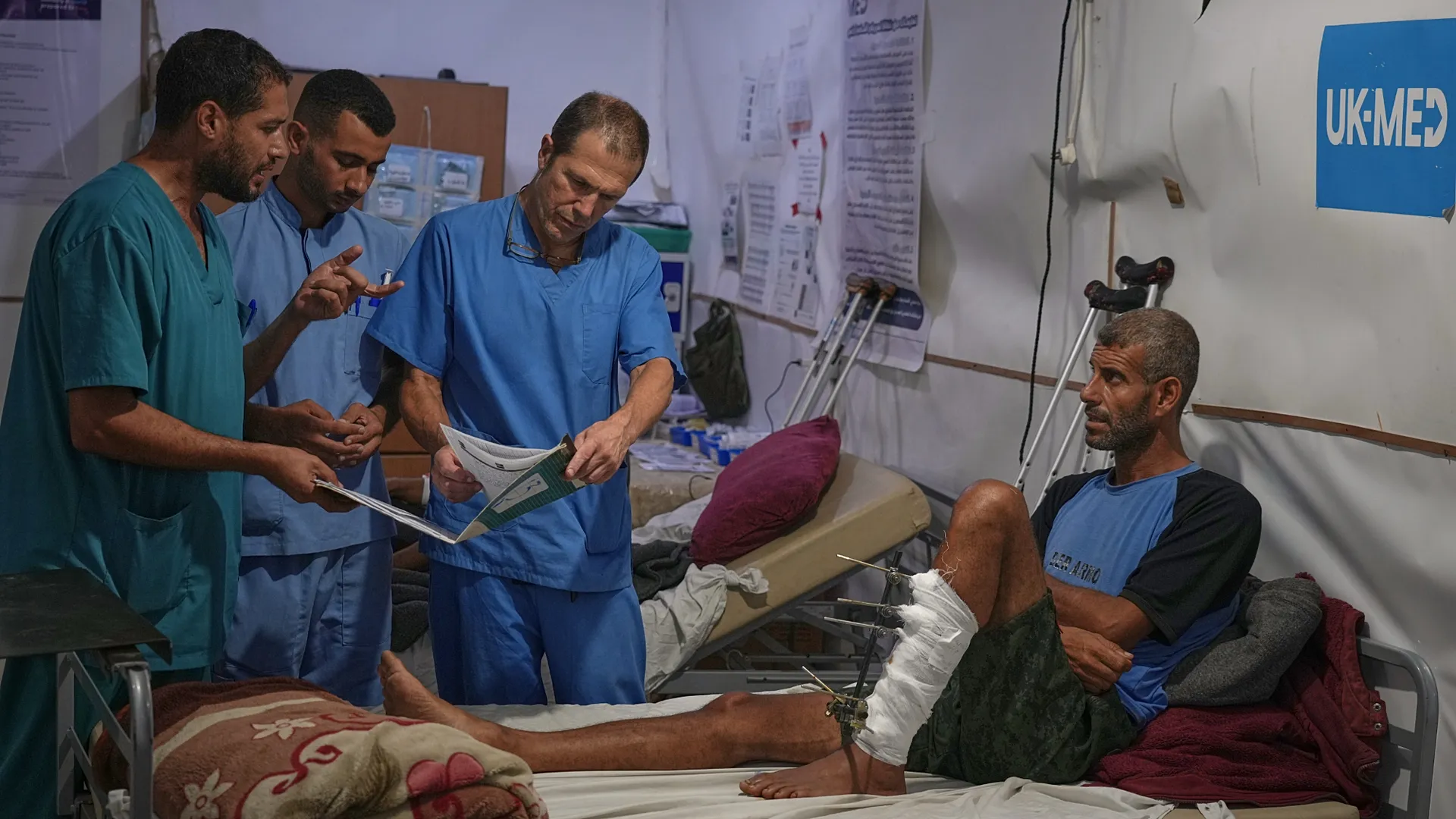
Amid an unprecedented humanitarian catastrophe, the war in Gaza is approaching a geopolitical turning point that could redefine the strategic balance of the Middle East.
Gaza, September 2025. The death toll in the enclave has surpassed 66,000 since the start of the Israeli offensive, according to the Palestinian Ministry of Health. The grim milestone comes just days before a critical meeting between Israeli Prime Minister Benjamin Netanyahu and U.S. President Donald Trump, where conditions for a potential ceasefire are expected to be discussed. The context could hardly be more complex: the military campaign shows no sign of slowing, civilian infrastructure has collapsed, and the international community is under mounting pressure to respond to a crisis that has shattered every known threshold of violence.
Netanyahu has repeatedly stated that Israel “must finish the job” against Hamas, a phrase he reiterated during his address to the United Nations General Assembly. This narrative, designed to justify the continuation of the offensive, is part of a broader strategy that blends military pressure with diplomatic maneuvering. According to the Center for Strategic and International Studies (CSIS), the meeting with Trump is less about achieving immediate peace and more about “redefining the terms of the conflict” in a way that allows Israel to consolidate its territorial gains before agreeing to any ceasefire.
The offensive has completely transformed life in Gaza. Repeated bombardments have reduced hospitals, schools, power plants, and water infrastructure to rubble. Thousands of families are now living in tunnels, underground stations, and destroyed buildings, while internal displacement has reached record levels. The United Nations Relief and Works Agency (UNRWA) has warned that the humanitarian collapse is “total,” with most of the population lacking reliable access to food, medical care, or electricity.
The political dimension of the conflict has also intensified. Several European governments are now debating the formal recognition of a Palestinian state — a move that would directly challenge Israeli positions. Simultaneously, institutions within the European Union are weighing targeted sanctions on Israel’s military sector, while cultural and sporting organizations consider boycotts in protest. According to the German Institute for International and Security Affairs (SWP), this growing pressure marks a significant shift in Western consensus, which has traditionally supported Israel’s stance.
In Washington, the U.S. administration is examining a 21-point ceasefire plan that would include a gradual withdrawal of Israeli troops in exchange for the release of hostages. Sources close to the State Department note that the success of any agreement will depend not only on Israel’s willingness but also on Hamas and other Palestinian factions’ ability to meet their commitments. The White House also faces a domestic political dilemma: balancing its longstanding support for Israel with growing public outrage over the human cost of the war.
The role of external actors remains decisive. Analysts at the Lowy Institute in Australia highlight that Iran and Turkey have stepped up political support for Hamas, while Russia is using the conflict to divert international attention from its war in Ukraine. At the same time, Egypt and Qatar are maintaining mediation channels that could prove pivotal in the coming weeks. According to the International Institute for Strategic Studies (IISS) in London, the most likely scenario is a temporary ceasefire serving as a prelude to broader negotiations, although deep mutual distrust remains a nearly insurmountable obstacle.
The figure of over 66,000 dead has become a symbol of the international community’s collective failure. Human rights organizations report that most of the victims are civilians, including thousands of children, although exact figures remain difficult to verify due to the collapse of Gaza’s health system. The UN High Commissioner for Human Rights has described the situation as “an open wound on the global conscience” and called for unrestricted humanitarian access.
The upcoming meeting between Netanyahu and Trump represents more than a diplomatic attempt — it is a power struggle between a military strategy seeking to cement facts on the ground and an international coalition demanding a change of course. If diplomacy fails, the conflict could enter an even more violent phase with unpredictable consequences for the region. But if it succeeds in opening a viable negotiating channel, it could mark the first step toward a fragile equilibrium in a landscape where every move is reshaping the geopolitics of the 21st century.
Every silence speaks / Cada silencio habla.