

 Phoenix 24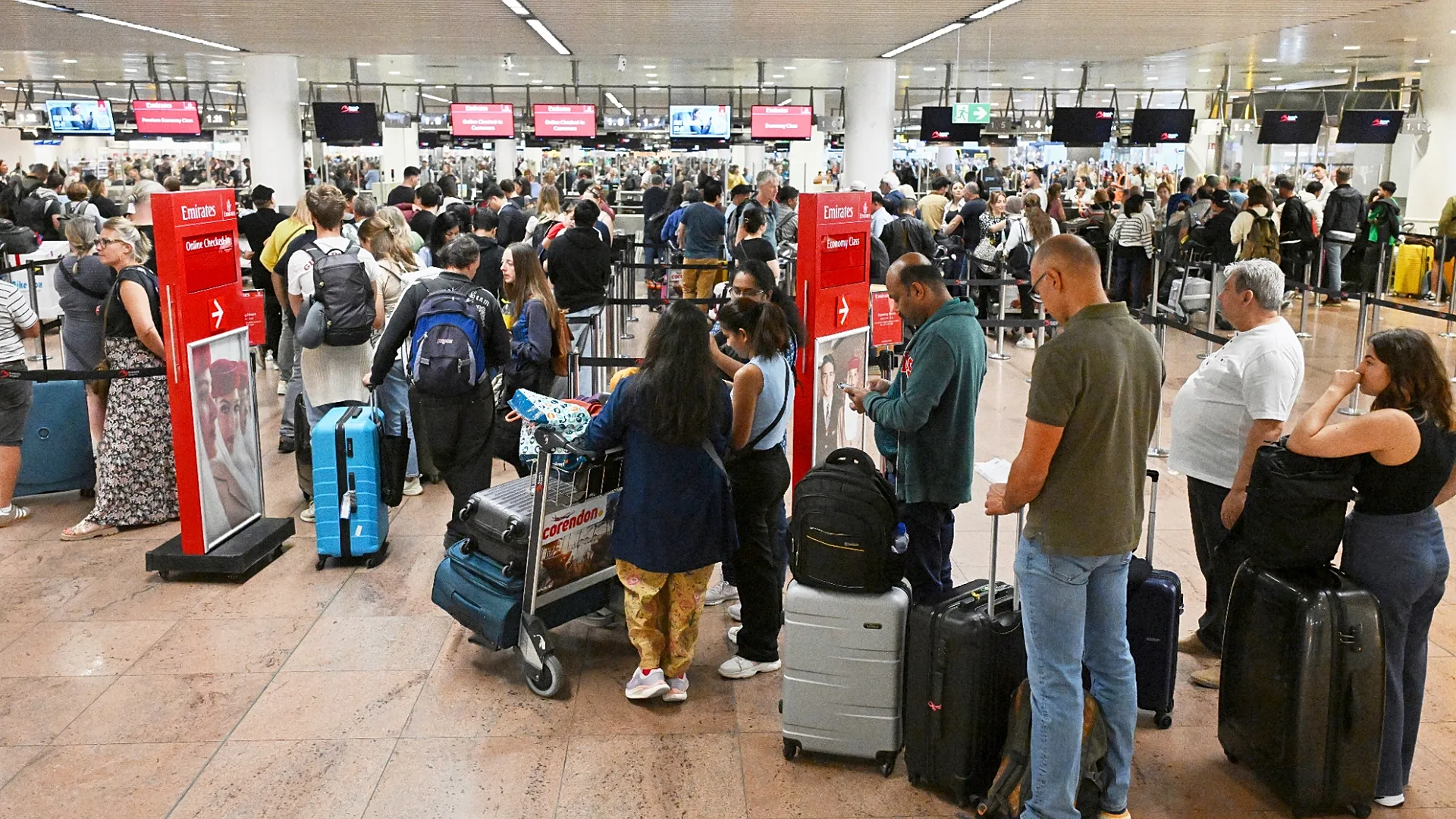
Passenger chaos and logistical strain expose fragile digital dependencies in transatlantic civil aviation.
Brussels, September 2025.
A large-scale cyberattack targeting Collins Aerospace’s MUSE software, which manages check-in and boarding functions, has disrupted airport operations across Europe. The attack forced airports including Brussels, Heathrow, Berlin and Dublin to cancel flights, delay hundreds more and return to manual procedures that strained staff and passengers alike. Brussels Airport took the unusual step of asking airlines to cancel nearly half of the following day’s departures to prevent its terminals from collapsing under the weight of backlogs and crowding.
The immediate impact was visible in airports where check-in counters and baggage systems suddenly failed. Airline personnel were compelled to revert to handwriting boarding passes, tagging baggage manually and verifying documents without digital support. Such procedures slowed down every aspect of passenger flow. At Heathrow, close to ninety percent of more than three hundred fifty flights experienced delays. In Berlin and Brussels, passengers reported waiting in long lines with little information, while airlines struggled to keep schedules from disintegrating. The disruption cascaded into regional airports as delays multiplied through interconnected flight networks.
European security officials emphasized that air traffic control and core aviation safety systems were unaffected, but the attack exposed an uncomfortable truth: modern air travel relies as heavily on digital platforms as on runways and airplanes. Analysts in Paris and Frankfurt pointed out that depending on a single software supplier represents a systemic vulnerability. Collins Aerospace’s MUSE has become an essential component in many hubs, and its paralysis demonstrated how one weak link can destabilize an entire continent’s aviation grid.
Cybersecurity specialists in North America echoed these concerns, noting that the incident illustrates how civilian infrastructure remains a tempting target for both criminal organizations and state actors. Although no group has claimed responsibility, experts in Washington warned that the level of coordination suggested a sophisticated operation rather than an amateur breach. If confirmed, this would raise the stakes for both NATO and the European Union, which are already under pressure to harden civilian networks against hostile cyber operations.
Investigations in Brussels and Berlin are focusing on the possibility that the attackers exploited vulnerabilities in supply-chain access points, where subcontractors provide updates and maintenance. This model of dependency is precisely what makes aviation networks efficient but also dangerously exposed. The lack of clarity over who orchestrated the intrusion raises the threat level further, as regulators cannot yet confirm whether the disruption was a singular act or the first in a planned sequence of coordinated strikes.
For passengers, the disruption was immediate and deeply unsettling. Families missed connections, business travelers were stranded, and airlines scrambled to provide compensation while improvising communications. Social media amplified the frustration, with images of crowded terminals spreading across Europe and fueling pressure on governments to deliver answers. The sudden collapse of normal routines revealed how fragile the trust in aviation systems has become when digital reliability fails.
Beyond the visible chaos, the incident points toward strategic vulnerabilities that extend into economic and political arenas. European lawmakers are now calling for urgent reviews of digital resilience standards, demanding stronger oversight of suppliers and stricter requirements for redundancy in critical infrastructure. Think tanks in Asia and Oceania have also followed the developments closely, warning that similar dependencies exist in hubs from Singapore to Sydney. What happened in Brussels could easily be replicated in other parts of the world, underscoring the global nature of the threat.
This attack is unlikely to be the last. In an industry where punctuality and predictability are the foundations of trust, the paralysis of check-in systems demonstrates how narrow safety margins have become. The Brussels case could prove to be a turning point, forcing regulators and operators to rethink procurement, redundancy and incident response. Whether Europe responds with decisive reforms or temporary fixes will determine how resilient its skies remain in the years to come.
Más allá de la noticia, el patrón.
Beyond the news, the pattern.