

 Phoenix 24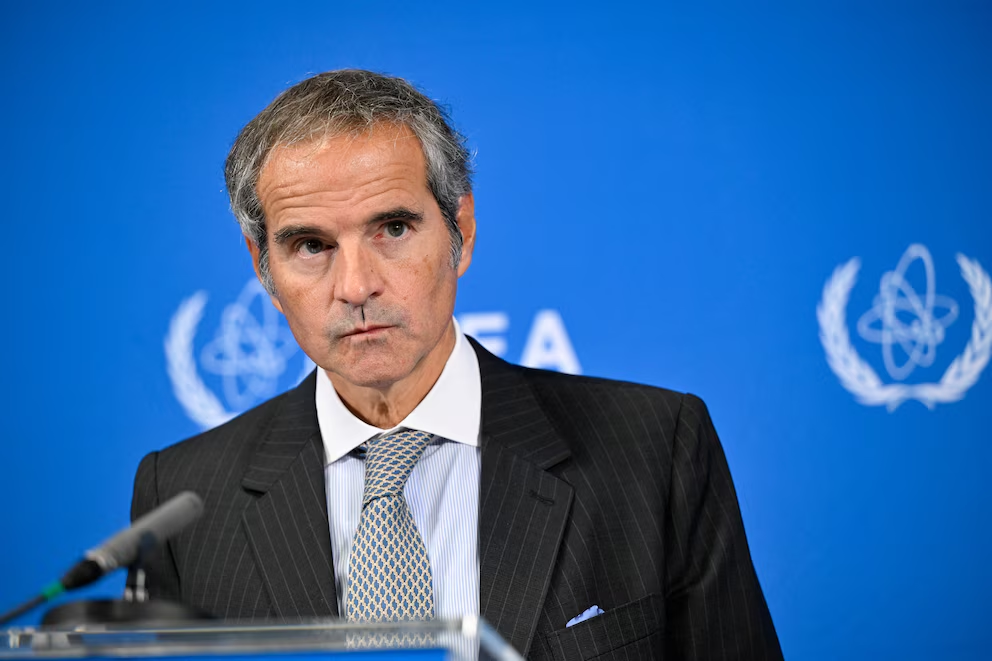
When the arms race races ahead, silence from the inspection agencies becomes dangerous.
Vienna, September 2025.
Rafael Grossi, Director General of the International Atomic Energy Agency, delivered a stark message during a quarterly board meeting: there is not much time left to reach an agreement with Iran that would permit the full resumption of international nuclear inspections. He acknowledged that some progress had been achieved in recent talks but underlined that the coming days are decisive for restoring the agency’s capacity to carry out its verification mandate.
Iran had suspended cooperation after the June airstrikes carried out by the United States and Israel on nuclear sites at Fordo, Isfahán and Natanz. In response, Tehran enacted a law requiring that any inspections be authorized by its Supreme National Security Council. Since then, the IAEA has only been permitted one limited inspection at the Bushehr nuclear power plant, far from the comprehensive access normally required under international agreements.
Grossi’s warning comes as European powers intensify diplomatic pressure. France, Germany and the United Kingdom have already launched a process that could reimpose sanctions within thirty days if Iran does not allow unrestricted inspections, reduce its stockpile of highly enriched uranium and reengage in negotiations with the United States. This move signals that Europe is unwilling to accept prolonged opacity in Iran’s nuclear activities.
The IAEA’s latest findings add urgency to the situation. The agency estimates that Iran’s stockpile of uranium enriched to 60 percent purity now exceeds 400 kilograms, a level uncomfortably close to weapons grade. Without the ability to verify how that material is being stored, used or potentially diverted, the international community faces a dangerous information gap that undermines trust and stability.
The implications reach beyond inspection protocols. At stake is the credibility of the global non-proliferation regime and the fragile balance of regional security in the Middle East. If Iran continues to block oversight, it risks not only the reinstatement of sanctions but also the further erosion of confidence among world powers. If it accepts the return of inspectors, a narrow but significant path remains open toward transparency and reduced tensions.
In Grossi’s words, time is running out. The decisions taken in the coming days could determine whether Iran remains engaged within the international system or slides deeper into confrontation. For the IAEA and its partners, the clock is ticking, and the cost of silence grows heavier with each passing hour.
Truth is structure, not noise.
La verdad es estructura, no ruido.