

 Phoenix 24
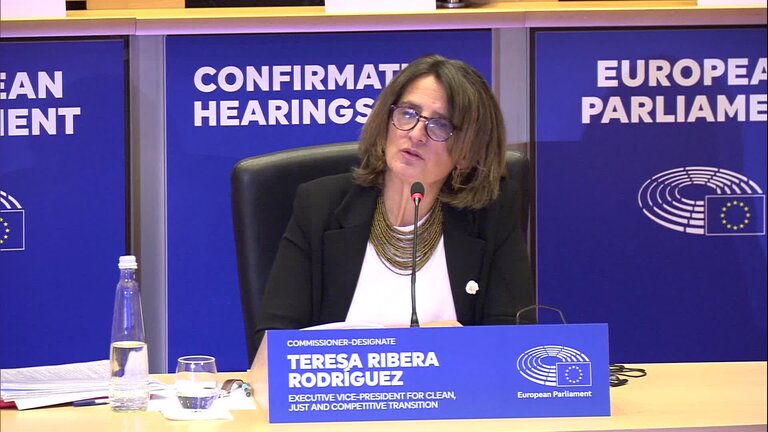
A rare rupture in Brussels exposes deeper fissures over Europe’s moral conscience.
Brussels, September 2025. In a speech delivered at Sciences Po in Paris, European Commission Executive Vice President Teresa Ribera stunned audiences by referring to Israel’s military conduct in Gaza as genocide, lamenting that such a term exposes Europe’s failure to act and speak with one voice. Her words, unprecedented coming from a senior EU official, triggered an abrupt distancing by the Commission and underscored an internal fissure over both rhetoric and political posture.
Ribera’s intervention marked a departure from the restrained language typically favored by EU leadership. She framed her critique not merely as condemnation, but as a reflection on institutional paralysis during a crisis that has prompted widespread protests across European capitals. Her argument implied that failure to unite around fundamental values risks undermining Europe’s credibility.
Following the remarks, Commission spokesperson Paula Pinho clarified that there is no unified EU position on the genocide allegation and that such determinations fall within the purview of judicial bodies. She reiterated that Ribera’s comments did not reflect a collective stance within the institution.
The reaction from Israel was immediate and fierce. The Israeli Ministry of Foreign Affairs condemned Ribera’s wording as reckless and inflammatory, accusing her of echoing Hamas propaganda. Officials urged her to focus instead on calling for the release of hostages and for Hamas to cease hostilities.
This episode highlights more than a diplomatic spat; it reveals the political tightrope the EU walks amid diverging member state stances. Nations such as Spain have grown increasingly vocal in criticizing Israel, while others, including Germany and Hungary, have advocated caution and continuity in strategic ties. This tension encapsulates a deeper identity crisis: whether Europe can reconcile moral leadership with geopolitical cohesion.
From an internal perspective, the strategy of distancing may be less about denying Ribera’s intent and more about preserving the Commission’s perceived neutrality. By emphasizing that legal definitions fall to courts, EU leadership sought to deflect potential judicial or diplomatic repercussions. At the same time, the incident underscores how individual commissioners may become lightning rods, especially when institutional consensus fractures.
Looking ahead, the consequence of this rupture may shape both the Commission’s internal dynamics and EU foreign policy narratives. For the public, it crystallizes a debate on sincerity versus institutional discretion. For the EU’s bureaucratic architecture, it signals the need for clearer communication strategies in volatile geopolitical contexts.
Every silence speaks.
Every silence speaks.