

 Phoenix 24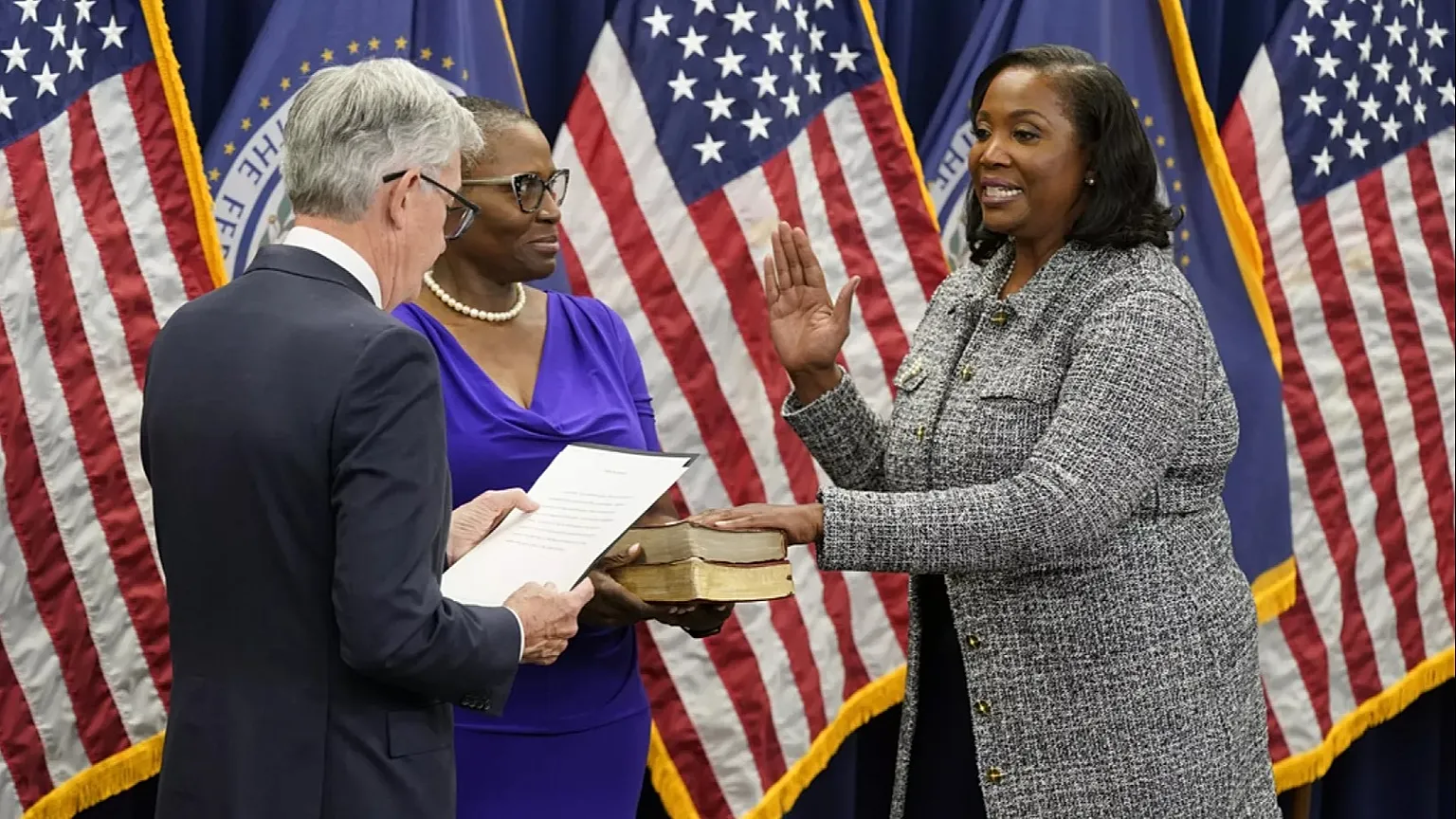
A legal showdown unfolds as the only Fed governor ever challenged in over a century fights to block her dismissal, highlighting deep tensions over central bank autonomy.
Washington, August 2025
Federal Reserve Governor Lisa Cook, who holds a 14-year term confirmed in 2022, has launched an unprecedented lawsuit challenging her removal after learning of it through a public announcement. As the first Black woman on the Board of Governors, her dismissal attempt marks a historic rupture with the Fed’s long-standing political insulation.
The case rests on how the law interprets “for cause.” Under the Federal Reserve Act, governors may only be removed for inefficiency, malfeasance, or neglect of duty. Cook’s attorneys argue that the allegations against her—mortgage irregularities predating her appointment—fall outside these grounds. In their view, administrative disputes unrelated to her service cannot justify overriding statutory protections, and removing her under such terms undermines the rule of law.
Judge Jia Cobb, presiding over the initial hearing, emphasized the gravity of the matter. She reminded both parties that in over a century, no U.S. president has sought to fire a sitting Fed governor. The uniqueness of the case, she said, obliges the court to weigh not just procedural fairness but the institutional equilibrium that has safeguarded monetary policy since the Fed’s creation. For now, she postponed a decision on the emergency injunction, leaving Cook in her seat while the case advances.
Beyond the personal dimension, the dispute touches the very core of executive authority. Trump’s team insists that presidents must retain broad powers to remove officials who, in their view, compromise integrity or obstruct policy. Critics counter that allowing such discretion would render the Fed vulnerable to shifting political winds, with governors dismissed not for cause but for policy disagreements. The lawsuit therefore carries implications far beyond Cook’s own tenure.
Financial analysts note that the case could determine how markets interpret central bank credibility in the future. If Cook prevails, the outcome would reinforce investor confidence in the Fed’s independence, ensuring that monetary decisions remain insulated from electoral cycles. If she loses, the ruling might embolden future administrations to recast the Board according to political priorities, destabilizing the very stability the institution was designed to preserve.
The symbolism is equally powerful. Cook is not only a seasoned economist but also a figure whose appointment was celebrated as a step toward diversity in financial governance. Her defenders warn that dismissing her on contested grounds would erode trust in the institution’s impartiality and project an image of politicization at a time of global economic uncertainty.
Within Washington, the lawsuit has sharpened dividing lines. Legal scholars frame it as a test of the separation of powers, monetary policy experts warn of the inflationary risks of politicized rate cuts, and political operatives see Cook’s resistance as a rallying point against executive overreach. For Trump’s allies, by contrast, the case represents an opportunity to recalibrate the Fed, steering it toward decisions they believe are more aligned with growth and less with inflation control.
Global observers are paying close attention. In Europe, policymakers quietly express concern that undermining the Fed’s independence could unsettle global financial systems already under pressure from geopolitical shocks. In Asia, analysts interpret the conflict as another sign of institutional volatility in Washington, with potential ripple effects on currencies and capital flows.
The case’s broader message is clear: independence is not an abstraction but a shield that underpins the functioning of modern economies. If the courts affirm Cook’s claim, they will reaffirm the principle that monetary policy must stand above partisan struggle. If they side with the administration, they will grant presidents a precedent to reshape the Fed whenever political convenience dictates.
For the moment, Lisa Cook remains in office. But the uncertainty surrounding her future has already introduced new volatility into the debate about where authority begins and ends in U.S. governance. What happens in the courtroom will not only decide her fate but may redefine the guardrails protecting one of the most powerful institutions in the global economy.
Facts that do not bend.
Hechos que no se doblan.