

 Phoenix 24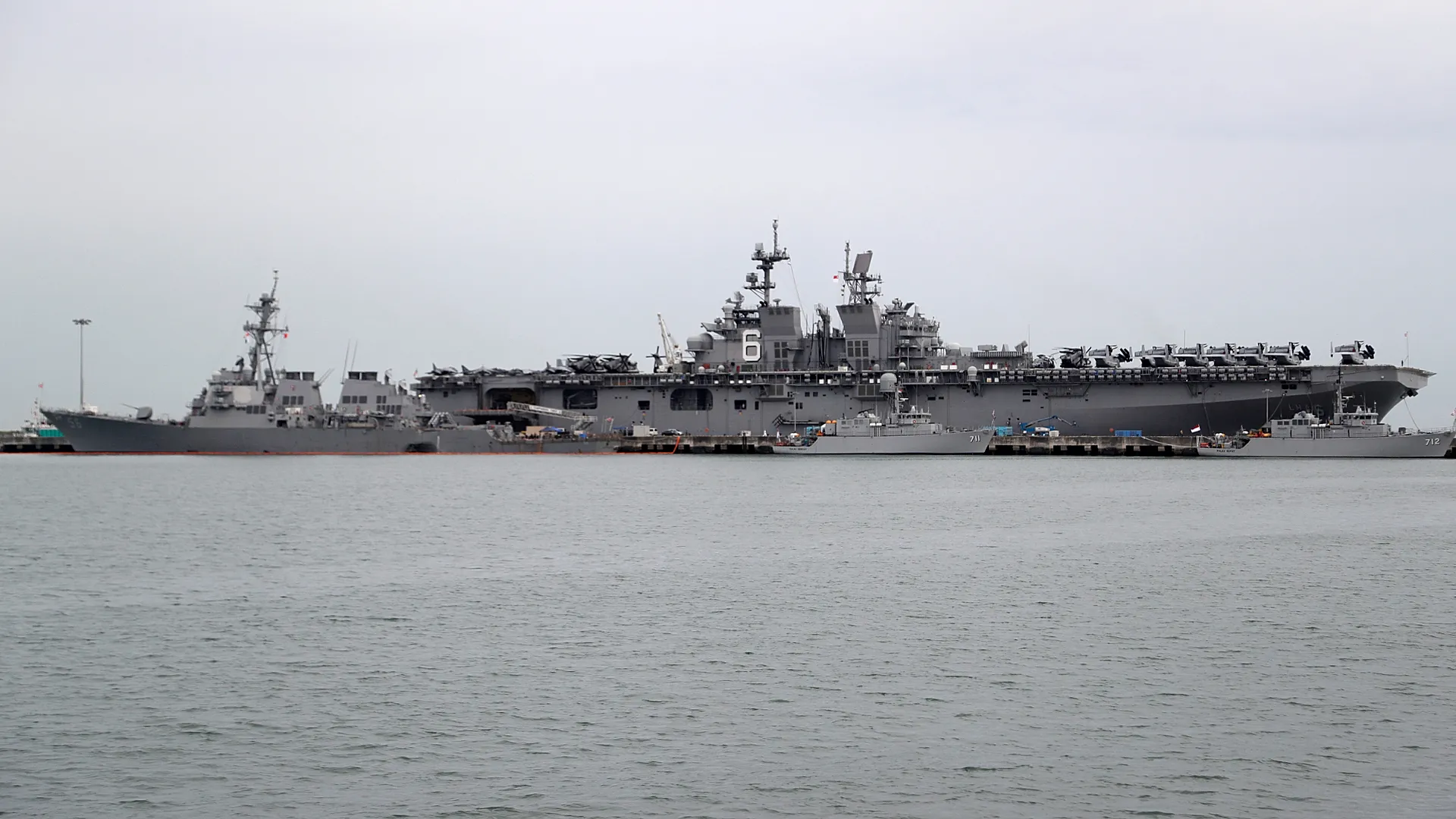
Fort-de-France, August 2025
The Caribbean has once again become a strategic board. France reinforced its naval presence in coordination with the United States to counter the rise of transnational crime and stabilize a region where maritime security, politics, and economics intersect with every nautical mile. According to French officials, the decision prioritizes the protection of its overseas territories, with Martinique and Guadeloupe as logistical nodes, and aims to disrupt routes that currently feed European markets. It is not a new picture, but the intensity has shifted: patrols are more frequent, commands have clear rules of engagement, and operational cooperation is now sustained. What once was routine surveillance now operates as a signal of deterrence.
The move becomes clearer when one observes the cartography of illicit traffic. According to UNODC, the Caribbean functions as a corridor for cocaine heading toward Europe, with flexible branches using mid-sized ports, insular platforms, and cabotage routes that are hard to monitor at first glance. Added to this is a financial and logistical ecosystem that, despite tighter controls, still presents gray zones. The French reading is pragmatic: if the risk vector strikes its Atlantic doorstep, the response must start at sea, where early interdiction spares political and social costs on land.
The United States, for its part, has recently increased maritime pressure under the argument of stopping networks that combine drug trafficking, smuggling, and money laundering. The synchronicity with Paris is no coincidence. Both actors share the same operational space in the Antillean arc and the same perception of threat, one that also converges with civilian and military agencies. The remarkable detail here is that several Caribbean capitals have begun to take sides. Trinidad and Tobago expressed political support and facilitated security coordination, a gesture that reconfigures, at least partially, the delicate intraregional balance. Still, the debate remains open: Caribbean governments weigh every word to avoid cooperation turning into automatic alignment.
On the Venezuelan side, the response was both discursive and logistical. Caracas announced the mass mobilization of militia members and hardened its rhetoric against what it described as external provocation. Technical voices indicate that these internal deployments serve a double purpose: they project territorial control and shift the debate toward national sovereignty, a symbolic field where the government maneuvers with ease. Yet the military equation is not solved with numbers in parade; it is resolved through sustained logistics, real interoperability, and financial backing, variables that sooner rather than later reveal the limits of rhetorical muscle.
From Europe, SIPRI has emphasized that naval deployments in sensitive environments work as instruments of strategic signaling. It is not only about firepower, it is about the message. The presence of units with permanent links, clear command, and known rules reduces the incentives for accidental escalation. At the same time, according to the OAS, regional cooperation frameworks can ease tensions when combined with verifiable information exchange and mechanisms of civilian oversight. In other words, architecture matters as much as patrols; without architecture, patrols quickly become exhausted.
There is another, less visible angle: indirect networks. Regional analysts are monitoring financial intermediaries, front foundations, and mixed-use NGOs that, under the banners of development or assistance, channel resources that ultimately lubricate illicit economies. Here, narrative caution is crucial. At Phoenix24 we avoid sensationalism and apply a minimum operational standard: when attributing covert roles, we require two independent pieces of evidence and a reasonable right of reply. That methodology, less exciting than headlines, has proven to be the only one that survives external audits.
The technological component also carries weight. Information warfare accompanies every frigate’s move: manipulation campaigns, smokescreens, and carefully crafted euphemisms. NATO StratCom has warned that in hybrid contexts, disinformation seeks to disorder interpretive frameworks rather than disprove specific facts. This is why it is advisable to narrate with transparency the limits of available information and to clearly state the hypotheses that have not yet been confirmed. Ultimately, credibility erodes more from interested ambiguity than from an honest admission of uncertainty.
What can happen next? A continuity scenario: if Washington and Paris keep the operation focused on interdiction and limited cooperation, there will be more targeted boardings, intelligence exchange, and deterrence without major headlines. A disruption scenario: a poorly calibrated incursion, a clash in sensitive waters, or a misidentification could escalate tensions and force rapid mediation. A bifurcation scenario: if an external actor with real logistical capacity, whether Russia or China, decides to step in as a political guarantor or technical supplier, the Caribbean board would become more complex and insular capitals would have to recalibrate their practical neutrality.
Meanwhile, economic costs are in play. Maritime insurers adjust premiums when they perceive increased operational risk; shipping companies redesign routes to reduce exposure; exporters in the Caribbean basin calculate effects on transit times and cold chains. Europe watches this picture with its Atlantic ports in mind, while the Americas focus on the resilience of their logistics chains. In truth, everyone is asking the same question: where does muscle end, and where does politics begin?
The answer, always provisional, is that the Caribbean now functions as a real-time laboratory of cooperative security. If the region manages to articulate smart patrols, financial traceability, and port controls without turning every escort into a diplomatic incident, there will be a window for stabilization. If not, the sea will keep speaking in its own way: with shifting routes, blurred numbers, and ships that say more through their silence than through their press releases.
Facts that do not bend.
Hechos que no se doblan.