

 Phoenix 24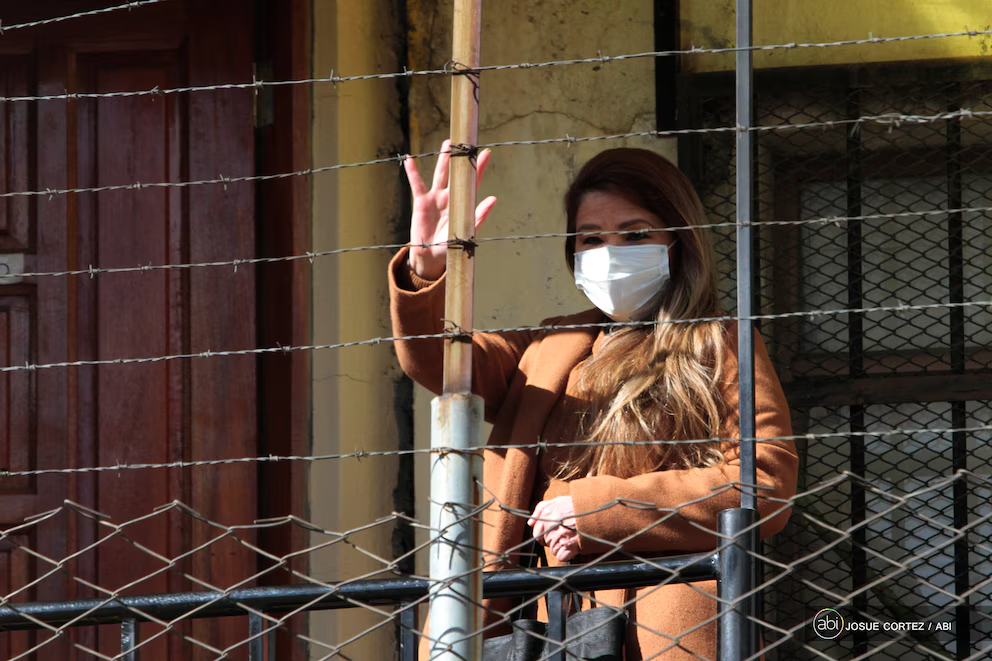
A judicial turn could recalibrate penal norms amid shifting political winds.
La Paz, August 2025.
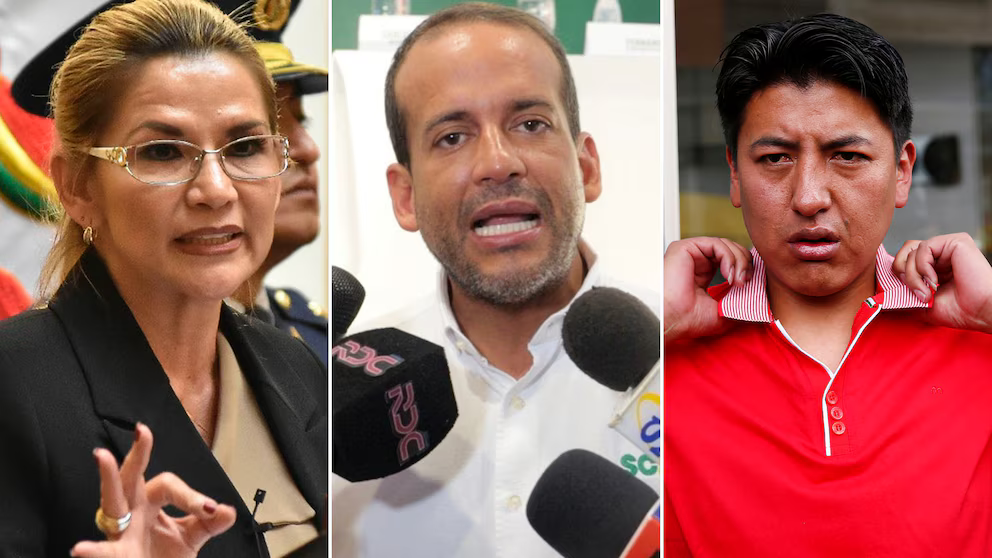
Bolivia’s highest judicial body, the Tribunal Supremo de Justicia (TSJ), has ordered departmental courts to urgently review the legality of preventive detentions affecting former interim president Jeanine Áñez, opposition governor Luis Fernando Camacho, and civic leader Marco Antonio Pumari. The instruction, signed by TSJ president Romer Saucedo, directs lower judges to act on their own initiative if necessary and stresses that the mandate reflects judicial autonomy rather than interference.
Áñez, already serving a ten-year sentence issued in 2022 for her role in the post-Morales transition, still faces multiple ongoing investigations. Camacho and Pumari remain in custody under terrorism charges, cases that are pending constitutional review. The TSJ signaled that if deadlines governing pretrial detention have been exceeded, judges must enforce existing law, potentially opening the way for releases.
The announcement reverberated across the political spectrum. Áñez publicly welcomed the order, framing it not as personal vindication but as overdue compliance with constitutional guarantees. Camacho’s legal team stressed that prolonged detention without trial undermines both rights and health, and urged impartial enforcement. Government ministers, for their part, portrayed the TSJ’s step as confirmation of judicial independence, distancing themselves from accusations of executive interference.
Latin American outlets highlighted how the decision could mark a turning point for judicial reform in Bolivia, a country where the use of pretrial detention has been widely criticized. European observers focused on its potential to rebuild credibility in a justice system often accused of political bias. In Asia, analysts noted that Bolivia’s dilemma resonates with broader debates in polarized democracies, where preventive detention is sometimes applied beyond its legal scope and later corrected under pressure.
The historical backdrop is instructive. Bolivia has faced repeated criticism from regional and international bodies for overreliance on pretrial detention. Reports from the Inter-American Commission on Human Rights and the United Nations have described a pattern of systematic delay in trials and overcrowded prisons. Local organizations estimate that a majority of inmates are held without definitive verdicts, a statistic that underscores how the TSJ’s directive could have implications beyond high-profile political cases.
Reactions also illustrate how justice intersects with politics. Supporters of Áñez and Camacho interpret the move as a possible opening for reconciliation. Critics argue it may simply represent tactical recalibration rather than genuine reform. Within Bolivia’s judiciary, uncertainty prevails: judges must reconcile the Supreme Court’s instruction with their own exposure to political pressure and public scrutiny.
Internationally, the development has drawn mixed interpretations. European human rights advocates describe the decision as overdue alignment with rule-of-law standards. Analysts in the United States warn that unless the directive is applied consistently, it may be dismissed as symbolic. Commentators in Asia view the case as a reminder that legal institutions in polarized societies often recalibrate only when credibility reaches critical lows.
Looking to the near future, several trajectories are possible. Continuity would mean departmental courts comply with the TSJ’s directive, reviewing deadlines and potentially releasing detainees whose custody violates constitutional limits. Disruption could unfold if resistance within lower courts or backlash from political actors slows enforcement, deepening the perception of selective justice. A bifurcation scenario may arise if the order is applied only in emblematic cases while other detainees remain in prolonged limbo, reinforcing accusations of inequality before the law.
Beyond the immediate fate of Áñez, Camacho, or Pumari, the episode touches on the durability of Bolivia’s democratic institutions. The rule of law is tested not when justice aligns with political convenience but when it resists it. Whether this directive leads to systemic reform or becomes another episode in a cycle of selective enforcement will determine if Bolivia can begin to restore public trust in its judiciary.
Facts that do not bend.
Facts that do not bend.